Night Shots: An essay in photos


This slideshow requires JavaScript.

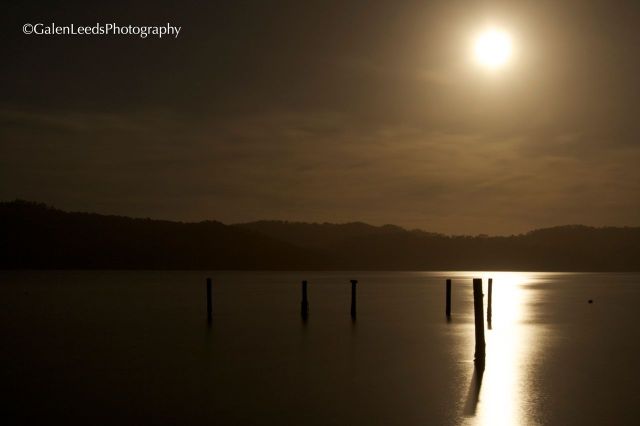
The colors in this picture are a little goofy, because that's not the sun up there, it's the moon, and this was a long nighttime exposure

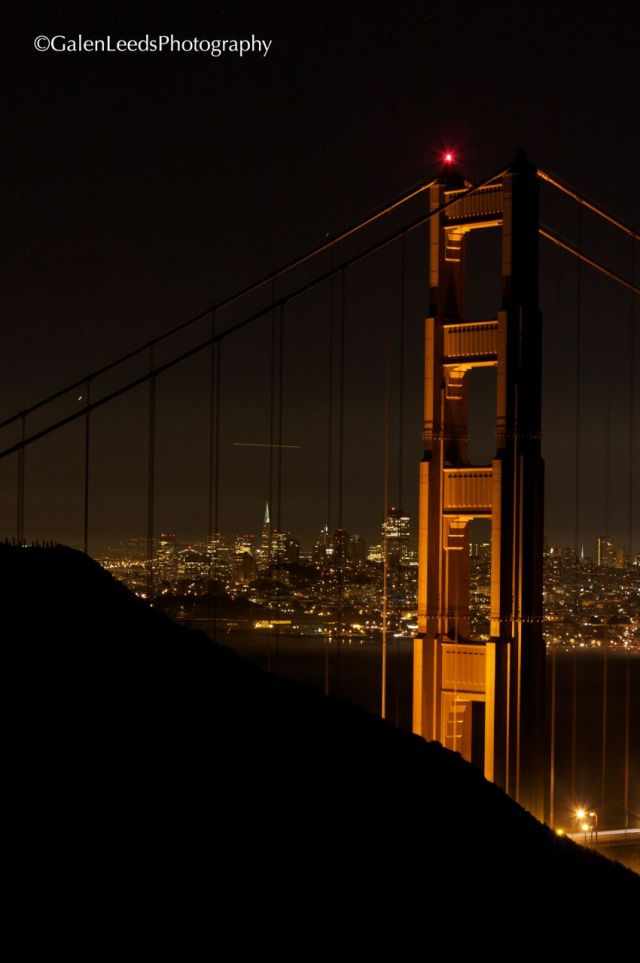
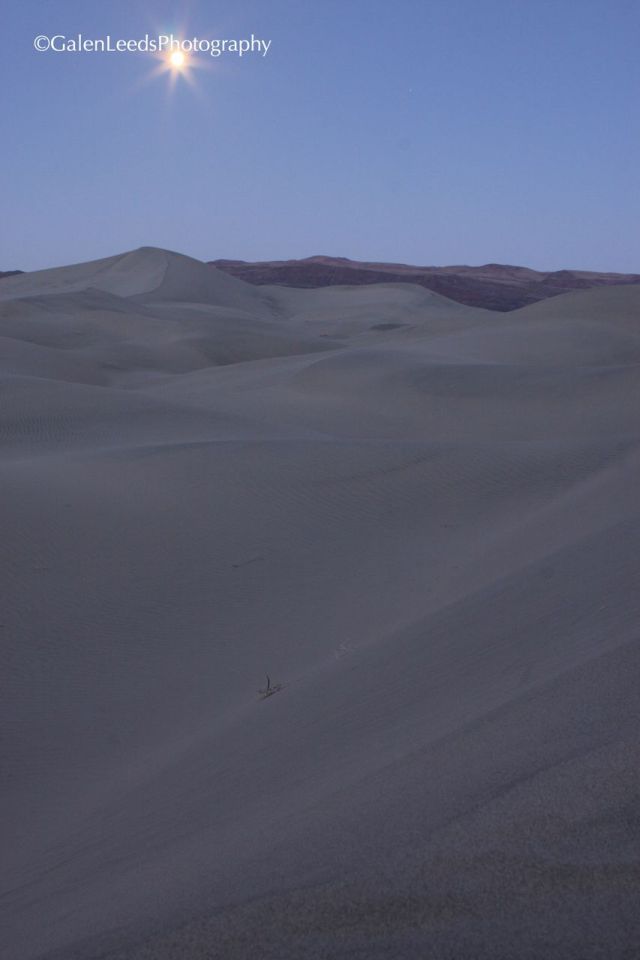
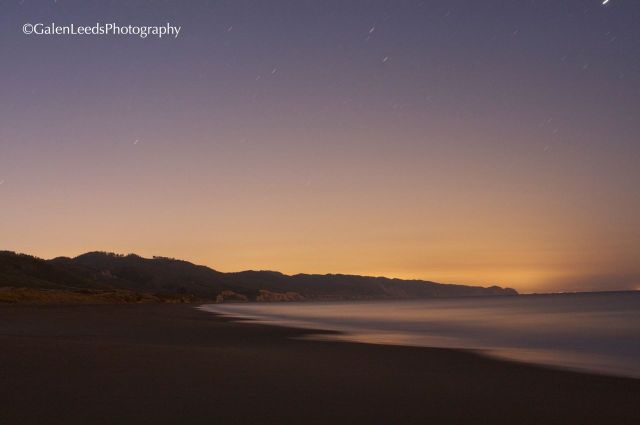
A brief gallery of images taken just after the sun has gone down, and before it has returned to our sky.

When there is no fog at night, it can be a rare thing around the Golden Gate Bridge, so take your chances as they occur

The Eureka Sand Dunes under the light of the setting moon

Long exposures before dawn always give the ocean such a soft look, as the waves become lost in time

Posted in landscapes, nature photography, Photo Essay, photography, SLR | Tagged , , , , | 2 Comments

Tule Elk: An essay in photos


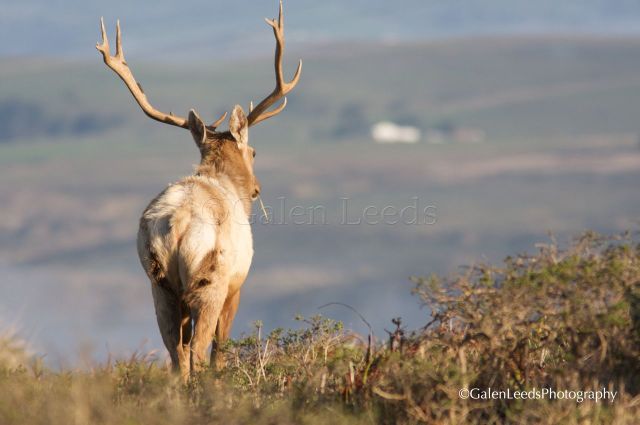
A bull elk walking the headlands of the Point Reyes National Seashore

I live near a large stretch of national park, and within that park there is an area that is protected for tule elk (a subspecies of our local elk). I try to take advantage of this natural resource from time to time by heading out and shooting a few of them (with the camera of course). Here are some of the images I’ve come up with. Many of them have stories behind them, that I will be including in the Anatomy of a Photo series. In the meantime, enjoy these images. (I have so many more, this is just a sampling of ones that have special meaning to me.)

Galen

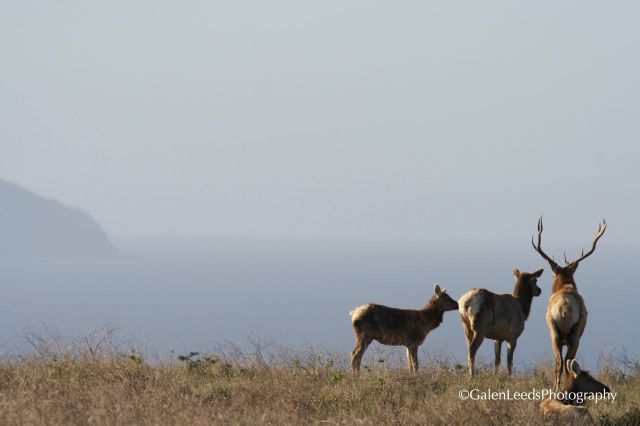
Elk with the "point" of Point Reyes in the background

This slideshow requires JavaScript.

New

Posted in California, landscapes, nature photography, New Zealand, Photo Essay, photography, portraits, SLR, wildlife photography | Tagged , , , , , , , , , , , | 1 Comment

The Tomales Racing Sheep: Anatomy of a photo #32


20110701-122405.jpg

I was driving through the coastal countryside of northern California one drear grey day, when I saw something that added a little color to my day. I came across the Tomales Racing Sheep during a practice session. They were running dry heats, getting used to the competition, the excitement, the timing… It’s a very different thing running against opponents, versus running just for the joy of it. The dynamics just change.

On this day I mostly took portraits as they rested between sprints, ruminating on their strategies. Their racing stripes seemed to need a little retouching, although they still wore their Tomales Red proudly. The ones who were out of shape and not running as well looked decidedly sheepish. I’m not sure if all them had qualifying times for the upcoming races against Valley Ford.

I used a long lens for the picture- a 70-200mm zoom with. 1.4x converter if I recall. The aperture was open fairly wide, since the shutter speed was more important to making sure that I captured the action without blurring it. I was using one of my older cameras, so the ISO was set low for the shooting- between 100 and 200 to make sure that there wouldn’t be much noise.

Posted in Anatomy of a photo, California, documentary, How To, nature photography, photography, road side, ruminating, SLR | Tagged , , , , , , , , , , , | Leave a comment

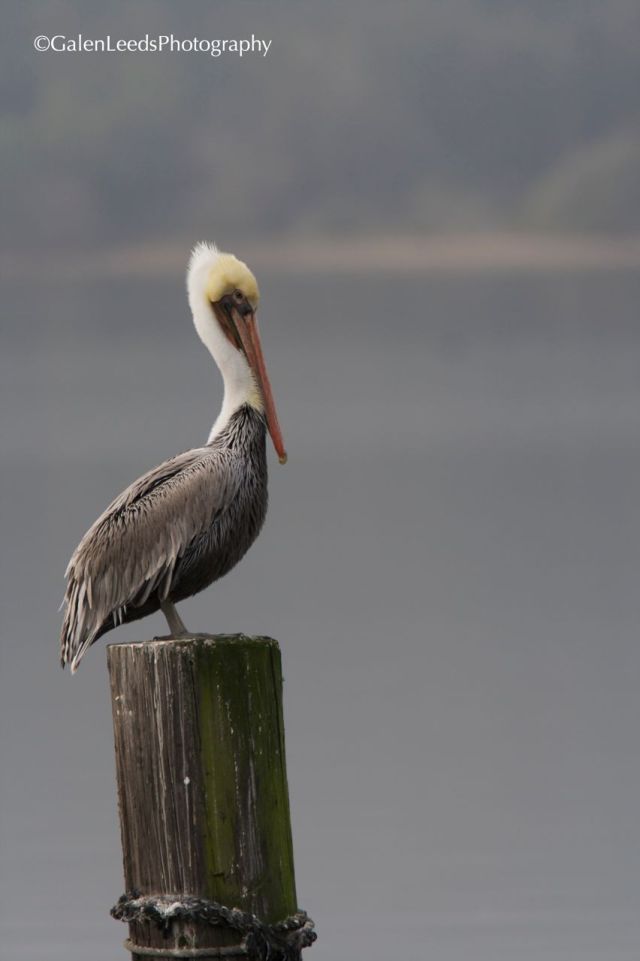
Anatomy of a photo #31: Pelican on a foggy day


The subtle tones and even lighting on this photo are wonderful when it is printed

Oh how I love the Pelican! The way its beak can hold more than its belly can

One of my favorite birds. I have many photographs of pelicans, and will likely be visiting several different images of them over the life of this blog. I am at least starting chronologically, with one of my earlier pelican images. This one was taken a little south of where I live, on one of our local bays (Marconi cove of Tomales Bay for those who know the area).

Some birds, like the pelican, have differently colored feathers based on the season (mating or not mating). If you are going to work on a portfolio of bird images, you should try to eventually have each bird in its various ranges of plumages (male, female, juvenile, mating). This pelican happens to still have some of its breeding colors (the clean white and yellow), but is missing some of the more striking colors about its face that show up during prime time.

This photograph was taken on a gray, foggy day, which resulted in the even lighting. A long lens was used to photograph the bird without disturbing it. A shallow depth of field to blur out the background and give sharper focus by contrast to the pelican. Shutter speed fairly high, as it was handheld (the higher shutter speeds are especially important when using the longer lenses hand held.)

Posted in Anatomy of a photo, birds, California, marine life, nature photography, photography, portraits, SLR, weather, wildlife photography | Tagged , , , , , , , , , , , , , | Leave a comment

Turkey Vultures: An essay in photos


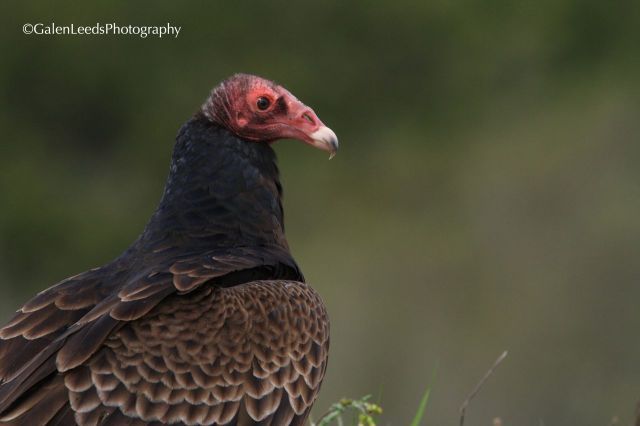
Not necessarily the prettiest bird, with its naked head, but a very interesting one

The Turkey Vulture is one of those ubiquitous birds that is seen throughout the states during the warmer months, but disappears during the winter and cold. Some areas, such as the California Coast and lower inland areas that don’t see much snow will have the vulture around for much of the year.

They are much maligned, but are actually a rather interesting and very useful bird. They serve a necessary, if rather gruesome purpose in helping to remove the dead in a quicker, less odiferous manner. They are interesting in their design.
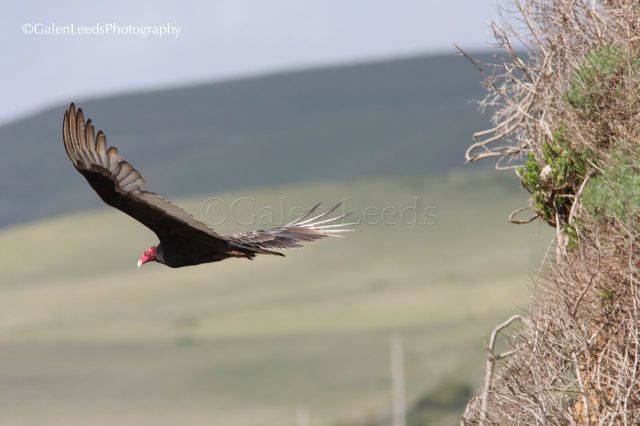
Turkey Vulture gliding by a bluff


The vulture can glide better than almost any mainland bird in the U.S. Other birds see them soaring, circling up on a thermal, and will fly over to enjoy the same thermal, because they know that the vulture is the best at finding them. You will see them aloft and soaring, before most birds can even think of gliding, because they can make use of the least air current… A mouse fart would almost be enough for them to glide on.

They wobble in the air, as they glide along, looking somewhat clumsy, but it is because they are often pushing their flight to the very limit, getting everything out of an airstream until they try for a little too much, push a little too hard, and it fails on them, causing that wobble.

If they are aloft in large numbers, just before or right after sunrise, I know it will be a very windy day. This has worked unfailingly for me as a wind predictor in the area that I live in. If there is enough wind, they will be riding it, and if there is enough that they are aloft in such numbers, it means it will only get stronger through out the day.
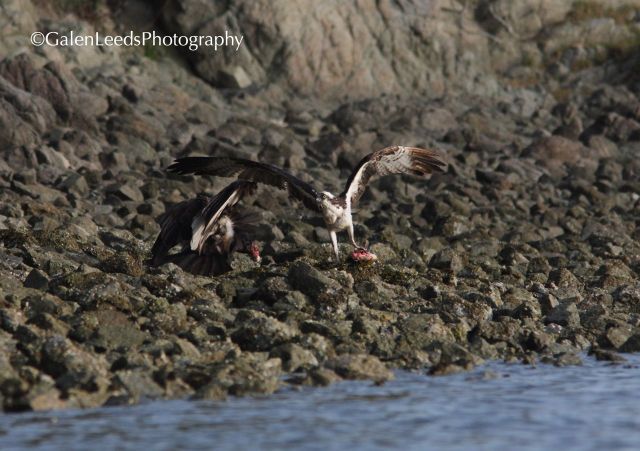
Vulture closing in on an osprey as it eats a fish it just caught

I have seen them get close to Red-tailed Hawks, Osprey and Peregrine Falcons, edging towards them and freshly caught prey, until the raptor has the choice of flying off with its meal, or leaving it for the vulture. Which is another thing- vultures can’t carry anything while they fly. At least not in their talons. They can carry a very tiny amount with their beak. Because of this they nest on the ground in crevasses, caves,or in hollow stumps when it is time to lay eggs and raise young.

They have no septum- that is, you can see in one nostril and out the other. Go back to the top of the page and have a look, you will see that it is true. They do however have a sense of smell, which is not true of many birds, especially of raptors.

Turkey vultures. Next time you see one, marvel a little.

This slideshow requires JavaScript.
Posted in birds, nature photography, Photo Essay, photography, portraits, SLR, wildlife photography | Tagged , , , , , , , , , , , , , | Leave a comment

Disclosing where photographs were taken


There are times when I am loath to announce where I have taken a photograph. Some of the reasons are ethical, some a sense of preservation, and some… a little more selfish.

Wildlife

I won’t disclose the location of bird nests or animal dens that I come across. This, for me, is an ethical one. If people learn of these sites, they may get drawn- with no harm intended- to try and catch a peek of these animals and they’re young. Even with the best of intentions, this can drive adults away, causing them to abandon eggs or young.

Spending too much time near these areas where young animals are, can get the young too used to people, can make them less cautious than they should be. Part of the beauty of wild creatures is that they are wild.

I will give general locations of animals, where people can come across them while they are out and about, but I try not to reveal specific locations that are important to their life needs. I might say “I often see Bobcats while kayaking on Tomales Bay.” I won’t say, “If you paddle to the second cove past the big rock (I’m making up these directions), you’ll find an otter den with several pups.”

Locations

Some locations I proudly announce the name of when I display my photographs. In fact, I would say this is the norm rather than the exception, especially with landscapes. People will often feel more of a connection with a picture, if it is of a place they are familiar with. It’s good PR and business sense to tell locations, because it offers that connection. If someone wants to go to the same spot and take one’s own version, fine. It won’t be the exact same picture, because of differences in composition, weather, and lighting. We all see things differently, and our photographs will often show those differences. If someone goes to the area, and they just aren’t satisfied with their own images after seeing yours, that’s fantastic. You’ve just reinforced in their minds what a good photographer you are. If you’re afraid of competition, then perhaps you’re not doing everything you could to make the images you want.

What will stop me from disclosing an exact location, is when an influx of people will change the character of a place, or threaten the habitat or environment. Part of taking pictures of beautiful places is preserving them.

Finally, there are a few areas I don’t share, simply because I know they are places where I know I can find a quiet spot to rest and get away from it all when I need to- places that are special to me. I have spots I’ve been going to for years, where I’ve never come across another person, even though they are on public land. I don’t want that to change.

Sometimes it can be tricky balancing the sharing of a place with protecting it. Sometimes I feel somewhat selfish, but I feel it is the wise choice to err towards protecting important places in the end.

Posted in birds, ethics, How To, landscapes, Location, marine life, nature photography, photography, ruminating, wildlife photography | Tagged , , , , , , , , | Leave a comment

Anatomy of a photo #30: Silhouette on Hot Water Beach, NZ


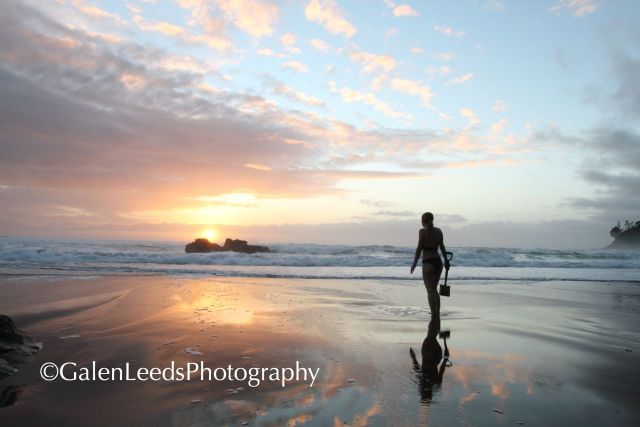
Preparing to dig into hot springs at the tide line

I made this image on a recent trip to New Zealand. Where the silhouetted woman is standing is a hot spring that is only exposed at low tide. We were the only ones on the beach at a very early hour, but one of the nice things about traveling or heading out on early morning adventure with someone, is that you can have a willing model with you.

There are some scenes that will do much better with a human element in them, transforming what would otherwise just be a nice landscape with pretty colors into a story that can draw the audience in. There are so many photographs out there of beautiful sunrise or sunset colors, of the sun at the edge of the ocean, that they can be sort of cliche, so you should really look for something to add to the photo to make it more dynamic.

Since you’re generally facing towards the main light source when taking pictures of the sun on the horizon, it is easy to make a silhouette out of something with interesting lines- trees, rocks, or in this case a person. The fact that she is holding a shovel adds a little extra curiosity.

When shooting silhouettes of people, it is important to consider how the position of the body will affect its outline. In this photograph, even though the person doesn’t have much detail, the hands slightly out to the side, the quarter turn to the side facing the sun, these clues tell you where the person is facing, and that is towards the sun. You don’t want the subject to just be a blob. Anything can be a blob, but people are more dynamic. You can shape them, capture them from different angles. Use them, instead of just including them. (This doesn’t mean you have to pose them, just pay attention to their outlines and what affect their activities will have on the image.)

To take this image, I was crouched down. When taking pictures of reflective surfaces, especially with a wide angle lens (or very zoomed out) like I was for this image, I like to get down low so that I have as much reflection in the image as possible. I made sure that neither the sun nor the person was at the center of the image, placing one to each side. I also tried positioning the rocks near the sun. (Two reasons, one was to block some of the brightness to avoid over exposure where the sun was, but also to add an extra point of interest near the sun.) I also made sure that the horizon did not run horizontally through the image, but made sure that it was lower in the composition. This meant I had to crop out some of the nice reflections on the beach with my camera lens, but I thought it to be the lesser of two evils. I made sure to have the entire silhouette of the woman reflected on the beach. I didn’t want to cut off her head with the picture.

The aperture in this image is closed down fairly small- f16. This keeps most of the elements in the picture in focus. The sky, the rocks, the person- they are all the subjects in this picture, so I did not want to lose any of them to being out of focus. The ISO is fairly high, but not too high as I did not want to lose the picture to too much noise. The shutter speed is mid range- 1/40th of a second, as I did not want to much blurred movement in the waves, but I wanted to keep the ISO and aperture where they were, while not changing the exposure levels.

Posted in Anatomy of a photo, How To, landscapes, nature photography, New Zealand, photography, portraits, SLR | Tagged , , , , , , , , , , | 3 Comments

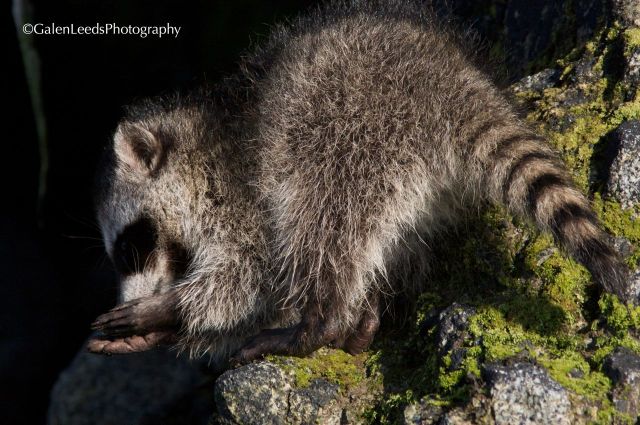
Anatomy of a photo #29: Young Raccoon feeding on the Bay


Young raccoon feeding from its hand like paws

It often makes wildlife pictures interesting if you can capture them in natural behavior, not just sitting there. If you capture them while grooming or feeding, it adds a little action and a hint into their daily lives. I often get excited when there is a chance to photograph an animal in a moment that expresses their “natural history.”

Being able to see how this young raccoon holds its food in its hand-like paw adds a little story to the image. It makes the viewer wonder what it is eating, lets them see a little about what separates these animals from others. It sucks them in.

I’ve found that kayak photography is a good medium for photographing raccoons foraging for food, especially in the summer time, when there are fewer hours of darkness for them to hunt in. This can especially be true in tidal areas where raccoons like to search for crabs at low tide. During the summer, there won’t always be a suitable tide during the shorter nights, forcing the raccoons to forage near dawn or dusk if there is a low enough tide to expose the crabs.

The raccoon in this picture was photographed at such an early morning tide, while I was kayaking. It is a young animal- you can tell by its tail, if not its size. Notice how the tail seems kind of short, and the black stripes aren’t well defined? Young animal.

This young one was walking the shores with a sibling. I was able to capture images of them together and apart, but I really enjoy this image because of tue details of the body.

Camera setup for this picture was fairly standard- long lens, fairly open aperture and high shutter speed.

Posted in Anatomy of a photo, kayak photography, marine life, National Park, nature photography, photography, portraits, SLR, wildlife photography | Tagged , , , , , , , , , , , , , , , , , , , | 1 Comment

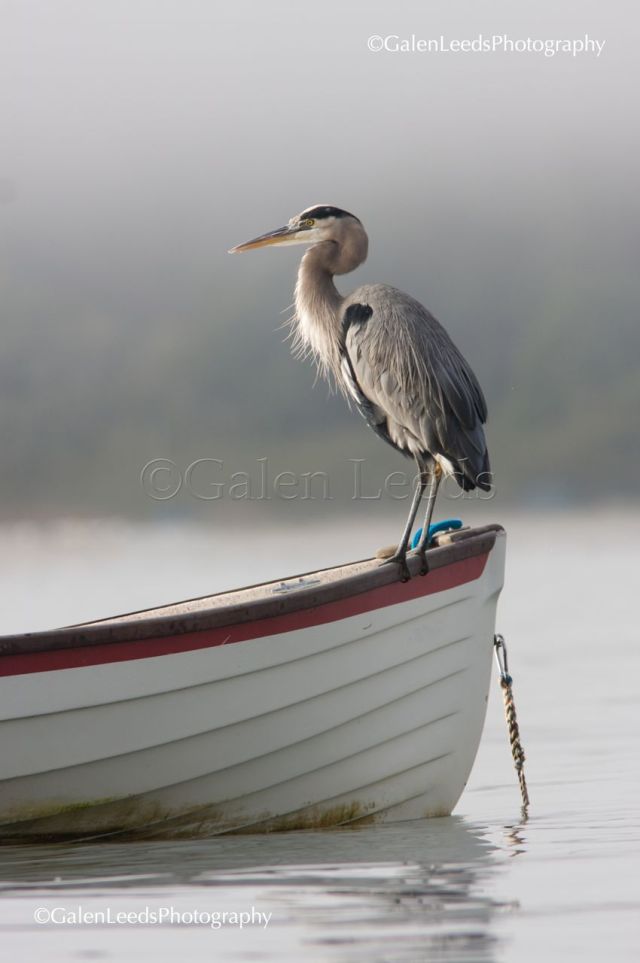
Anatomy of a photo #28: Great Blue Heron, boats and mist Part II


Great blue heron perched on the bow of a small boat. This one differs from one taken in a few minutes earlier in lighting, composition, and detail

When photographing wildlife, the situation is constantly changing. The “wild” in wildlife is not there by accident. These animals and birds are not trained, they act and react according to their own needs and instincts. There is no studio, no constant lighting, no chance to call out direction to your subject and expect them to react how you want them to react. Because of this, with wildlife, I try to take a good shot. Then I try to take a better one. I never know how long an animal will stick around for, when a cloud might cross the sun, changing the lighting dramatically, so I try to compose the best I can, as quickly as I can, while I can. I slowly moved down the road, almost paralleling where this heron was perched upon this boat, taking pictures as my angle to the heron changed, and as the light itself changed. The sun rose high enough, where it could clear the hills and light up the heron, no longer leaving it as a silhouette. Detail and color jumped forth from the heron and the boat, especially when contrasted against the washed out background of mist and distant land. The neck feathers wafted out in the gentle breeze, and fluffed out as it groomed itself. there were a myriad of different postures and activities to choose from. The boat was moving about in the breeze, compounding the changing angles. I stayed with the long lens that I used in the photograph of the heron from a few minutes earlier- I wanted to be as close to this heron as I could without disturbing it. I kept moving in my slow and deliberate fashion, being careful not to focus too much attention on the heron as I trained my lens upon it. I opened up the aperture by nearly two full stops, as it became less important to have the background in focus, and more important to have a higher shutter speed to capture the heron as it began to actively preen and move around.

Posted in Anatomy of a photo, birds, California, documentary, How To, How To, How to, landscapes, Location, road side, SLR, underwater, video | Tagged , , , , , , , , , , , , , , , , , , , , , , , | 2 Comments

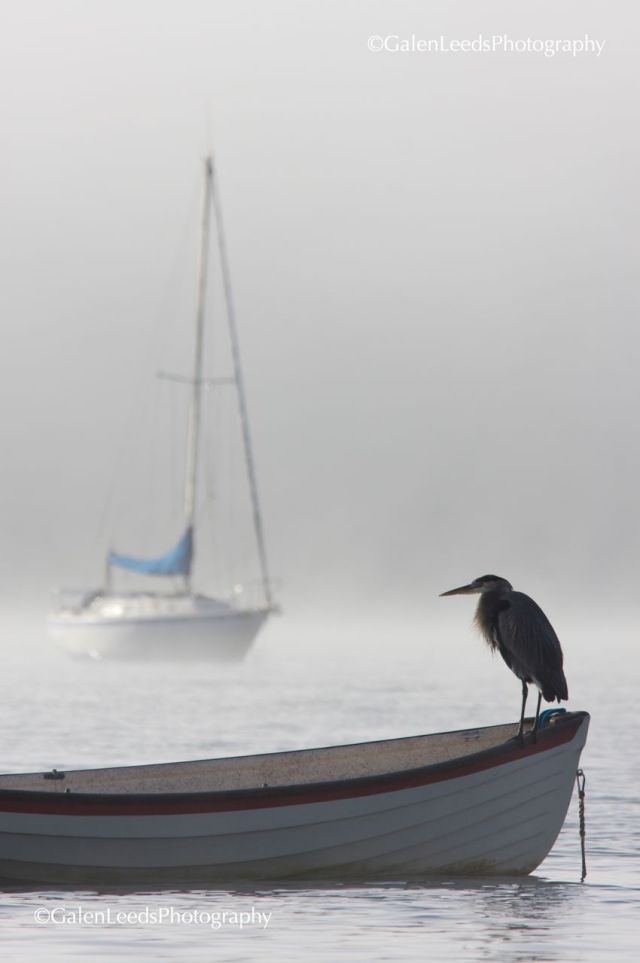
Anatomy of a photo #27: Great blue heron, boats and mist Part I


Great Blue Heron on a boat. I'm using a long lens to be closer to the heron, but also to compress the composition

As I drive my local roads I am usually on the look out for interesting animals in interesting places, that are fairly accessible- i.e. safe place to park, I can get good views and angles without spooking the subject away, the light is coming from the direction I want, etc. I generally try to park a little up or down the road, as I find stopping right next to a wild animal will often be enough to spook it.

When I saw this Great Blue Heron I actually drove past it, even though there was good parking right there on the side of the road next to it. I knew there was good parking on the opposite side of the road (the side away from the heron and some what screened from view from it), so I drove down the road until I could turn around.

I parked and crossed the road where I couldn’t see the heron (which meant it couldn’t see me either), before walking very slowly into view. Once I knew it could see me, my movements were exaggeratedly slow. I moved similarly to how the herons themselves move when stalking prey, slowly lifting a leg and advancing it ahead of me, pausing before the next slow step. Great Blues are notoriously spooky when they are not actively hunting, so I wanted to take my time.

I was a fair distance down the road from where it approached the heron at its nearest point, so I had some time to think about different compositions. I saw several different boats that I could place in the background at different stages of the journey, but there is always something fun about the lines of a sailboat. From the distance I was at, and the spacing of the heron, the more distant boat, and the misted out far shore, a vertical (portrait) orientation of the photograph seemed the most pleasing for the lens I wanted to use- my 300mm with a 1.4x magnifier. This lens would give me the most detail on the bird, while not trying to bring in too much outside landscape detail. It would let me keep the composition fairly simple.

I walked until the heron was on the far right of the view, and the sail boat on the left. I didn’t want either of them centered in the image. I wanted it to flow. I kept them down low for a similar reason, but also because I wanted the entire mast of the sailboat to be in the image, with some space above it.

The lighting was a little tricky, as the sun hadn’t risen high enough to hit the heron yet, so I exposed for the more distant scene, turning the bird into what is more or less a silhouette, which is usually pretty fun and dramatic.

I had the aperture stopped down about halfway. This put the more distant sailboat into enough focus that you can tell what it is, but keeps it blurred enough that the sharp focus on the heron’s silhouette is what really grabs the audience.

The next blog post will be about pictures I took as I continued walking down the road and taking pictures of this same heron.

Posted in birds, How To, nature photography, photography, portraits, road side, SLR, wildlife photography | Tagged , , , , , , , , , , , , , , , , , , , , , | Leave a comment

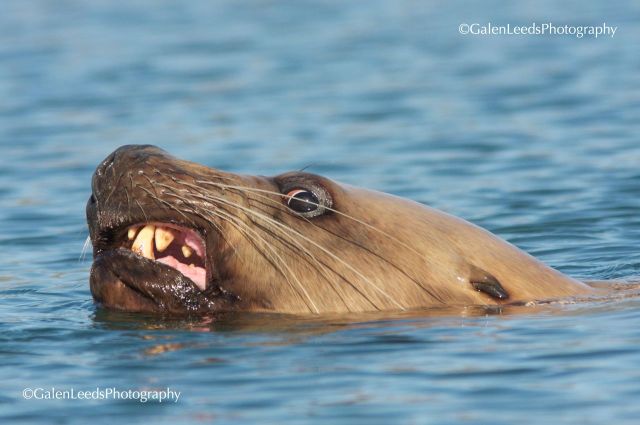
Anatomy of a Photo #26: The Sea Lion Snarls


The sea lion wasn't really snarling, just taking a breath. Looks convincing though, doesn't it?

This is another image, showing the rewards of kayak photography. I must say though, this was one of the few times I have been nervous while kayaking near wildlife. It wasn’t the teeth so much, as the proximity of this very, vary large and potentially aggressive marine mammal that was bigger than my kayak swimming around me.

I did not approach it, it swam towards me, in what I was hoping was simple curiosity. I try not to approach marine mammals in my kayak- first it is illegal, second, you can stress them out unneccessarily, and third and best of all, they are often curious and will approach closer if you let them do the approaching. This time though, I was the one made nervous by the nearness of the approach.

The sea lion would surface near me, making these chuffing noises as it would surface, blowing water out of its mouth. It circled me half way, examining me, deciding my fate, going under and resurfacing several times. Would it knock my kayak over dumping me in my camera? Would it try to climb on the kayak, flipping it, and dumping me and my camera? In the end- No.

It was very exciting, and even in my nervousness I took all of the pictures I could. Focusing anew as it changed its distance from me. I used a longer lens, even though it was almost close enough that a shorter lens would have done very well to give landscape and scenery as well as the beast. Because it was sunny I was able to shoot fairly fast.

For composition… my main goal was to get as much of the visible animal in the frame as possible at one time. When you are this close the rule of thirds is harder to apply as something is nearly always centered, and something is nearly always at a third, but even more important is not cutting something out because you are worried about where one third is.

You can see this Sea Lion not snarling on the post The Sea Lion’s Tongue

Enjoy

Posted in Anatomy of a photo, How to, kayak photography, marine life, nature photography, photography, wildlife photography | Tagged , , , , , | 1 Comment

The camera doesn’t matter, taking pictures does


20110624-122929.jpg

Having a big expensive camera doesn’t really matter if you don’t use it. There are myriad reasons to not use a camera- too expensive, too bulky, too complicated, too noticeable, being afraid of losing or breaking it.

A fancy camera can’t take pictures on its own, so if you aren’t going to have it with you and to use it, what is the point? You’ll miss taking great photographs, for the simple reason of not having a camera with you.

Much better by far to have something smaller, that never leaves your side, and is simple to use, IF it is something that you actually will use.

Yes, the fancy SLRs can take better pictures, and you can get more creative with them, but they aren’t the end all and be all of cameras. Digital cameras of all types are constantly improving image and color quality.

Just yesterday I had this picture of a firefighter conducting a training excercise published in a local paper, and it was taken from my iPhone. The editor actually apologized for cropping it down some (it took up a quarter of a page when printed in the newspaper). High end digital cameras of ten years ago would be pushing it to be in a newspaper, and now the camera in my phone is high enough quality.

And how was I able to get this picture? It’s because I had my phone with me, because my fancy camera would have been in the way. A chance for a cool shot appeared, and I didn’t worry about which camera I had, but focused instead on composition, exposure, and focus.

A fun app for phones that separates the focal point from the exposure value is Pro Camera

Posted in documentary, photography, portraits | Tagged , , , , , , | Leave a comment