The heron eats the gunnel: A short video


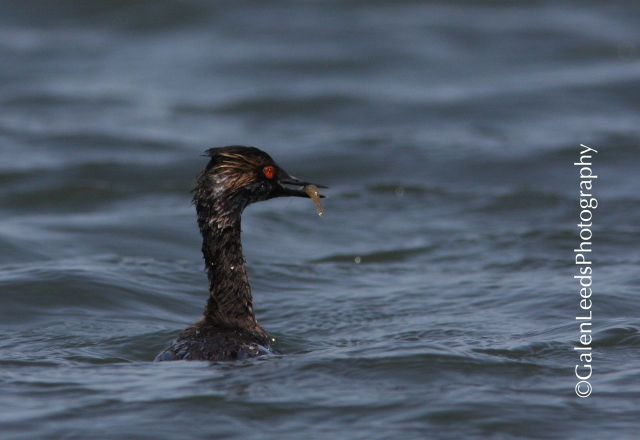
Some fish apparently are easier for herons and egrets to eat than others. It seems a good size gunnel fish can take several attempts, especially as the heron had already given it many tries before I started recording video. Hope you enjoy the show,

Galen

Posted in birds, kayak photography, marine life, nature photography, photography, SLR, video, wildlife photography | Tagged , , , , , , , , | Leave a comment

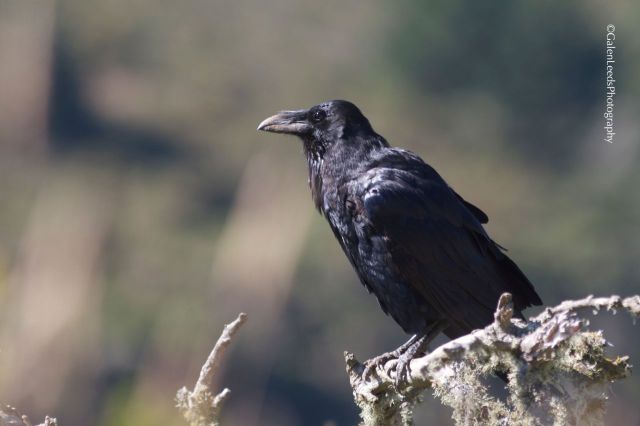
The common Raven: A short video


I went for a hike the other day, and on the way back, we came across this raven sitting near the path. It was very close by, so I thought it was an excellent chance to practice my videography skills, so I pulled out my camera and began filming.

This isn’t the most exciting or action filled video. It is fun, simply because of the detail we get to see in the raven.

Came across this raven while hiking. It was rather vocal, which can't be entirely conveyed in this image

Enjoy

Posted in birds, nature photography, photography, SLR, video, wildlife photography | Tagged , , , , , , | Leave a comment

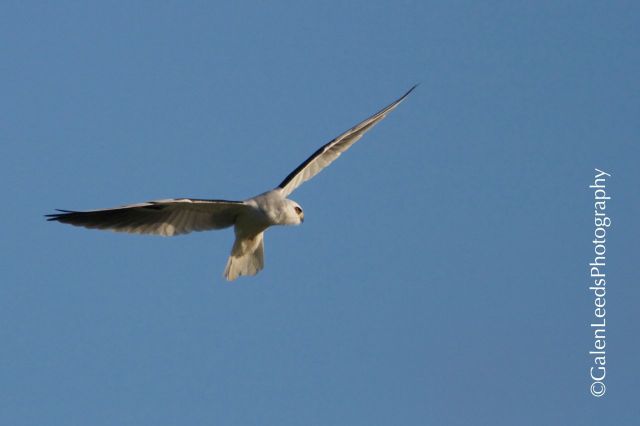
Anatomy of a photo #66: White-tailed Kite in flight


One thing that surprised me when I first captured detailed pictures of a Kite was their red eyes

I really like my birds of prey, so one day, as I was driving down the road and saw two White-tailed Kites flying fairly low over a field, I pulled over and found myself a good spot to try taking photographs from. As photographers, we must take advantage of opportunity when it presents itself, and then stack the deck as much in our own favor as we can.

While a car can often work as an impromptu blind from which to take photographs of birds and wildlife, it does have its limitations- i.e. staying near or on roads or in places where you can actually drive it. In the case of this kite, it was best to leave the car. The place where I could safely park it was not where I had the optimum views of the two hunting birds.

So I stealthily left my car, crossed the road under the cover of a cut in the hillside, and scrambled up through some brush. I found myself partially under the cover of some bushes, but not so much so that my camera movement would be restricted and my lens blocked by vegetation. I was next to a fence. Crossing it would have gotten me even closer to the kites, but would have exposed me more to their view, so I stayed put, and decided to leave the rest to them, as they seemed to be flying a regular, coursing pattern, and I judged that they would fly fairly close to where I was.

And they did. In fact they did several passes, providing me with many opportunities for shots, of which this is just one.

The lighting was fairly ideal on this day. Late afternoon sun, which put the angle from which the light was coming fairly low. This helped light the underside of the kite, and gave a nice warm temperature to the lighting. The kites themselves were also helpful by not flying too high, allowing for more side on images. This was helped partially by the fact that I was at the peak of a small hill, and as the kites flew up the hill, maintaing a fairly constant height above ground, they rose they were only above me as they came close to me.

I used a very fast shutter speed to catch all of the action, faster than I really needed, but it was very effective- 1/2000th of a second. Aperture was wide open- f/f.6, as I was maximizing for shutter speed and not depth of field. For all of the images the camera was hand held, as I did not trust myself to be able to follow their quick movements while confined to a tripod.

ISO 400, 300mm lens with 1.4x converter, f/5.6, 1/2000 shutter speed

Posted in Anatomy of a photo, birds, nature photography, SLR, wildlife photography | Tagged , , , , , , , , | 1 Comment

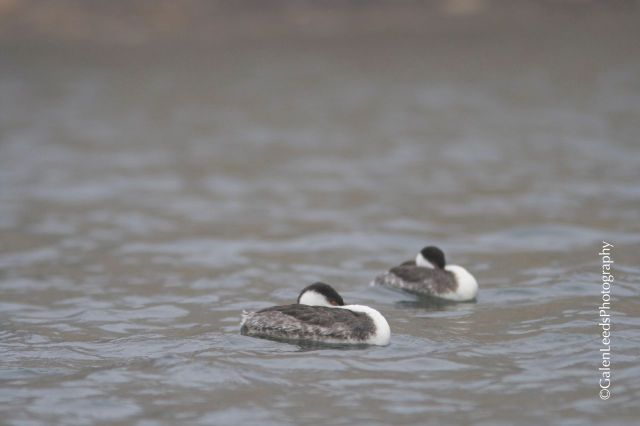
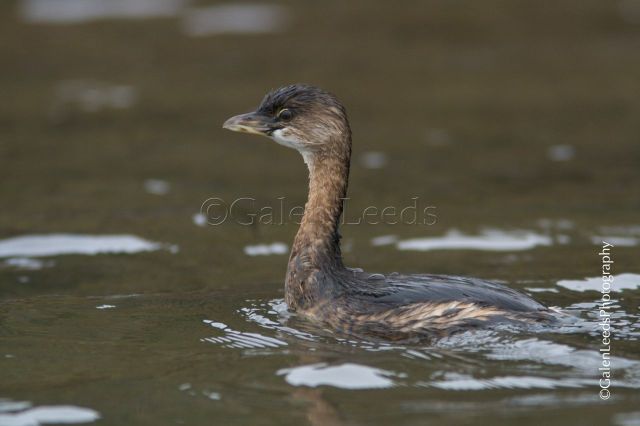
An essay in photos: Six species of Grebe


This slideshow requires JavaScript.

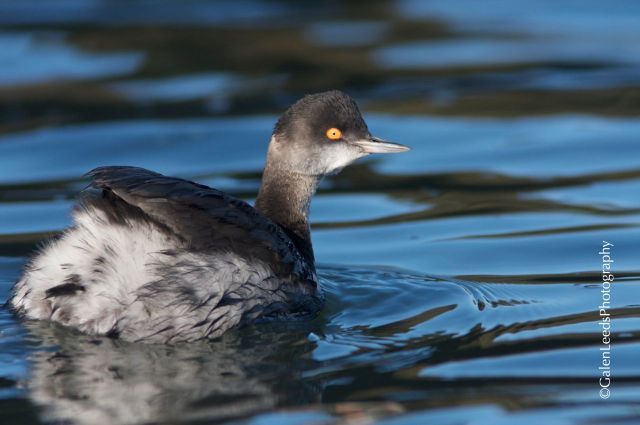
How many of these grebes can you identify? Please, let me know, I can help you with any that you can’t ID

The eye colors of some of the species of grebe can be pretty amazing. Some of them you can get a rough idea of the age by their eye color

Grebes and loons are fairly similar in my mind. Both are diving birds that seem more comfortable on the water than out. You rarely see them off the water, and when you do they appear unbalanced, ungainly. They are more likely to dive under water if they feel threatened, than to take wing, appearing at the surface a safe distance away, often in a different direction than whey were heading when they began their dive.

They dive for their food, which while often fish can range through the gamut of seafood... Shrimp for example

Around where I live there are six different species that we see with some regularity- Western, Clarkes, Pied-billed, Eared, Horned, and Red-necked (I led a kayak tour once, where one of the people in the group kept chuckling as he tried to decide which was more of a red neck- him or the grebe).

Some species when they are more inclined to rest, simply fold their long necks down and swim in stealth mode

Each one is different, yet they all share some similarities- lobed toes instead of webbing, long necks, and more.

Their coloration can run the gamut, all though each species is fairly try to its own colors

Posted in birds, documentary, kayak photography, nature photography, Photo Essay, photography, SLR, wildlife photography | Tagged , , , , , , , | Leave a comment

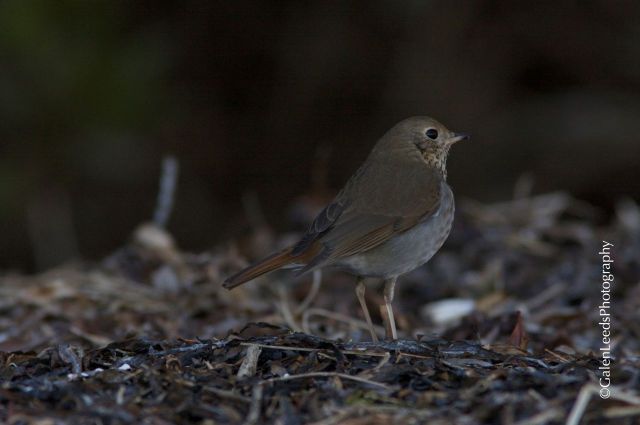
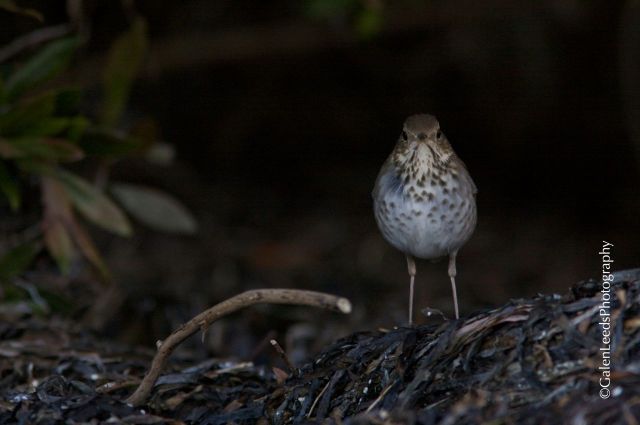
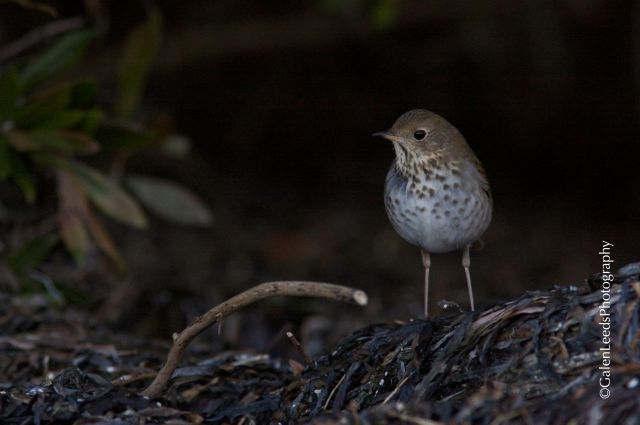
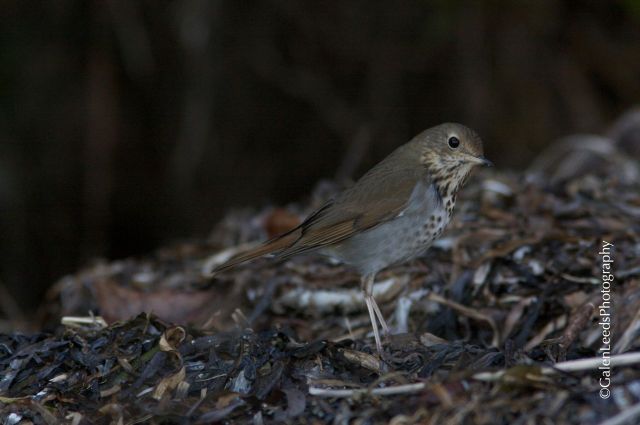
Anatomy of a photo #65: Hermit Thrush portrait


This slideshow requires JavaScript.

Often times when I head out on kayak photography excursions I will put the kayak in the water while it is still dark, or just getting light. This way I can capture not just the changing light of the day and the sunrise, but also all sorts of wildlife that only shows itself at dawn or dusk. Some of the time I will leave the water and head home by 11 or 12, but other times I will make a full day of it, kayaking from sunrise til sunset.

On these longer days, I will have brought food with me, it could be something simple like a sandwich or a burrito, or often I will bring a camp stove with me, and create a meal while I am out there. Never anything too complicated, but it gives me an excuse to leave the water in the afternoon when the lighting is not so good, find a shady sheltered place, and to relax for a couple of hours, perhaps taking a nap.

That is how I found this hermit thrush one afternoon, when the sun was high overhead, and making it very difficult to take on the water photographs. I had eaten my lunch of freshly cooked cous cous and Indian food, and was stretched out on a grass matt (got to love all that storage space on a kayak, and how easy it is to bring along simple amenities) in the shade, when I noticed this small bird hoping through the nearby detritus that had washed up on shore.

It would hop for a pace or two, pause, and cock its head. Some of the time it felt like it was investigating me, the big new thing sprawled on its beach, but mostly it just seemed to be looking for seeds and tidbits that may have been washed there by the sea, or blown down from the trees above our heads. Being me, I stealthily pulled out my camera which naps next to me, and started to take its portrait.

Between hops, it would cock its head

The deep shadow was both a blessing and a curse. It made me ramp my ISO to dangerous levels, where I was courting with greatly increased noise, but it also gave me very even lighting, which is great for capturing detail and not losing anything to blocked up shadows or blown out highlights. As you can tell, no details are really lost in dark shadows, the bird is there in detail.

Part of why I had to crank the ISO up to 800 is that I wanted a high shutter speed (1/500) for this hermit thrush, because its movements are so quick. At lower shutter speeds more of its movement should have been blurred. Similarly the aperture is relatively wide open to maintain this fairly faster shutter speed. But I like open apertures anyways for the short depth of field that they give.

You’ll notice in most of the compositions that the thrush is on one side of the frame or the other. This gives the image a better flow.

Posted in Anatomy of a photo, birds, How to, kayak photography, nature photography, photography, SLR, wildlife photography | Tagged , , , , , , | Leave a comment

Anatomy of a photo #64: The surprise in the flower


It wasn't until I was home and reviewing the images that I saw I had captured a little surprise- a small spider inside

The Seep-spring Monkey Flower is one of my favorite plants, and while I must admit that it is partly for the name, it is also for its shape and color. I hadn’t known much about this impressive flower, other than its name, until just now, as I researched it briefly for this post.

I had always thought of Mimulus guttatus, as a flower specific to my coastal habitat, thriving in the shadows of this fog soaked, wet habitat (including the salty shores of our local waterways), however it appears to be a survivor, found throughout a wide range, including the geysers of yosemite and the trailings of copper mines. It also appears to be a very well known flower, with over a thousand scientific papers written on it, due to a facility for being studied evolutionary wise, and ecologically. Its genome has been fully mapped and well studied.

I took the photograph of this distinctive yellow flower, on the north-eastern shores of Tomales Bay. I had kayaked up the bay late in the spring, when I saw several of these flowers beckoning to me, urging me to leave my kayak and wander the shores, photographing them. I obliged, and when I returned home I found I had captured more than I realized in my images.

Inside of a flower there was a very small spider, living within its throat. No matter how carefully we compose and plan a shot, we can find ourselves with something extra, that we never planned on, sometimes for the better. The spider adds to the story, showing an extra window into the life of this flower and how it interacts with the world around it.

I likely would not have noticed the spider, except that I took this image while the flower was in deep shadow. Being fully within shadows, the lighting was even, without the extreme highlights and blocked up shadows that you can find in full or partial sun. This would especially have been a problem with this photograph, as I captured it at noon, when the sun was directly over head, and would have been especially problematic for causing harsh contrast. However, since everything was in shadow, I was able to expose evenly, capturing the fine details of the flower, and thereby the spider.

I used a long lens set to a “macro” setting (see yesterday’s post about Point Reyes Checkerbloom for more on this). An open aperture gave a shallow depth of field, blurring the background and keeping the focus on the flower.

It wasn't until I was home and reviewing the images that I saw I had captured a little surprise

ISO 800, 300mm + 1.4x converter, f/7.1, 1/400th
Posted in Anatomy of a photo, kayak photography, nature photography, photography, SLR | Tagged , , , , , , , , | 1 Comment

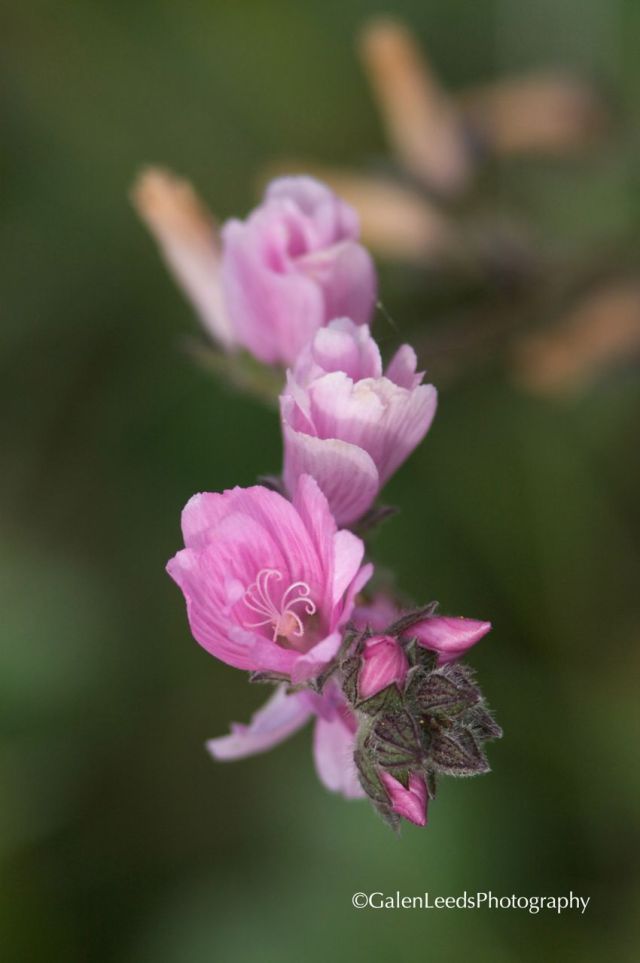
Anatomy of a photo #63: Checkerbloom unfurling


Each flower is different, Compose your image so that it captures some of that uniqueness

Wildflowers are marvelous to hike about and photograph. Pictured here is Point Reyes checkerbloom (Sidalcea calycosa), also known as checker mallow or annual checkerbloom. This is one of the plant species endemic to California, and is not found naturally anywhere else.

When taking pictures of flowers, I like to get in nice and close, sometimes filling the entire frame with a single flower, other times, like with the checkerbloom pictured here I like to step back just a little to give a little more context. Checkerbloom has several flowers and buds coming off of the same stem, and this photograph shows that.

I used a digital single lens reflex (SLR) camera with a telephoto lens. This lens has a “macro” function, which while not a true macro does a fairly good imitation. Several lenses, and many cameras have similar macro functions, including compact digital cameras (the point and shoots).

The macro or close function aspect on these cameras is often accessed on the compact digitals with two symbols, one of a mountain and one of a flower. The default setting is the mountain, or the far focus. If you change your camera’s settings to the flower (often just a simple toggle between the two) you will then find yourself on the close or macro focus.

Play around with your camera, see how close to your subjects you can get.

ISO 400, 420mm, f/7.1, 1/800

Posted in Anatomy of a photo, How To, nature photography, photography, portraits, SLR | Tagged , , , , , , | 1 Comment

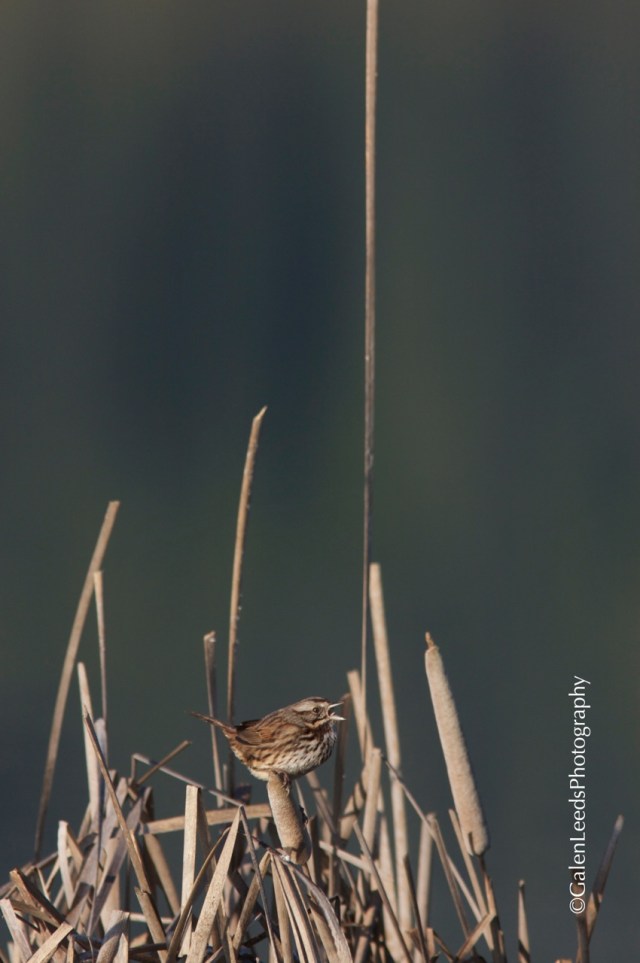
Anatomy of a photo #62: Song Sparrow singing


If you look closely you can see that its beak is open, and even that its tongue is trilling along

Sometimes the best way to find birds to photograph is to just stop and listen. That is how I found this Song Sparrow (Melospiza melodia) while I was out kayaking one day. This is a small bird, and could be easy to miss for it size and coloration, except that it likes to sit on top of clumps of vegetation and sing. It sang. I listened. I photographed.

The sparrow was by a small tidal channel that I was kayaking down, the cat tails the last remnant of a previously fresh water habitat.

The current was moving the wrong direction to float me past, so I grounded the nose of my kayak nearby and captured these mid morning shots.

ISO 320, 420mm, 1/640 shutter, f/8.0

For more animal tongues, you can have a look at these animals-

River Otter tongue
Gull’s tongue while swallowing a whole starfish
Tule Elk tongue
White-tailed Kite tongue (it’s a type of bird/hawk/raptor
Sea Lion tongue

Posted in Anatomy of a photo, birds, kayak photography, nature photography, photography, tongues, wildlife photography | Tagged , , , , , | 1 Comment

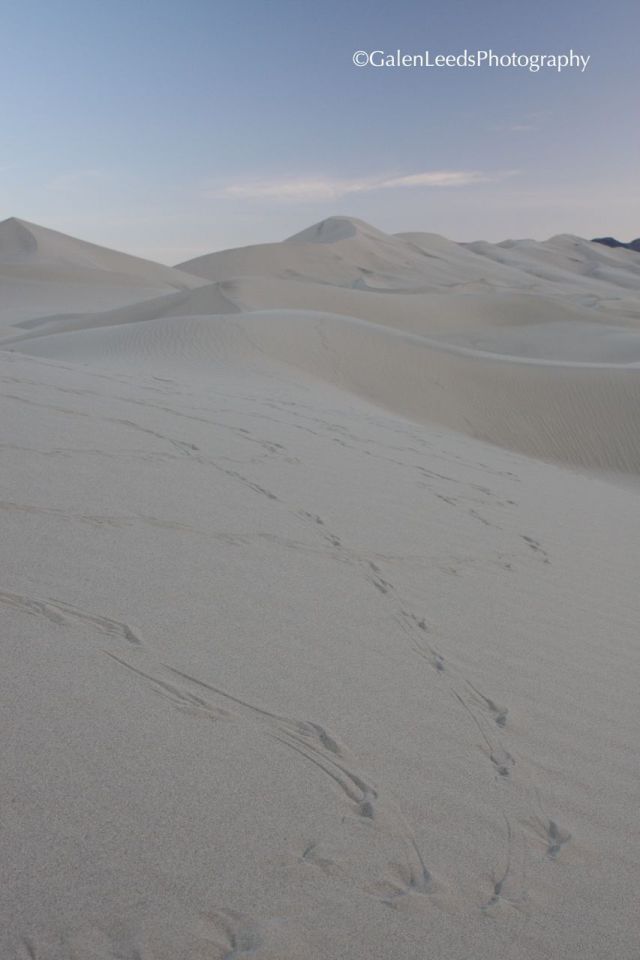
Anatomy of a photo #61: Raven tracks on sand dunes


These are the early morning tracks of a raven in the sand

Early in the morning, before the winds have had the chance to erase the tracks of the night and dawn, you can walk the loose sands of the world, reading those stories. Here raven tracks criss cross each other, meandering on the face of this dune. There are areas where it looks like the bird was traipsing drunkenly, others where it came to a run. It is a mystery story, a who-done-it.

The tracks are clues to a mysterious dance, where the motive was unknown, and only the path can be seen. In a few brief hours the story will be erased more completely than most in the world, blown away by the breezes of the day… but there will be a fresh palate by night fall, ready for a fresh story for those early readers that want to seek it out.

Often I prefer to take photographs of sand dunes when the first rays of the sun strike the dune, giving every wind wrinkled inch texture and definition, adding knife edges to the shifting contours of the distant faces. There are times though when that contrast between shadow and light can be too distracting and change the focus and message of an image. There are times when the subtleties of the dunes can speak more loudly, such as when I took this photograph in the hour before dawn, when the sky is brightening, but not yet casting its sharp shadows.

ISO was higher- 640- as I was shooting in low light without a tripod. Shutter speed for this reason was fairly slow, but not too slow- 1/50th of a second. Equally, aperture was only slightly stopped down to f/7.1. I focused a little farther from me, not right close up to maximize my shallow depth of field.

ISO 640, 24mm lens, 1/50, f/7.1

Posted in Anatomy of a photo, How To, landscapes, National Park, nature photography, photography, SLR | Tagged , , , , , , | 2 Comments

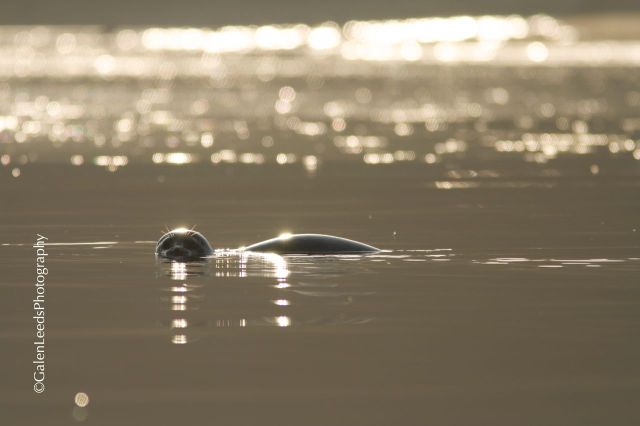
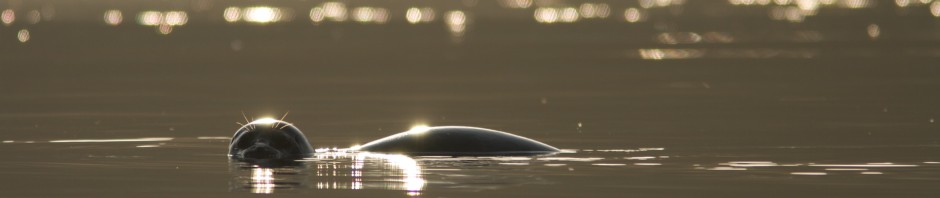
Anatomy of a Photo #60: Harbor seal silhouette


Sometimes when shooting wildlife or in adverse lighting conditions, ou have to center your subject

Normally I wouldn’t try to photograph wildlife by shooting into the sun (or the suns reflection), but rules are made to be broken. Silhouettes are created by facing towards the light source and throwing all we’ve learned about proper lighting to the wind.

This image was an experiment. I had no die how it would turn out, and I had very little time for experimentation, harbor seals being prone to surface and then dive again during a fairly short time span. That details are visible in the seals face, and that the water isn’t totally blown out by the suns reflections was very fortunate.

There was one very simple tool however that I could not have taken this image without- a hood on my lens. While a hood is nearly indispensable already in kayak photography (protects the lens from stray water droplets), on this day it was especially important because it prevented some very unsightly lens flare. Facing towards the sun the way I was, the sun would have hit the glass of my lens and caused some pretty severe flare, if I had not had my hood in place.

One other consideration I had to make while taking this photograph was to center the harbor seal in the image. The bright light that was being reflected causes havoc with the cameras autofocus system. The center focusing point however is the most sensitive and accurate, and can sometimes over come such adversity.

Happy shooting

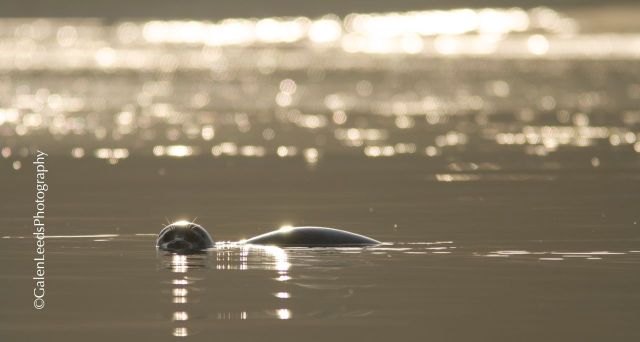
With a little cropping however, the subject is no longer as centered, and the image flows better

ISO 100, 420mm lens, 1/800th shutter speed, f/5.6

Posted in Anatomy of a photo, How To, kayak photography, nature photography, photography, seals, SLR, wildlife photography | Tagged , , , , , | Leave a comment

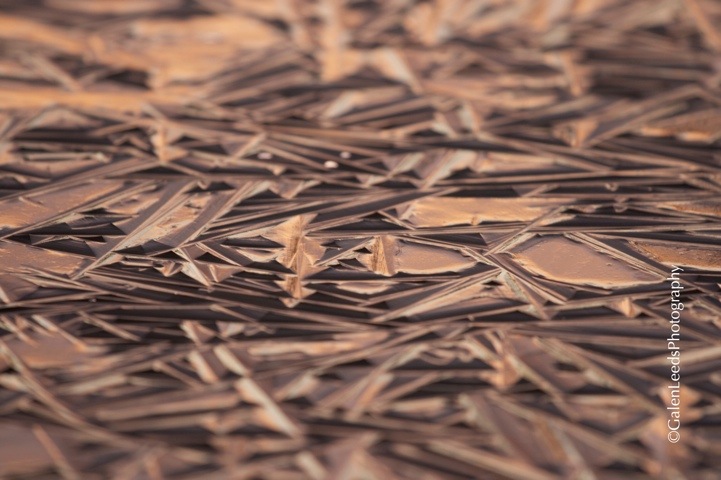
Anatomy of a photo #59: Geometric ice anamoly


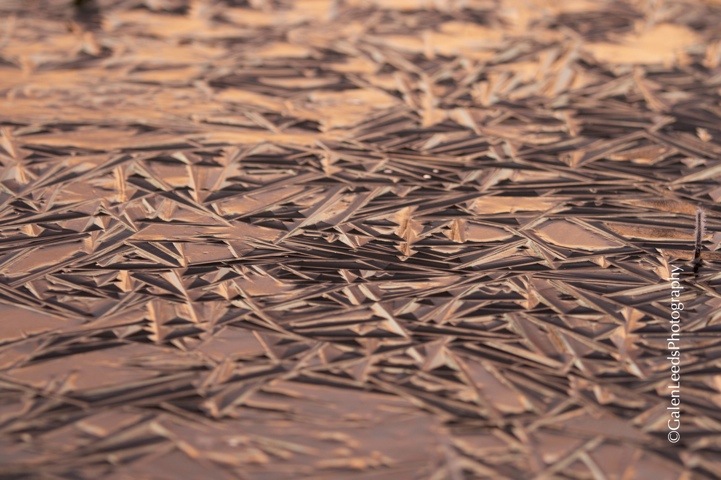
20110810-061121.jpg

This is an image of one of the more bizarre ice phenomena that I have come across in nature. Perhaps this is something rather common, but it is the one and only time that I have come across it.

While out hiking one frozen, frosted morning I decided to see if the seasonal stream that runs near my house had frozen. It had, but in a way that I had never imagined.

During the night, as the barely moving stream sat in the deepening cold, it began to freeze, and it froze into raised crystalline, geometric shapes with angled sides. I don’t know the how or the why of it, but I captured it with my camera all the same.

The lighting is natural, as is the color. The sun was beginning to rise, and while it was not hitting the ice directly, it colored the sky, which was reflected by the ice.

I used a 200mm lens, and crouched down nearby to get the closeness and angle that you see.

The second picture was taken at the same time, but at 116mm. Aperture was wide open for both at f/4.0. Shutter speed was rather slow 1/30. I used a tripod in this case to eliminate shake.

If you’d like to see another example of math in nature, check out these photographs of natural cauliflower fractals

20110810-064027.jpg

Posted in Anatomy of a photo, How To, nature photography, SLR, weather | Tagged , , , , | 4 Comments

How to take photographs from a kayak: Six quick tips on holding yourself and your camera


Perhaps one of the most important things for being a successful kayak photographer is learning how to hold your camera and your body. Since a tripod is impractical do to the amplified movement at its head, you and your body must take its place. In some ways it is similar to land based photography, but there are some important adaptations.

1. Use two hands. Secure your paddle so that you can use two hands to hold your camera. For more on what to do with your paddle while kayaking, try this article- What to do with your paddle when taking a picture. Your camera will have less shake if you use both hands. Also, make sure to use that strap so that you can’t drop your camera in the water.

2. Keep your elbows in tight to your body. Your torso is the only thing that you can easily brace against to steady your arms, so do so by holding your elbows tight. Mine almost sit on top of my belly.

3. Keep your camera in close to your face. If you are using sn SLR and its view finder, this happens automatically. If you are using the viewing screen of your camera however, it may be something you have to consciously decide. Holding the camera close in will give it more stability and make it less prone to shake.

4. Lean back a little. Leaning back gives a little more of a base to rest your camera and elbows. I especially do this if I am shooting video and not just stills. It allows more stability, while letting me view the action. In a kayak it is usually possible to lean back just enough to give your arms just a little more stability.

5. Don’t rotate too far to one side or the other. If you are looking straight ahead, don’t rotate your body much more than 45 degrees to either side. If you rotate farther it becomes more difficult to keep your camera steady. If you want to shoot more to one side or the other, steer your kayak so that it is pointing in the proper direction.

6. This is perhaps one of the most important things. Keep your hips loose. It is your hips that will absorb rocking motions that waves might cause. They are sort of the shock absorber between your kayak and you. If you minimize any motions coming from the kayak by using your hips, it makes it that much easier to keep the rest of you (and thereby your camera) still.

For more tips on kayak photography, try reading Simple tips on taking photographs from your kayak

Posted in How To, kayak photography, nature photography, photography, safety, SLR, wildlife photography | Tagged , , , , , | 1 Comment