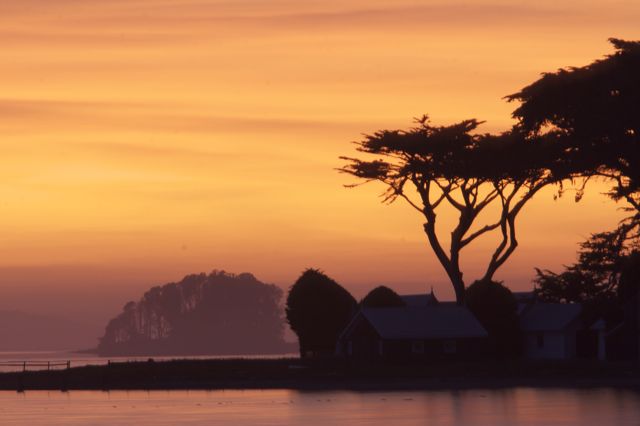
Does the kayak choose the camera, or the camera the kayak?


It’s an interesting conundrum- should the kayak choose the camera, or the camera the kayak? Some kayaks will be suitable for almost any camera, provided the right conditions, while some cameras will work great in any kayak, but again, provided the right conditions. And then there are times when the location you are kayaking will choose both.
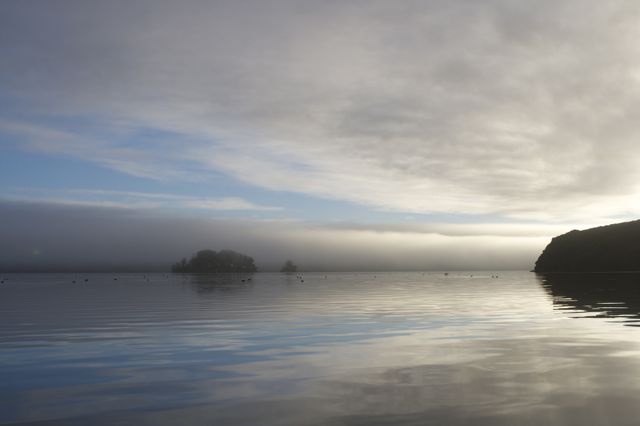
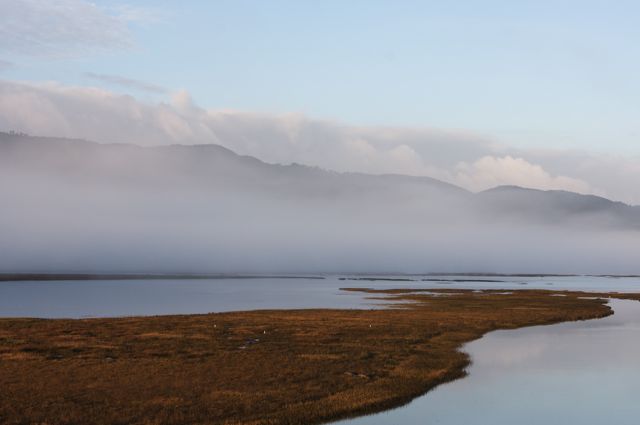
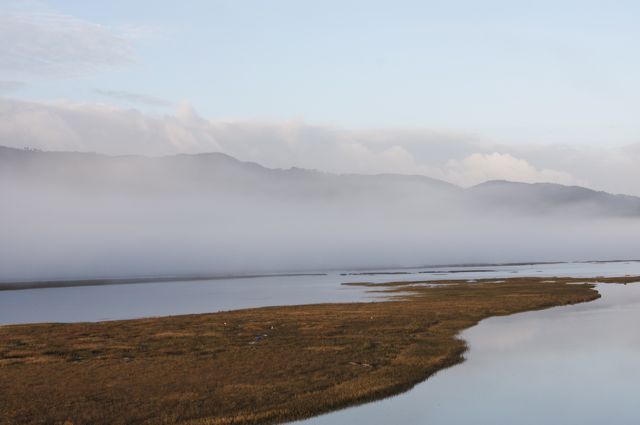
Morning Bay under Fog

Sometimes the conditions are so perfect, that any kayak will do, and there are no worries about keeping your camera safe, no matter what the type.

Whitewater

If I will be shooting rapids (in the kayak sense, not the photographic sense) I don’t want an SLR. I want a rugged, shockproof, waterproof type of point and shoot camera that can with stand a bomb. Chances are I will be too busy to directing my kayak to mess with an SLR anyways. In this case it would be something along the lines of the Canon D10 series, the Olympus Tough or TG series, the Casio EX-G1, the Vivitar… You start to get the idea. There are a ton of these types of effective, tough water proof point and shoots out there. Each major brand has its own, plus there are companies that do nothing but underwater. Many of them are similar in what they can do, so find the one that is closest to your needs outside of kayaking (for instance, you might want it to be freeze proof if you live in Minnesota). Most of these are cheaper than an SLR, and if they go floating down the river without you, while it isn’t nice, at least it won’t be a huge loss.

Most river kayaks can also be problematic for SLRs, even when they are on lakes and calm water. They are almost too maneuverable. They are less stable, rockier, and more prone to yaw, and it can be hard to keep the ‘yak still enough to handle an SLR for long enough periods of time. On a river kayak simple is often best.  Kayak chooses camera.

Sea kayaking

Sea kayaking can be either way. It really depends on if you are on the high seas or the flat seas. If you know you will be in larger waves (in or out of the surf), the rolling motion will make it hard to focus the camera on much, plus the kayak will want lots of attention. The conditions choose the camera. Keep out the point and shoot, stow the SLR until you are on land.

If you know you will be primarily in reasonable conditions though, let the camera influence your kayak. Choose something a little more stable versus super sleek or tippy. Get your self a rudder. Make things stable enough for that SLR, and allow yourself to steer while both hands are holding the camera.

If the weather gets too rough for an SLR, put it away until you are in a spot where you can use it, be it a sheltered cove, a wind shadow, or shore. If it’s really rough have it inside of a dry bag or hard case and in the driest part of your boat. At least you won’t be wanting it when you need it.

Sea kayaks are sort of the middle ground. You can prioritize them or your camera, it depends on your shooting style.

Sit on tops

Generally these are the most camera friendly (but not always). They are a wider kayak, which usually will make them more stable. Movement inside of the kayak is not as restricted as here is no spray skirt to worry about. An SLR can be kept close, and at the ready, while in easy reach using a dry bag or hard case. If the water gets rougher, you can secure the camera within its protection, stow it out of the way, grab your waterproof point and shoot, and be ready to go. Try to get the longest open deck kayak you can, while maintaining stability. This way it will track the best and be faster.

There are however some draw backs to a sit on top. You will get wetter. They are not designed to keep you as dry. It can be easy to keep your camera dry, not so much yourself. This is generally a slower kayak. If you don’t have a rudder (and you will want one for your photography) they are often more difficult to control.

They still won’t be stable enough if you are going through rapids or rough seas. You will still have to put your camera away if conditions get too rough.  They are good, but not perfect.

In the end, the camera, the kayak, the location and conditions all depend on one thing. You. Decide where you will be spending most of your time, and under what conditions. Ask yourself if you are kayaking to take pictures, or just taking pictures while kayaking.There are some features that you can look for in any kayak for photography, such as these.

And don’t forget to have fun.

-Galen
Posted in birds, How to, kayak photography, mammals, marine life, nature photography, photography, wildlife photography | Tagged , , , , | Leave a comment

The “Why” of Photography: Questioning yourself


When I am out with my camera, creating photographs, I find one of the most important questions I can ask myself is “Why?”. Not so much “why am I taking photos?” but rather “Why am I taking this photo? Why does this scene inspire me?” which makes me pause and think about what in the scene it is that really interests me, inspiring a slew of other questions that can help me take a better picture in the end.

Is it how the subject blends with its background, or is it how it stands out from the background? If it’s about how it stands out, that can make me rethink my composition, my aperture, even the lens I am using. Why does it stand out, and how can I emphasize it in my picture. How can I draw people’s eyes to it. Should I blur the background? Or try for detail in it, that may just distract from the main subject? Which elements of the background will either add or detract? This helps me choose what angle I will be shooting my image from, and how much depth of field I want.

Once you realize what is important to the image that you see in your mind, you can begin to find a way to make those same factors important when your shutter clicks. The “why” helps to filter the image in the mind.

Posted in photography | Leave a comment

The Shore is not the Horizon


I spend a lot of my time photographing on the water and near the water. As such there have been a few things I’ve had to learn- water reflects light, water is bad for your camera, your feet get wet if you only watch your subject (and not where you are going,) and that the shore is not the same thing as the horizon.

Image taken with a level on the tripod head

What does this mean? Have a look at the two images on the right. Notice the top one looks skewed compared to the bottom one.

Which of these two images is level? Which version is more pleasing to look at?

Image falsely leveled to the shoreline

The top picture was taken using a tripod with a built in level in its head. The appearance of the shore/horizon being out of level is an illusion of distance. On the right hand side of the photograph, the land is much farther away, a mile or so. Being level however, it just feels funny.

For the lower image I used the straighten tool on my computer’s photo viewing software, lining up the horizon with the grid lines. It feels more natural in the composition. There is no strong foreground element that declares where level is, so I am able to “create” a new level that makes sense to the eyes. In this case, out of level can look more natural.

A way to “straighten” an image without post processing is to use your cameras focusing grid. I sometimes do this when I am out shooting. I place two of my focal points that are in line with each other on the horizon, and “preset” the lean. Sometimes, if I don’t notice something in the foreground, or if there is a nearby tree, this can work against me. Buildings or trees can acquire a “lean” if I “level” the photo out.

A strong foreground element can help establish a level feel for an image, especially if it is in a contrast area

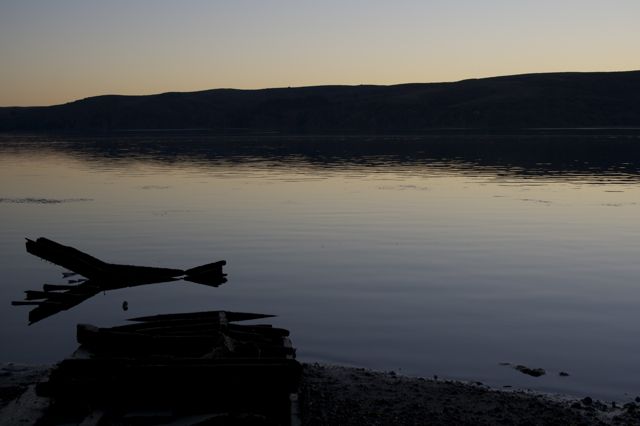
It isn’t always necessary to combat or worry about the far horizon. If you can include subjects in the foreground that immediately draw the eye, they can pre-establish where level is. Look at the picture on the right. The silhouette of the rotting boat cradle on the waters edge is one of the strongest elements and has good contrast. The eye goes there first. Level is immediately established by the reflection and how the water hits the cradle. The slight angle of the far shore becomes irrelevant and natural.

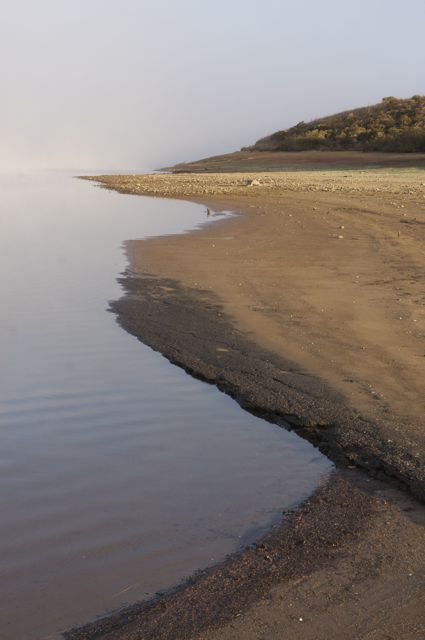
Including shoreline that leads through the picture helps establish that the shoreline is not supposed to be level

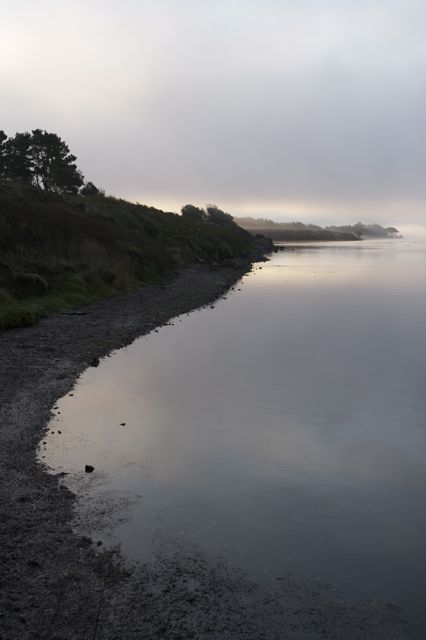
Another way is to show the shoreline as it winds away almost from your feet. This establishes right away that the shoreline will not be a horizontal line by the time it is more distant. Notice in this picture how the very far shorelines that jut out into the picture seem to rise slightly to the right? Again, an illusion, but one that is allowed by the foreground.

A third method is to include the near shore as well as the farther shore. Also, try shooting straight across a body of water, instead of up or down it. Shoot from angles where there is no major change in distance between the left side of the frame and the right.

Sweeping curves, lines from the edges, joining the shore at points where the mind can easily realize that the shore is not supposed to appear level are all good ways to watch your horizon. There are more ways, so take your camera and find some of them. Play with objects that the mind should think of as level or plumb, and see how incorporating them into your images affects your horizon.

Many of these same tricks and effects can also be noticed with fields, some skylines, and other open spaces. Play around, enjoy. Try to take notes of which pictures you take level, and which ones are offset so that you can understand what leads to acceptable results, and what keeps you scrathcing your head trying to figure out what is wrong.

Showing both shores of a river, slough or creek can help the eye to establish level

Again, showing the shore leading away helps to establish the images sense of shoreline

Middle ground elements can also serve to establish level and horizon

Posted in landscapes, nature photography, photography, road side | Tagged , , , , | Leave a comment

Approaching wild animals on foot, without walking towards them…


The key to approaching wild animals, is to remember that they are wild. Profound isn’t it? Well, for this lesson, it boils down to this- if you walk directly towards an animal, that is an aggressive form of behavior. In the animal world it generally means that you want to defend your territory, invade another’s territory, steal prey, steal a mate, or turn what you are walking towards into dinner. The natural response if it is a rabbit, deer or bird is to flee. If it is a predator or large mammal (such as an elk or moose,) the response can be to attack.

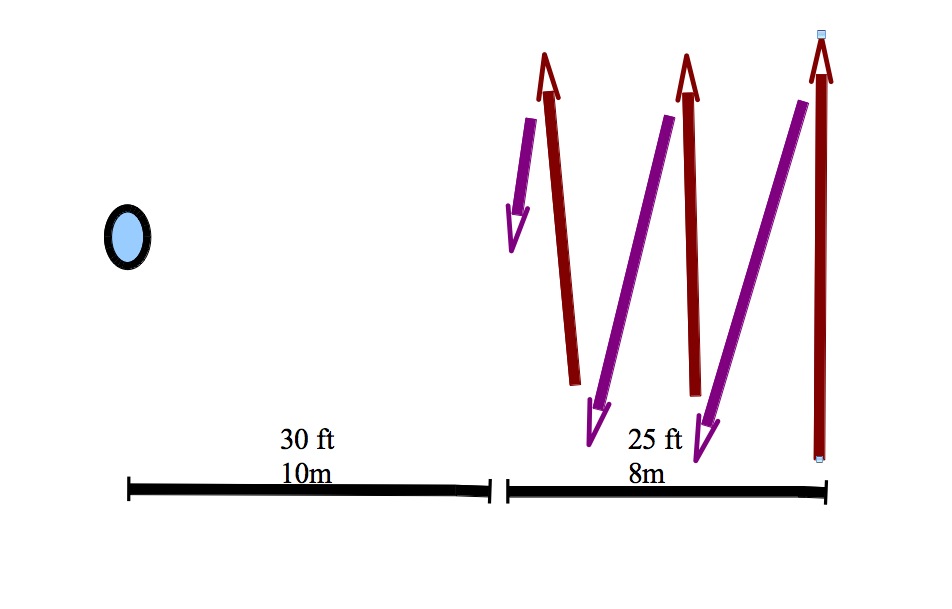
Regardless of the end result- being left with no wildlife to photograph, or you lying mangled on the ground with a broken camera- walking directly towards wildlife is not the way to go. Instead walk at an oblique angle to your subject, so that in the course of 30 feet you get perhaps three to ten feet closer. Also, walk farther than your closest point to the animal. It’s a little tricky to explain, so let’s look at a diagram I made-

Approaching a wild subject

If you follow the arrows, you can see that by never walking directly towards the subject on the left, you can still get considerably closer without (hopefully) making that subject feel threatened. Notice that on each leg of the trip, the midpoint (which would be the closest point to the animal) is not the stopping point. You keep walking, continuing until your back is almost toward the animal. It takes a little longer, but is more effective. This makes the animal feel that they are not the focus of your movements, that you are continuing beyond them, that you are doing something other than trying to get closer. Also, since you are zig zagging from side to side, you are viewing the subject from more angles that you can take pictures from, each with slight differences in lighting and background. (And yes, I realize that this is just a drawing I made on my computer, and not an exact representation of reality. Distances will depend on terrain, the animal, its species, and many other factors.)

When you are using this method, make sure that you do not stare at the animal. They will become nervous or aggressive if you focus too much attention on them, and you will lose any advantage that you may have gained. Look to the side, examine the grass, at your feet, even take a couple of pictures of that grass. Focus your camera lots of places, not just on the animal. Move your attention around. Also, keep your movements slow and smooth, pausing often. Sudden movements will still spook or alarm animals, especially if you are closer to them.

It is important to remember however, that if you get too close, any animal can feel threatened. Still use your telephoto lens (I prefer a 200 mm or more.) You don’t want to scare off the wildlife, stress it out, or get attacked, so maintain your distance. Because you can get closer doesn’t mean that you should be foolish. Don’t expect to be able to go five feet from a Grizzly without being attacked, just because you try this method. A hawk is still wild, and won’t want you right next to it. This is not a magic trick, and you must still show respect for the animal and the fact that it is wild. If it seems to be getting nervous, you should stop, and even perform a slow retreat. (Too fast of a retreat can be as alarming as too fast of an approach.)

Be sure to watch the animals and the signals it is giving you. Not only will watching their behavior let you know when you are getting too close, but it can also let you know when the animal may be about to do something exciting, like catching a fish or a rat.

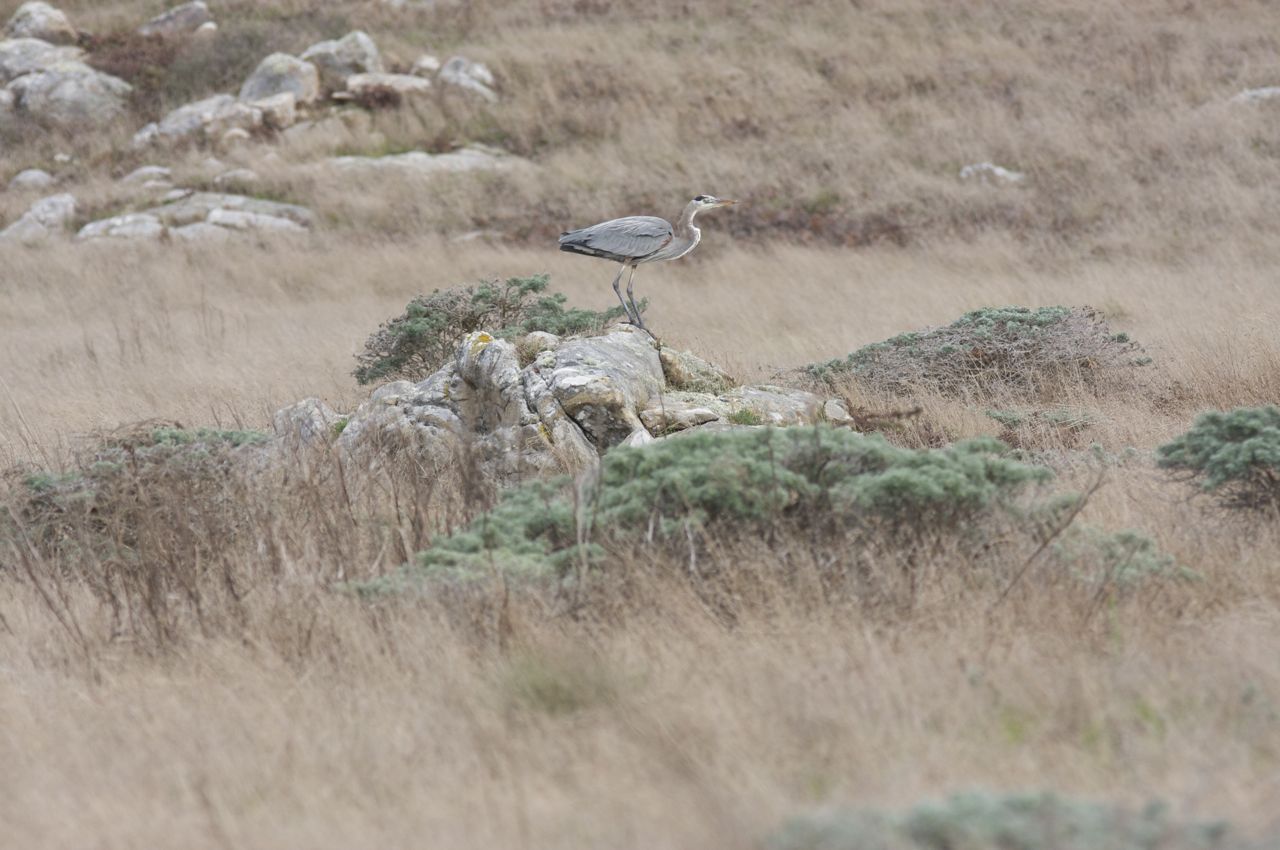
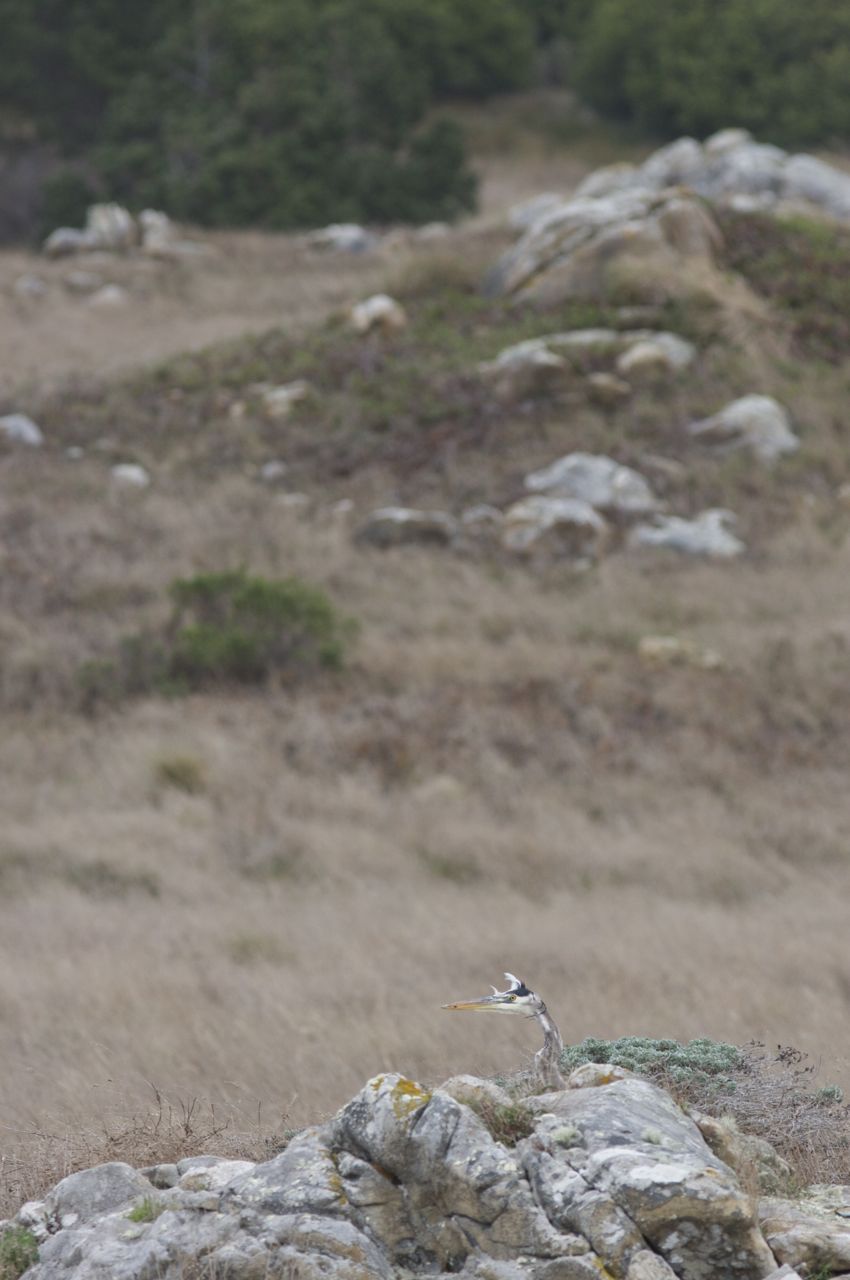
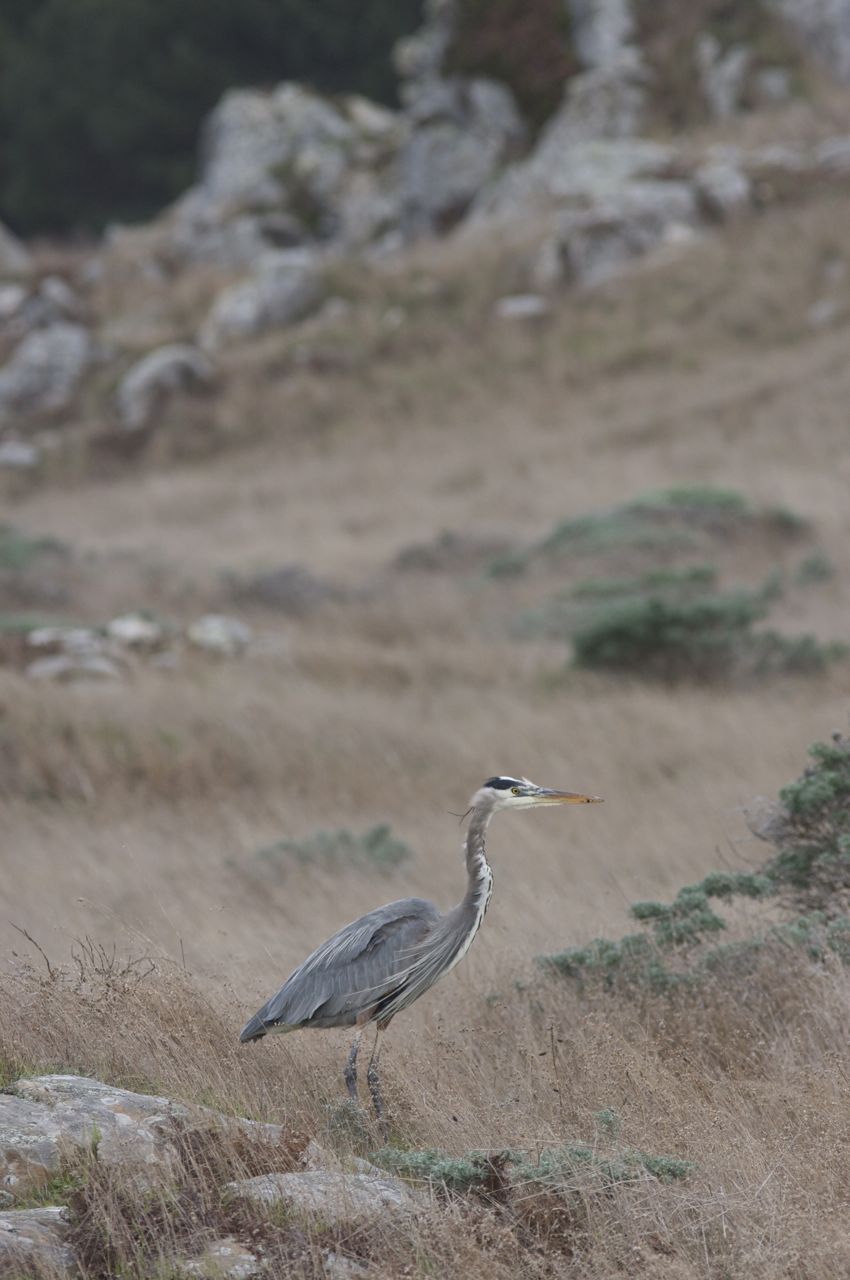
Below you can see several images I took of a Great Blue Heron on a windy day, using this technique. Notice the changes in angles, and the change in size of the heron (from getting closer.) I did not crop any of these images. They are how they were when they were taken from the camera.

Enjoy,

Galen

Great Blue Heron sited

Approaching the heron

Closer yet

Close to the heron, time to retreat

Posted in photography | Leave a comment

Wildlife Kayak Photography: Tips and Tricks


Great Egret on the hunt

Kayaks are an amazing medium for wildlife photography. You are down low, giving an almost eye to eye view with your subjects. You can move in almost any direction, there are no trails you have to worry about stepping off of (although a river or slough could be considered a really wide trail.) There are good views of what is around you, no trees or buildings blocking the views, giving you an idea of where to go and who is around to be photographed. However, due to its nature kayak photography also has some special considerations, many of which can be considered as pros or cons, depending on how you deal with them. I try to make them benefits.

With any wildlife photography it is important to understand that you are seeing wild animals. Their lives are fraught with danger and they don’t understand that we just want to shoot them with a camera and not a gun. They don’t realize we are creeping closer just to see them better, that we won’t suddenly pounce on them and carry them off. They need us to respect them and keep some distance. Stress is harder on them- there are animals that can literally be frightened to death. So please, even though there are no physical obstacles between you and that seal when you are on the water, give them their space. They will fly away or swim away if you approach them incautiously or too closely, losing any chance for that great photo. Also, it is against Federal Law in the U.S. to approach and disturb marine mammals.

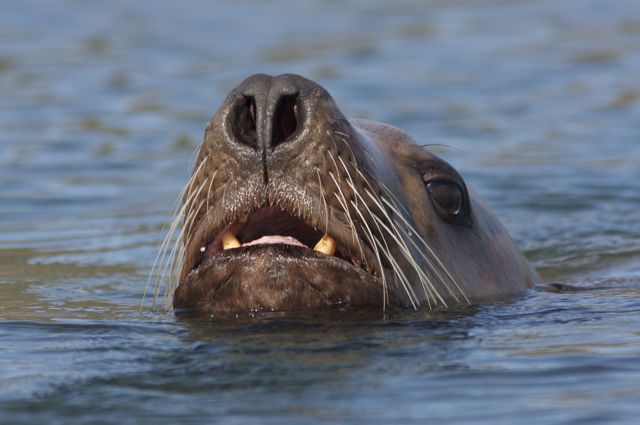
Sea Lion surfacing for air and curiosity

That said, there is some good news. It is not illegal for these same animals to approach you, and there are a lot of curious marine mammals out there. If you do give them their space, many times they will actually approach you, because they want to figure out what you are. Otters, seals, dolphins, even whales, can all get very curious and decide to come close enough for some amazing pictures (whichever camera you are using.) Seals especially love to pop up right behind kayaks where they think you won’t see them. Just remember to let them come to you. The Sea Lion to the left, and the Harbor Seal below did exactly that.

A curious Harbor Seal

Compact digital cameras (point and shoots) can be excellent for general photography, but fall shy (usually) on wildlife. You end up with lots of background, but little detail. Kayak photography is no exception. You will have your best chances for stunning and meaningful pictures using a dSLR with a longer lens- 200mm or 300mm often giving the best results. These lengths will help you get close enough for detail, while not being too long to compensate for the bobbing of a kayak. Under the right conditions you can be add a 1.4x or a 2x converter to these lenses.

Keep your camera accessible yet safe (I will be addressing this in Part 2 of Which Camera to Take, and how to keep it safe.) If your camera is packed away in to tricky of a place, you will never use it, because of the ordeal to take it out, or you might miss the magic moment when the whale is next to you.

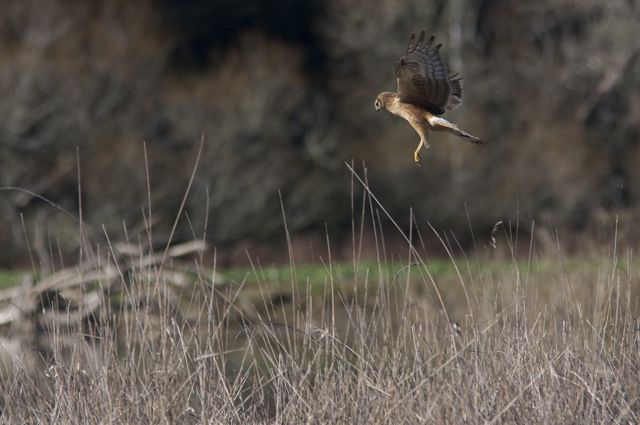
Marsh Hawk (Northern Harrier) hunting flooded wetlands

First of all, realize that it is generally not ideal to use a monopod or tripod when taking wildlife pictures from a kayak, unless the water is very calm. ‘Pods are made to be on stable surfaces, and a kayak is anything but. Slight movements cause a kayak to shift, causing the camera to shift even more. (Put your elbow on the table in front of you, with your hand up. Move your hand to one side- notice how little your arm moved near your elbow, compared to how much your hand moved? That is what a camera mounted on a tripod is like when kayaking, but even more so.) Image stabilizing cameras and lenses can be much more effective than a ‘pod on a kayak. Also, your body actually works almost as a natural shock absorber and compensator for the movement of the kayak. You will have the steadiest camera if you handhold. It will also be the easiest way to track and pan.

Osprey and fish

Use the wind and currents. Most of the time there will be a wind and/or some current. Figure out what direction you will go if you stop paddling for a while, and use that to approach  and pass wildlife with a minimum of movement. That is, get to a point where the kayak naturally wants to pass by what you want to shoot. Don’t waste all of your energy trying to keep your kayak close to something, when you can set yourself up to pass by them. This is often less frightening to the animal (no paddle waving in the air, just a still unmoving object drifting by,) but it also keeps your hands free for shooting.

Try to make sure you don’t drift right at the animal, aim your path to the side, giving the animal enough room that you don’t frighten it. This will also give you the most angles, and the largest range of lighting. You can’t direct the animal, so direct yourself.

Also, using the kayaks momentum, you can use the kayak itself to pan for your pictures. When a bird is flying by, if you have a rudder (which I highly recommend for kayak photography) you can steer the kayak with your feet, so that you are turning and rotating with the bird as it flies by. You can track it without turning your body, just your kayak. I’ve done this many times with Red-throated Loons and Osprey with fish.

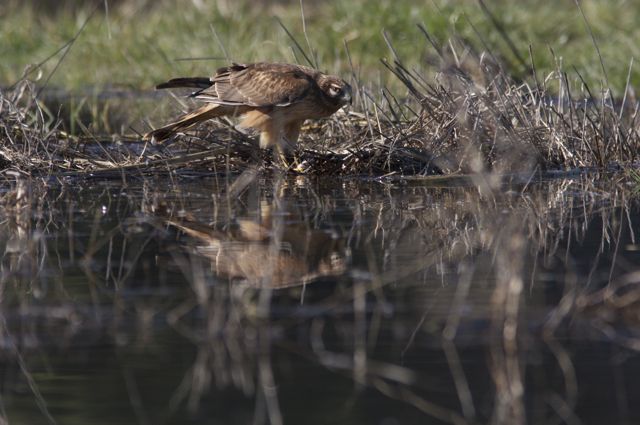
Marsh Hawk with prey

Watch the animals, don’t just take their pictures. This does several things. First, it lets you know if you are frightening the animal and should back off. It can also let you know if you can slowly approach more closely. It can also help you time your images for when the wildlife is doing something exciting or interesting, such as catching a fish. If you understand its behavior, it will be easier to guess when it will be doing something interesting.

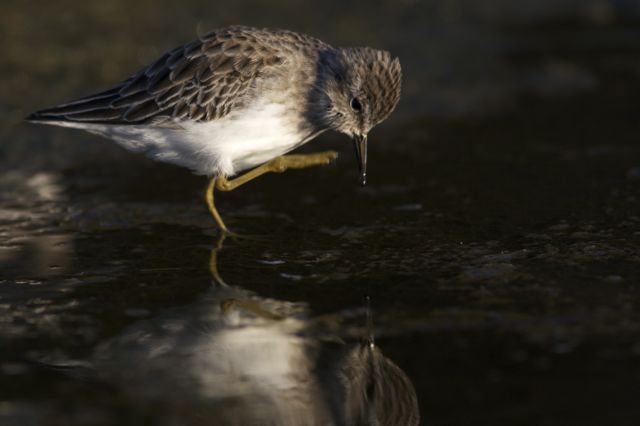
Through watching the different birds while kayaking, I now know how closely I can approach different species. Great Blue Herons for instance are a much flightier bird than a Great Egret, and I find myself having to paddle in a huge circle just to pass them by(unless the fishing is really good, then they become so focused that I can glide right by without them ever noticing.) Least Sandpipers on the other hand will pass within feet of me and my beached kayak as they walk along the shore, feeding on bits too small for me to see. Willits and Marbled Godwits are often fairly fearless, as long as they feel you aren’t approaching them too directly. There are many different ways in which time of day or year can also affect which species you will see, in what numbers, and in what plumages. Knowing the species will help with these questions.

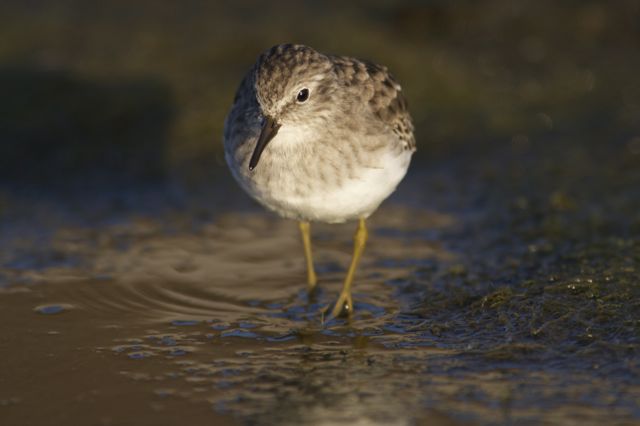
Least Sandpiper scrathcing

Take advantage of the fact that you are less than three feet off of the surface of the water. Use this to get images of wildlife from their own perspective. An eye level shot of  a pelican is much more engaging than one from a standing height. I even lean forward or back to get even closer to the water at times for the smaller and shorter of the animals.

You are on water. Water reflects. Include reflections when you can, it can give drama and effect very simply. Also, compensate for the reflected light when you are taking your pictures. Water is 1-2 stops different from the sky, but even more than that, it helps to light the wildlife you are photographing.

Marsh Wren in cattails

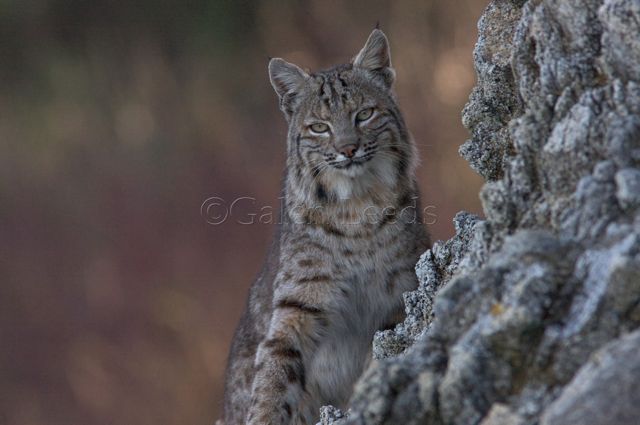
Also, be aware if you are about to kayak through a shady area (under a steep hillside, cliffs, or trees.) Preset your exposure if you are on manual settings, or adjust your exposure compensation if you are shooting on AV or TV. Make sure to fire plenty of test shots before you come across that bobcat walking the shore. You may only have one or two shots before it is gone. If you have custom shooting presets have one set to the light in the shadows, one for looking away from the sun, and one for the sun at your back. Try to plan ahead as much as you can for those surprises.

Bobcat on the shores of Tomales Bay. By having my camera ready, and my settings preset, I was ready for this beautiful cat

When I took this picture of a bobcat on the shores of Tomales Bay, I had just paddled into deep late afternoon shadows. I had my camera preset for the shade I was entering, my dry bag was open. This bobcat came out from around the corner of rock, stopped and looked at me. I was able to pull my camera out, take two quick shots, and then it turned around and left. If I hadn’t been ready with a preset camera, the bobcat would have been gone before I could have set the camera and taken a single shot.

Being so low to the water also makes it easy to include some of that water in the image. This can give perspective. It also gives a sense of place and naturalness to the image. What is more natural than a duck on water?

Don’t just look for animals on the water. Look on the immediate shore, but also a little distance onto land. Some of my best wildlife images of raccoons, deer, bobcat, elk, and coyotes all came about while I was kayaking. They don’t necessarily watch the water for dangers and might not notice you if you stay quiet and fairly still. If they do notice you, you are such a different creature from the person that is walking and stomping around, that they generally aren’t as freightened, and can be more curious as to what you may be.

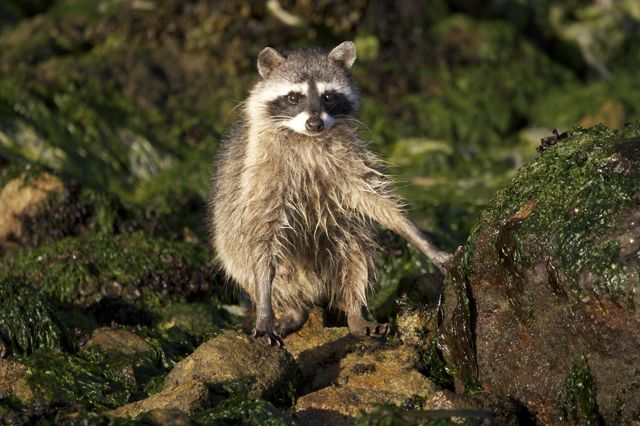
Mother raccoon hunting for crabs at low tide

This mother raccoon on the right I saw very early one morning searching for crabs in the rocks along the shore. I set my kayak to drift by her. She looked up as I passed, before going back to her hunt.

Be quiet and move small. This is true of any wildlife photography. No large sudden movements. When you do have to move, move slowly. Get a small one handed fishing paddle or carry a spare half paddle. My paddle splits in two, and I will often separate the halves and just use one end when I am trying to move small and not spook an animal.

Don’t be afraid to beach yourself if the opportunity presents itself and you have a chance for some good images. Sometimes it is nice not to have to worry about where you are drifting, and if it will take you too far from what you are trying to shoot. Be aware though that this will limit your mobility, and might not always be the most effective.

Bobcat stalking the shores at low tide

This is a different bobcat that I saw while I was out kayaking. It was some distance down the coast, but I saw it slowly making its way north. I beached my kayak well ahead of it, and just sat quietly and waited. I sat very quietly and stilly, moving little more than my camera and my finger on the shutter. It was aware of me, passing within a two meters, but as I was very still and unthreatening it merely passed on by before marking its territory and heading off into the brush.

Have large memory cards. You don’t want to swap out your memory very often while kayaking, or when taking pictures of wildlife. This also helps to simplify things. There is enough to think about already, that it is good to keep things simple when you can.

There is more. So much more, but this is enough for now. Keep shooting, paddling, and reading, and I will keep passing on tips, like what to bring in your kayak besides your camera.

-Galen

River Otters pausing in the shallows to watch me, as I watch them

Posted in birds, kayak photography, marine life, nature photography, photography, wildlife photography | Tagged , , , , , , , | 66 Comments

Kayaking with your digital SLR: How to protect it


For general tips on kayak photography, regardless of your camera, visit Simple Tips for Kayaking with your Camera For tips on how to protect your digital SLR, keep reading.

There are some of you out there that won’t be satisfied with a point and shoot camera, while you are out there kayaking. You’ll want your digital SLR right there with you. Perhaps it’s because you want pictures of wildlife and need your long lens, or you want a greater depth of field or image quality. But, you have a problem. There’s all that water. You don’t know if you dare risk your precious out there on the open seas. It’s okay, I understand, because I am one of those people too- I can’t imagine leaving my babies behind.

So what makes me confident enough that I will take two bodies and multiple lenses out there on my kayak? The belief that I can keep it safe. Through trial and error (thankfully it’s been mostly trial,) I have developed a system that works well for my style of kayaking. Each person will have slightly different needs, so each person’s style of protection will also vary accordingly. (For example, I wouldn’t really recommend bringing SLRs on a white water kayaking trip using this method.) This should however serve as a good base to develop your own system.

I have two preferred options for keeping my SLR safe from water- dry bags and dry cases. They are what they sound like, a case to keep things dry and a bag to keep things dry. Both can be very effective, but each serves for a different style of protection. Either of these can be kept in different spots on your kayak, but if you want them to be accessible the main options are lashed to the deck in front of you or between your legs (this second option is mostly for open deck kayaks, because of the spray skirt on sea kayaks.)

Dry Bags

A dry bag is generally a heavy bag made from flexible PVC or treated fabric that has a device for sealing it. Some are sealed with multiple rollings of the top, and then being fastened with buckles, others have ziploc style zippers. Both can be very effective, but make sure your choice can stand up to some rugged use.

The soft walls of the bag provide very little protection for your cameras and lenses, so you will need some sort of padding (to protect against banging.) Two main choices- a piece of dense foam with cut outs for your different camera pieces or light weight synthetic towels. You may also do a combination of the two.

The foam is the best protection. You will want a piece five to twelve inches deep, by the circumference of your dry bag. Cut out insets for your equipment, and that’s it. It is not a bad idea to keep a micro-fiber towel or two in the bag to clean off incidental water droplets, and to protect the top of your camera gear from bumps when it is stored. Also, it can be easier to lash onto the deck of the kayak as its shape is more defined. However the foam is bulkier and less versatile. It will eat up the limited space of your dry bag.

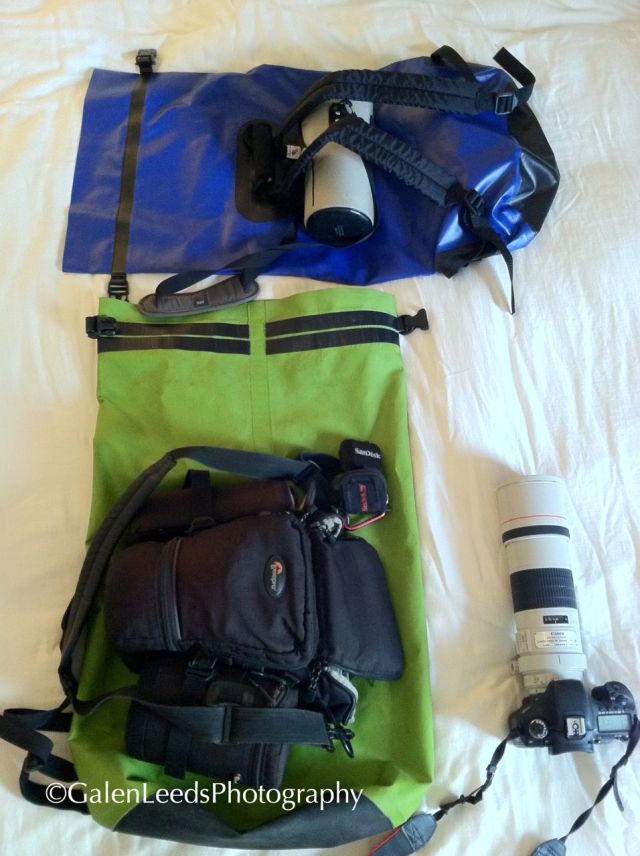
My usual gear for kayaking. I don't bring the camera bag with me, it is just there to give scale. My usual compliment of lenses is a 300mm IS, 70-200mm IS, and a 16-35mm f2.8 with one to two camera bodies

My usual method with the dry bag is without the foam. I keep each lens in a soft foam lens case or wrap it in a micro-fiber towel (these are the sorts of towels that you can find at camping stores. They are small and lightweight, soak up lots of water, but don’t hold it. They also dry very quickly.) I also wrap the camera bodies I am not using in microfiber towels. The parts are less well protected, but I am careful of banging them around. The size and the shape of the bag is more versatile, so it can place more easily between the legs.

One of the advantages over a hard case is that it can be easier to access a bag. You can keep the camera lying just inside the open mouth of the dry bag, without sealing it shut. This way you will not have to undue a case or a dry bag to pull it out and shoot that bobcat that just came down to the beach.

Not only should you test your dry bags water tightness regularly, there are also some dry bags that the manufacturers do not recommend for electronic equipment. Avoid these if you can, if you can’t, test them very thoroughly before trusting your camera. To test fill your bag with air (no camera or other equipment inside,) seal them, and hold them underwater. Watch for air bubbles. Make sure that each part of the bag spends time under water. If you see bubbles rising, you know it is not a place for your camera.

Hard Cases

A hard case is a plastic box that seals out water using an o-ring (rubber gasket) and buckles. One manufacturer is Pelican. The inside is lined with foam, either the egg crate style, or with cut outs for each piece of equipment. A hard case is generally mounted and strapped down, or held in a rack (here is a site for a DIY pvc mounting rack for a dry case.) These cases are the best option for guaranteeing dryness and protecting your camera from hard knocks. If you will be kayaking in rougher seas, this can be ideal.

Access can be a little more time consuming, as it is either locked in the case or out of the case, unlike a dry bag. On a sea kayak, you must make sure that if you open the dry case, that the lid has stops behind it to keep it from opening completely to where you can not reach it. You can set it up so that it opens sideways, but it will be less well protected from bow splashes. On an open deck kayak this is not as much of an issue as it will be more in reach.

You should be sure to regularly inspect the o-ring of the case for wear, dirt and debris. Sometimes a single hair can be enough to allow water to leak through. Be sure to occasionally test your dry case by immersing it in water.

In Conclusion

Both systems can be very effective. If you will be in rougher seas or subjecting your equipment to heavier knocks, go for the dry case, unless you really need that easier access and are comfortable enough in your abilities to leave your camera in an open bag.

A further suggestion if you get a dry bag is to get one with back pack straps. It is that much easier getting in and out of the kayak with it over your shoulder.

Happy paddling and good shooting

-Galen
Posted in How to, kayak photography, nature photography, photography, safety, SLR | Tagged , , , , , , , , | 15 Comments

Underwater housings and cameras for kayak photography


Bubble Jelly

Part 1   Underwater Cameras and Housings

Kayaking with a camera presents its own set of hazards, the main one (obviously) being water. Today, cameras are more susceptible to damage if they get wet, than in the days of film. There are all sorts of stories about the old, fully manual cameras being accidentally dropped in water, the film being kept wet until developing (beautiful negatives and prints resulting,) while the camera was allowed to dry, maybe cleaned, if the water was really dirty, and the camera then giving years of great service.

Try that with digital cameras (unless you have one of the more specialized ones made for water.) Get your digital camera wet, and that could be it. Fried circuitry, watermarks on the sensor… not good.

This means we need to devise ways to keep our cameras safe, when kayaking. There are four main options, each with their own set of pros and cons. Some will work better for each person, depending on her kayaking style and what she wants from her camera.

Underwater Cameras

First, there is the simplest solution. Buy a camera that is made to get wet. There are several brands out there, ranging in zoom capabilities and megapixels, but most of them coming back to the same benefits and shortfalls. They are generally smaller (this is a plus- easier to stash away when not in use, yet keep accessible,) they can survive being accidentally dropped in the water (big plus.)

These cameras are often fairly rugged, designed to take a little more of a beating than many of their dryland cousins. This can be handy when you are on swift moving rivers where there are many chances to tip over and perhaps hit a rock or bang against the kayak. These cameras are also usually slightly buoyant, and will float somewhat if dropped in the water.

Take note though, the ability of these cameras to go in the water is not necessarily the boon it seems. If you put the camera in the water to take pictures of a starfish or anemone, you’ve effectively disabled your camera for sometime  for above water photography. There are now water droplets on the lens which either confuse the autofocus, or add distortion to your pictures. Drying off the lens, you must be careful of scratching the lens. Allowing the lens to air dry leaves watermarks that then need to be wiped off. (If you are on the ocean or in a bay, be sure to rinse the camera in freshwater each time before wiping the lens- dried salt can scratch lenses.)

Anemone in the shallows

Another drawback to many of the made for water cameras is that they don’t have hoods. I love having a hood for kayak photography. Not only does it keep the lens shaded from the sun, it also protects it from incidental water droplets that can drip from the paddle or splash up as you pass through small waves (or a myriad of other causes.) I’ve made simple throwaway hoods for these cameras using plastic bottles and black tape (to make the camera opaque, not to attach the hood,) but they were rarely sturdy enough for longer outings.

I’ve also found that if my camera has been getting regularly submerged I am more reluctant to change the memory card and batteries for fear of not noticing water droplets that could damage the camera while its innards are temporarily exposed. Caution can be a good thing when swapping out.

I suppose the final downside for me is that I am a lens geek. I really like having an array of lenses with me, changing them out as the shooting subject demands. Most of the ready made water cameras lack the ability to change lenses.

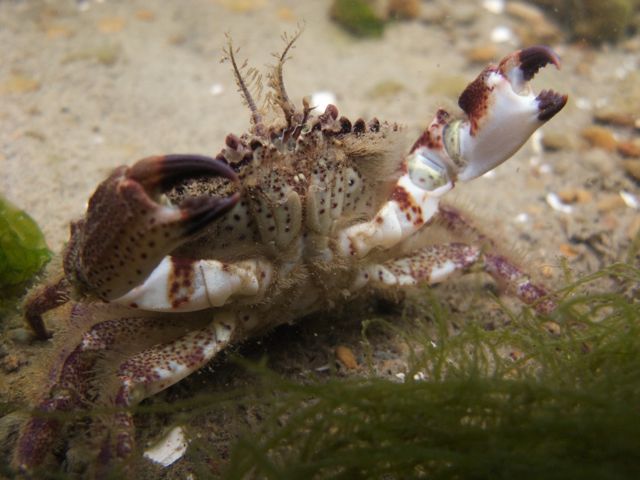
Crab defending

So what does all of this mean… Underwater cameras are good when you need extra rugged or you expect to be dumped in the water. They are also very handy if you want to be able to take pictures of what is under the water, by sticking your hand in. They are convenient, small and light weight. A good camera for basic photography and landscapes. Also what you would likely want on a river or in rougher seas.

If you plan on doing wildlife or bird photography above the water, chances are you want to try a different option where you can use longer lenses.

Underwater Housings

I am including underwater housings mostly as a side note in this post, as I find that much of this also holds true for them. Many of these same pros and cons apply. They are more rugged. There is no fear of getting them wet. There is the chance to take great pictures. But. Water droplets can be an issue. There is no hood. In addition, if using an underwater housing be aware of condensation inside of the housing. This can be an issue if you are frequently subjecting the camera to temperature changes by bringing it in and out of the water.

For suggestions on how to protect your digital SLR (Single Lens Reflex camera) try reading How to protect your dSLR while kayaking. This answers questions on how to kayak with your SLR without using underwater housings or special waterproof cameras.

Happy paddling (and shooting,)

Galen

Posted in How To, kayak photography, marine life, nature photography, photography, underwater, wildlife photography | Tagged , , , , , , , , , | 1 Comment

Why to kayak with your camera


Cypress Grove late afternoon

Yesterday I addressed some of the issues people new to kayak photography should think about, without realizing that I never said “why” people should kayak with their cameras in the first place. So today, I will talk a little about why I started taking my camera out with me, and about some of the pleasant surprises that awaited me (i.e. why I keep taking my camera out into watery danger.) Maybe they will inspire you to try a new style.

Cypress Grove pre-sunrise

I live alongside this amazing natural feature called Tomales Bay. Twelve miles of semi-tamed Pacific Ocean, with rolling, grass covered hills on one side, and rugged national seashore on the other (there’s a lot more to each side, but I am trying to keep this somewhat brief.) On the side with most of the grassy hills, a road runs about two-thirds of the length, often times fairly close to the shore. There are nice turnouts along the length of it, offering some beautiful shooting opportunities.

Cypress Grove at Sunset

Cypress Grove at Sunset

It’s fantastic… except that the turnouts and shore always offer the same views, the same angles. Sure, the light is different each day (as demonstrated by the first three pictures on the right,) and the sky and the clouds were always changing, but I was taking many pictures of the same scenes. I was starting to get frustrated that there was this amazing place, and I could only capture a small percentage of it. I began to hunger for a way to see more, get different angles. I needed a way to get away from the road and the shore so that I could have different perspectives. I started having dreams of a miniature personal blimp (which I still dream about,) of motorboats and sailboats… and finally I thought of a kayak, without ever realizing how perfect it would be for nature photography.

It didn’t always seem perfect at first, but as I got more comfortable being on the water, and started thinking less about the possible mishaps, I became more impressed by the pictures I was bringing home. I started to understand the potential, and the inherent advantages.

When you are in a kayak, you are down low, only two or three feet off the surface of the water, you’re entire perspective has changed. You are at, or just above the eye level of many birds and marine mammals. For landscapes, this same angle gives you a nearby foreground that gives perspective to the images. You don’t have to crouch down to get this picture plane, you automatically have it. Kayak = knee level point of view, but with photogenic water stretching away.

pickleweed

Even better, you get to drift. No moving your body in ways that will frighten wildlife. Breezes can push you. You can get moved along by the current. If you are on calm unmoving water, you can get up speed, point yourself in the direction you want to go, and your momentum will carry you for a good ways, gliding quietly along.

It’s quiet. No motor to scare wildlife away. The sounds of the kayak are similar to waves lapping the shore, or of fish and other animals swimming.

There are more reasons why kayaking and cameras can go well together, but this is only my second post, so I have to save something for later. In the meantime, go out and try something new, get a different perspective. Here are some tips for photographing wildlife from a kayak that you can try.

-Galen

Least Sandpiper stalking the shores

Posted in birds, kayak photography, landscapes, marine life, nature photography, photography, road side, wildlife photography | Tagged , , , , | 2 Comments