Descending into the Night: a video of Vaux’s Swifts


New

Each fall huge numbers of Vaux’s Swifts pass down the West Coast of the United States during their southern migration. At night they will gather for the night in massive communal roosts. Before the advent of man and his structures, they would gather in huge numbers inside of hollowed out tree trunks (redwood trees that had been cored by fire, oaks hollowed out by rot, etc.) Now however they love a good unused chimney, especially ones of a more industrial size- old brick factory kilns, disused boilers for campuses, etc. One such chimney is in Healdsburg, California, at a private school.

Luckily for the birding community and the curious, this school is kind enough to open up its campus each night to allow people to view the phenomenon of several thousand swifts descending into the school’s old boiler chimney. Up to 20,000 swifts can funnel into the chimney in the space of 2-10 minutes. On the night I took this video (Monday September 19, 2011) at least 3,500 swifts descended into this manmade roost, and perhaps as many as 8,000- I am horrible at estimating the number of swifts.

Enjoy the video (which since my main cameras are all at the doctors was shot with my iPhone).

Posted in birds, nature photography, video | Tagged , , , , , , | 1 Comment

The secret to seeing (and photographing) seals when kayaking


This slideshow requires JavaScript.


New

Remember to look behind you

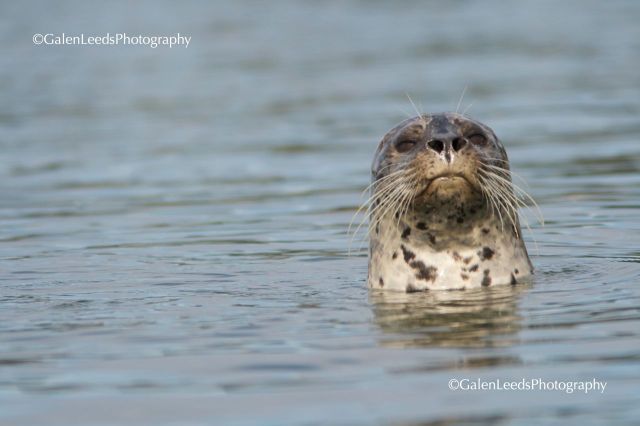
The biggest secret to seeing seals close up while kayaking shouldn’t be a secret at all… It’s simply to remember to look behind yourself. It is illegal to approach a seal too closely (federal marine mammal act), but it is not illegal for them to approach you. So let them do the hard work and stay out of trouble yourself.

A curious seal popping its head up for a better view

Seals can be curious, outgoing and social creatures, however after hundreds of years of being hunted by people they can also be rather shy and skittish, especially if you go charging after them in your kayak (or other boat). If you respect them and give them space, their curiosity will often get the better of them and they will actually come towards you, and you will find them closer than if you had tried approaching them.

A whole bunch of curious seals

Often though, for them to approach to their very closest, they will try and sneak up on you so that they can watch you without your knowing. This means that after they have arrived fairly close, they will dive down and come up behind you. They feel safer this way, seeing without being seen, and so if you remember to turn and look behind from time to time you might just be surprised to see that you are the one being watched.

This seal approached me, and then dove down and swam under my kayak, inspecting it from underneath, before swimming off

While having a long lens on your camera can be great for taking photographs of wildlife from your kayak, it can also help your image if the seals come to you, giving you a close up no matter what camera you are using. For more tips try reading Kayak wildlife photography tips.

Sometimes these gentle creatures will feel most comfortable with a friend to watch their backs and egg them on

Posted in How to, kayak photography, marine life, nature photography, Photo Essay, seals, wildlife photography | Tagged , , , , , | 4 Comments

The Bull and the Bat: An explorative essay in photos


New

This slideshow requires JavaScript.

What, may you ask would be the interesting connection and story between a bull and a bat? In this case, nothing, except that they are the only two things I took pictures of on this day a few weeks ago. The bull that I saw somehow seemed to me to be an exemplary example of prime USA beef. Can’t quite decide what gave me this idea…

Does this bull belong to the USA?

I saw the bull while driving my country roads, and it seemed such a bullish bull that I stopped for a photograph. The writing on the wall (it was so large that it seemed like a veritable wall of beef) proclaimed it for what it was, and helped to make the image.

A bat in the hand is worth two in the bush, but in some cases is useless for hitting a home run

Later that day I was at home, and my neighbor excitedly came over. He had come to the aid of another neighbor to capture a problem bat that was living in an attic and making it a little too fragrant. He thought I would be excited to take a few photographs as they worked on a relocation project, and he was correct. (I don’t know if the bat has since returned.)

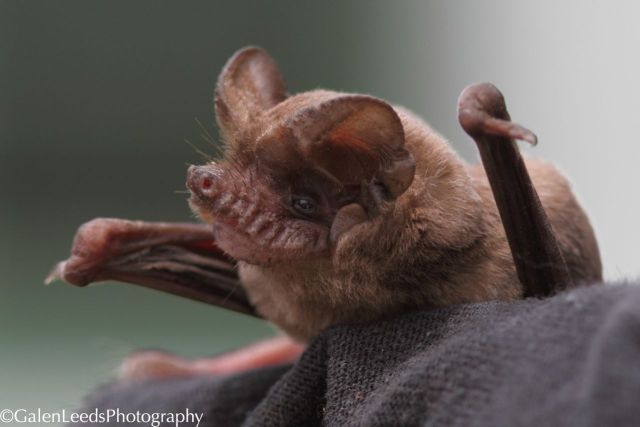
Rather pointy, needlelike teeth. Also love how translucent the ears seem to be

I’d never seen a bat especially close up, so it was rather interesting to explore it while it was briefly held captive. I don’t especially enjoy taking photographs of captive animals (and will always declare if a subject is in the wild, or captured when displaying said pictures), but not having any images of bats, jumped at my opportunity to explore one of these alien creatures.

Their ears are amazing to look at. Hyper-developed sensory organs that give bats their picture of the world. Notice how small the eyes are in comparison

Their structure is so different from other animals that I have seen… That is, while everything seems to be in the right place, the shape and scale of each of the pieces is different than what I am used to. The thumb with its nail coming out of the bend in their leathery wings for example, the textured snout…

A marvelous and interesting creature. The shapes, the textures, and the scale

After taking a few more pictures, my friend, who is a field biologist, placed the bat into a darkened transport to take it to its new home at dusk. (He didn’t want to release it in the middle of the day when it might present a target to predators.)

Even the feet are so different. Almost hand like, and with those long hairs coming off of them...

Posted in mammals, nature photography, Photo Essay, photography, wildlife photography | Tagged , , , , , | 8 Comments

Stanislaus National Park: A tour in Photos


New

This slideshow requires JavaScript.

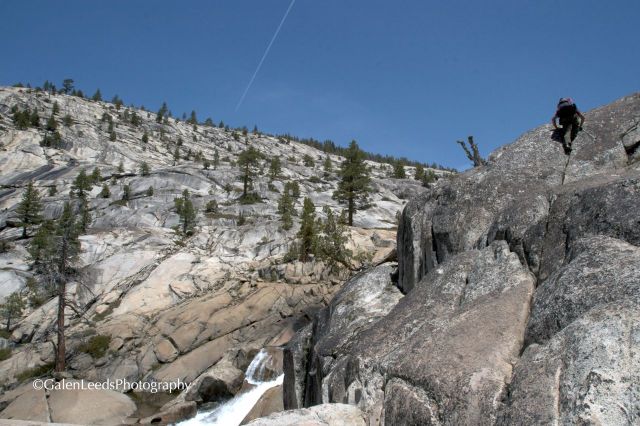
One of the more delightful backpacking trips I’ve been on in quite some time, was a trip I made with a friend of mine. We had a three day weekend ahead of us. We wanted that High Sierra feeling, but there was still more snow than we wanted to deal with at the higher elevations. So we asked some knowledgeable friends for suggestions on somewhere that was (A) close to the Bay Area  (B) remote and without a lot of crowds  and (C) had some of that Alpine feel, without having a lot of snow.

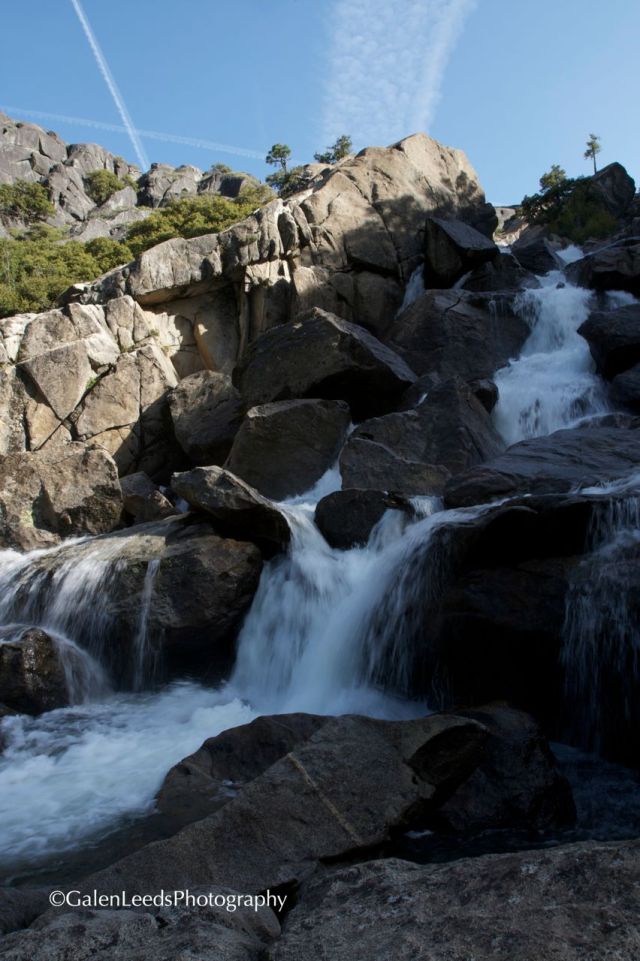
The hike up follows the South Fork of the Stanislaus. At times it runs a little smooth, but there are also rapids and waterfalls to photograph. It just remains to pick your timing for the best light

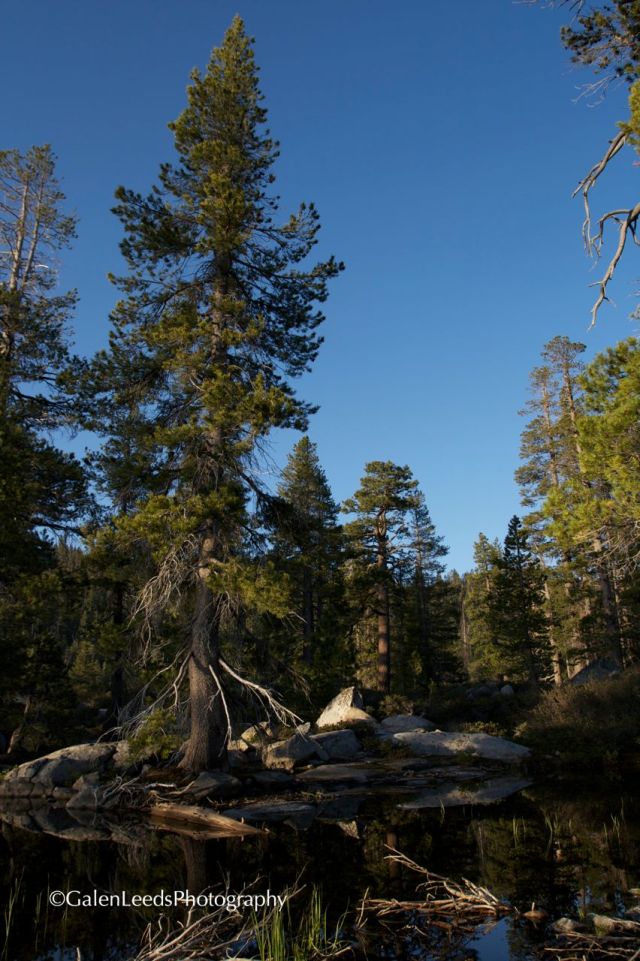
The answer was the South Fork of the Stanislaus River, located (where else?) in the Stanislaus National Forest. Granite, granite everywhere. Fantastic. Twisted, ancient appearing junipers, massive tumbled boulders, glacial polish, waterfalls, refreshing river (almost a little too refreshing,) open sky, and no sounds of the modern world.

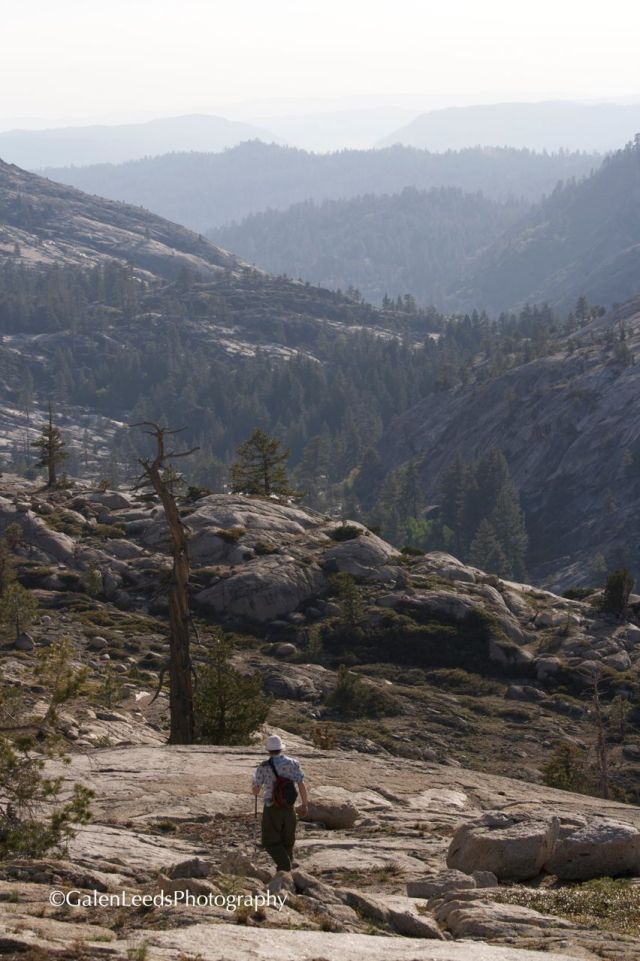
You find yourself wandering far above the world, removed from the hustle and the bustle. Wide, open landscapes

All of the granite does call for caution however. The granite surfaces are so vast and smooth, if you go for a tumble, there won’t be anything to grab on to, nothing to arrest your fall, and granite makes for a very hard landing. Don’t be afraid to retrace your steps and find a safer path.

It can be quite a scramble in some of the areas. Caution is well advised

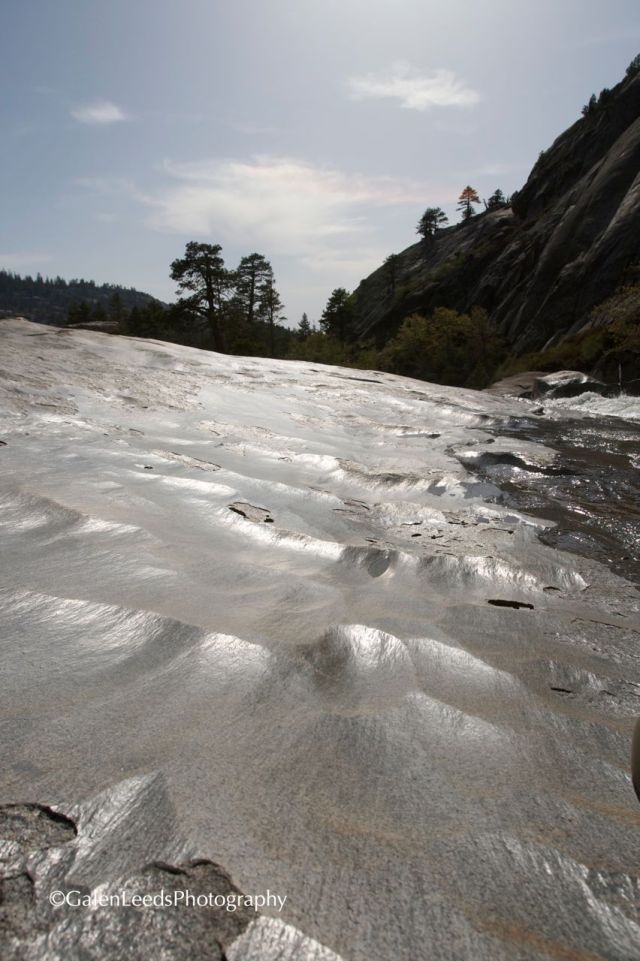
The rock is beautiful. Glacial polish creating a nice shine that has lasted for thousands of years. A sign of the ages gone by, a promise of what was and what could one day be again. In some places it is worn and chipped away, in others there is not the slightest change from when the many tons of ice and ground rock slowly moved en masse.

Granite polished by the passing of the glaciers

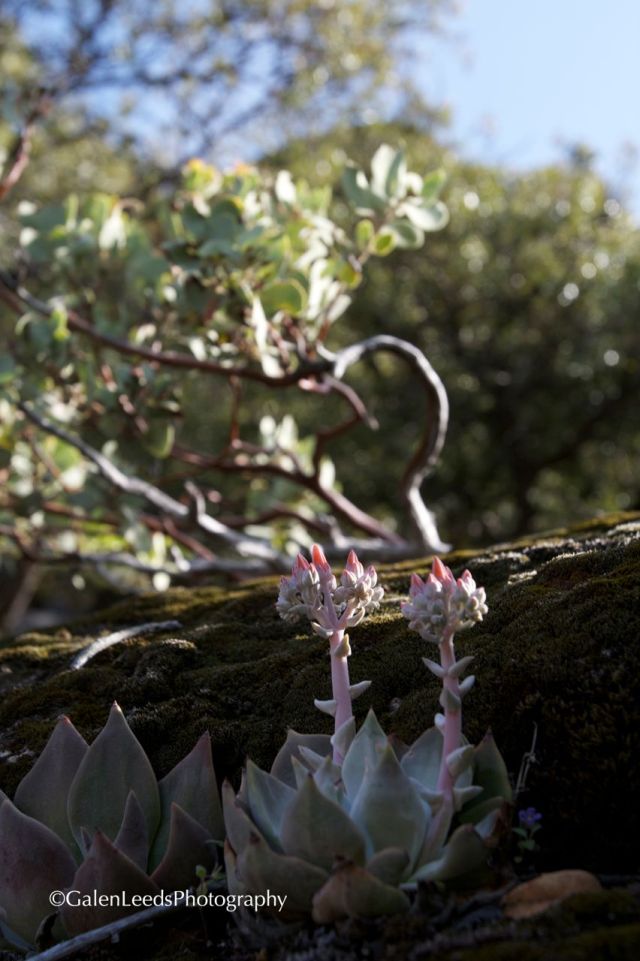
If you time it right you can see the wildflowers in their delicate glory, impressing the viewer that they can make a go of it with so little soil to be seen. They almost seem to be sprouting out of rock itself or hair thin cracks almost too small to see. Their tenacity humbles the visitor to their stony heights.

Succulents growing from cracks in the rocks

Getting there- Take I-5 to Highway 120/108. At Strawberry follow the signs for Pinecrest Lake. Park in the camp ground parking lot, and find the trail that passes along the south side of the lake. At times it will feel like you are walking through people’s yards, if you’re on the edge of the lake though, it’s okay. Once you reach the Stanislaus, or you see signs for Cleo’s Bath, head east, away from the lake. After the water falls the trail gets a little trickier to follow, mostly scattered arrows painted in various places as you scramble up a steep hillside. After you reach Cleo’s, there is no more trail. Just follow the valley. Don’t worry about always keeping the river in sight, the valley will guide you. Again, don’t be afraid to back track to find a safer route. Most of all, have fun and enjoy the solitude.

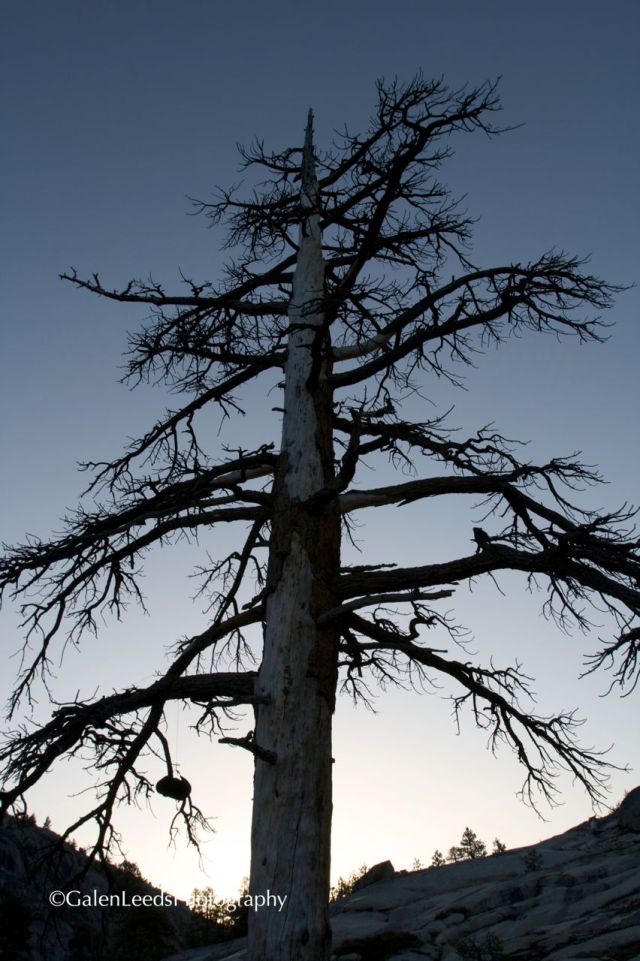
Don't forget to protect your food and your camp however. While we never saw any bears, we tried to keep them from our camp by bear bagging our food each night (You can see our bag on the lower left of this pine)

It’s necessary to pick up a camping permit (it will also double as your campfire permit.) You can do this at the Summit Ranger Station, a mile or two before Pinecrest. Call ahead, and they will have it waiting outside in a wooden box if you’re passing by outside of normal park hours.

There's the occasional mountain pond, but most of the water we saw was the Stanislaus that we followed up

It’s been a few years since I’ve visited the South Fork of the Stanislaus, but the memories are still cherished in a place close to my heart. I hop to return one day soon, but the snows are close to nipping at our heels. My return may have to wait until a new spring arrives.

Posted in landscapes, My favorite Parks, National Park, nature photography, Photo Essay, photography, SLR | Tagged , , , , , , , , , , | Leave a comment

Ardenwood Historic Park: A tour in photos


A great place for kids of all shapes

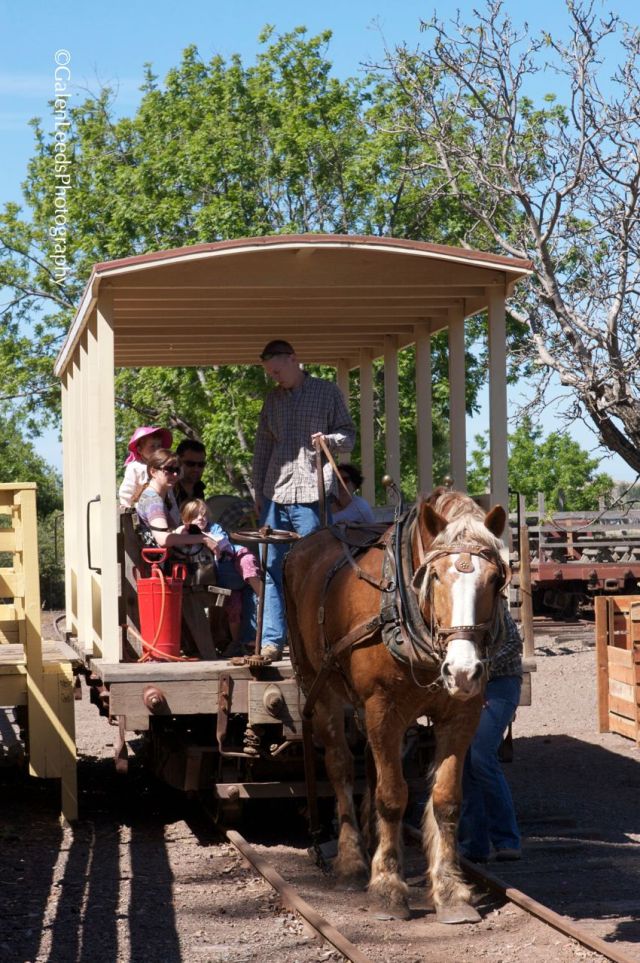
Ardenwood Historic Park is a family oriented, interactive park. It is part history, part petting zoo. It is educational and hands on… and oddly enough it is rather suburban. Nestled into the outskirts of Fremont, it is a mix of nature, farm, ranch, and suburbia. Its crooked horse and plow furrows are surrounded by the mechanically straight lines of modern tractors and plows, which are in turn surrounded by subdivisions and gas stations. It is a world unto itself with its horse drawn railroad.

This slideshow requires JavaScript.

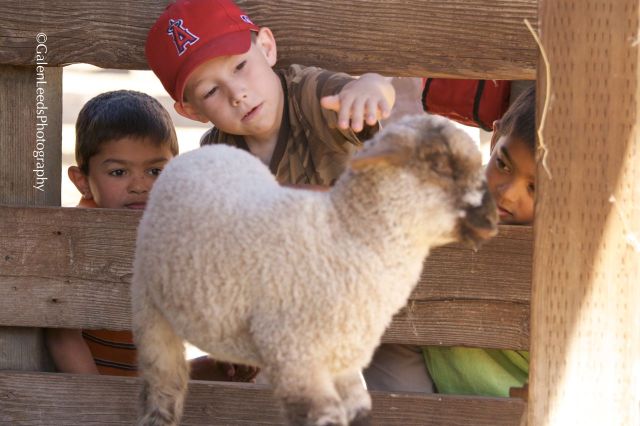
The clang of metal on metal echoed dully from the blacksmith’s shop as we crossed the farm yard atArdenwood Historic Farm. Beyond the goat pens, crooked rows of corn converged in the distance. It was obvious that they had not been made by modern-day tractors. That could wait though, there were sheep to be shorn. Literally. Crowded around a large enclosure were people of all ages, watching a man in funny shoes as he clipped the fleece from a placid sheep. He had slowed his pace, just so the folks crowded around the fence could follow what he was doing.

The fur (or wool) flew as the shearing demonstration went on

People crowded the fence, watching a mix of history and modern country life occurring there before their eyes

A young girl watches as the sheep are shorn

The park is this odd mixture of tourists  dressed in modern garb and weekend volunteers trying for a more period dress. It gives the place an odd juxtaposition that somehow feels comfortable… yet almost like a country amusement park.

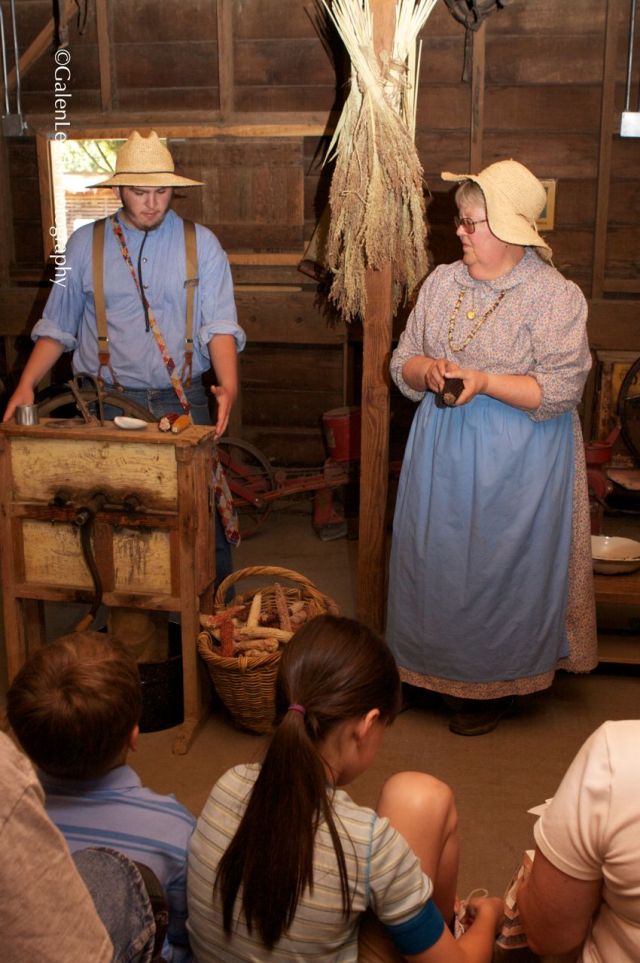
People dressed in period costume show how the tools of the time were used to separate the horn from the cob,. This is followed by the kids being allowed to feed the kernels to the chickens

The people give this place a vivacity as they interact with it, teaching young and old alike how it was in the day… the hard work mixed with the play. The machine separating the corn from the cob almost seems more like play to the folks that have never seen such devices before.

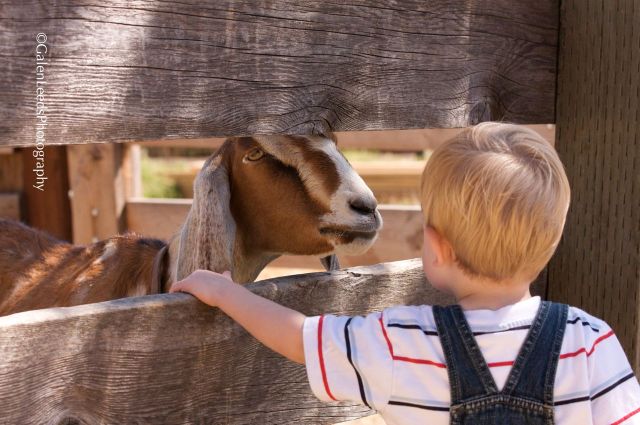
Interaction is key, whether it is with animals or period machinery

Ardenwood is fun, but with kids to learn with, it is even better.

The horse drawn train about to pull from the station

Posted in Location, My favorite Parks, Park, Photo Essay, photography, portraits, SLR | Tagged , , , , , , , , , | 1 Comment

The Badger crosses the road


New

This slideshow requires JavaScript.

I was driving home to Tomales one day after the Point Reyes Farmer’s Market, when I saw this white stripe moving through the grass on the side of the road. “A skunk!” I thought to myself. I hardly had time to debate with myself, the pros and obvious cons of trying to photograph a skunk (especially one that is out and about during the afternoon hours,) when I realized that it was not a skunk.
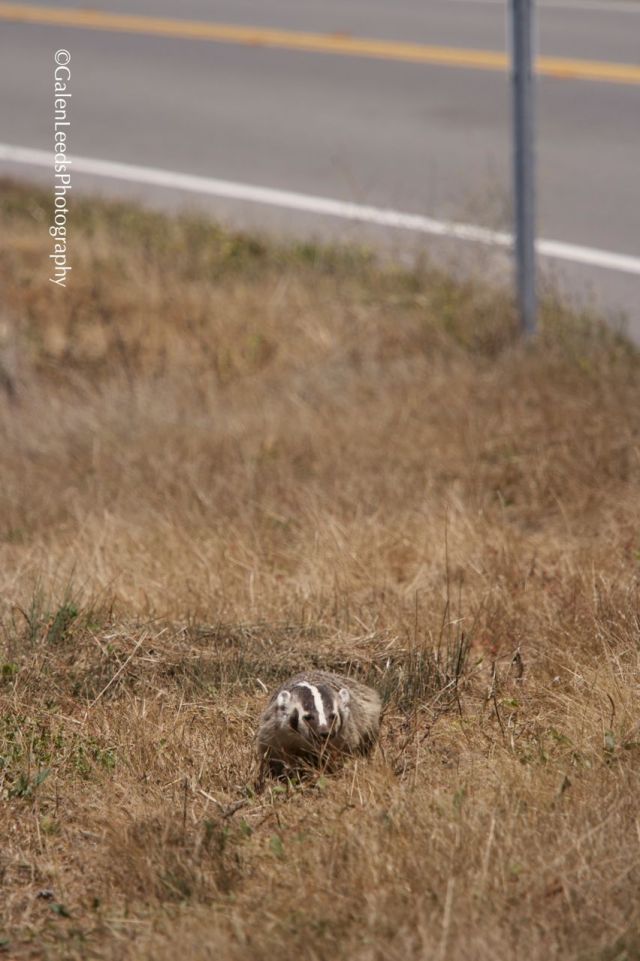
A white stripe walking down the road, but i wasn't a skunk

I used the first dirt pull-off, grabbed my camera, and went for a little jog. This was only the second time I had seen a live badger (I’ve seen several road kills in the area. So, keeping my distance because of rumors of their ferocity, I took pictures of this fine mustelid, until it decided to cross the road. I didn’t get pictures of it crossing, because they are slow crossers and I was obliged to wave down traffic. The badger did not care about the cars. It seemed to think that if they were stupid enough to mess with it, it would give them a lesson.
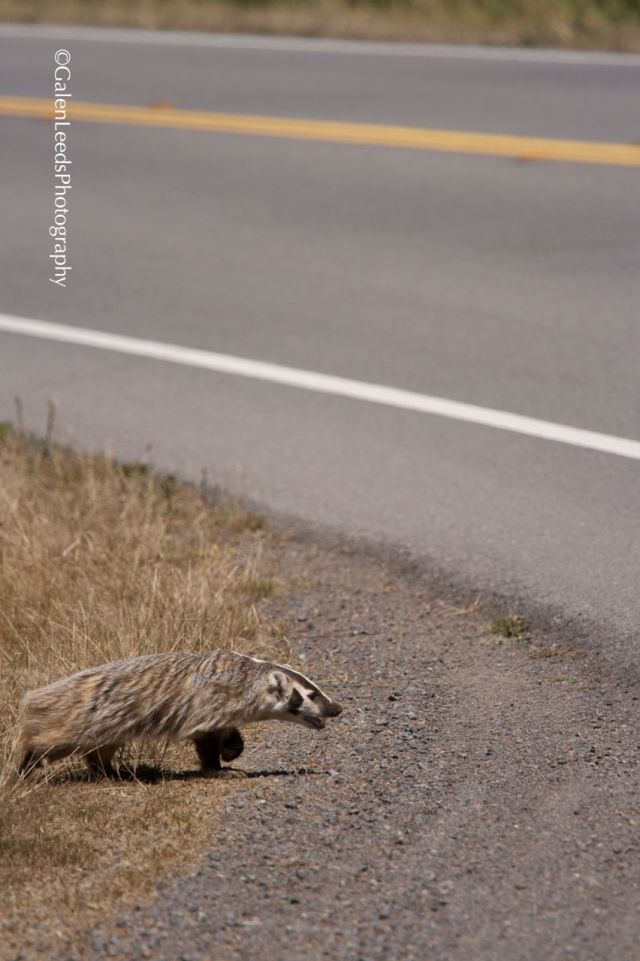
The badger getting ready to cross the road

One man stopped and asked, “Uh is that a hedge hog?” I gently explained it was a badger. He responded with “Wow! Cool… A badger,” and drove away suitably impressed.
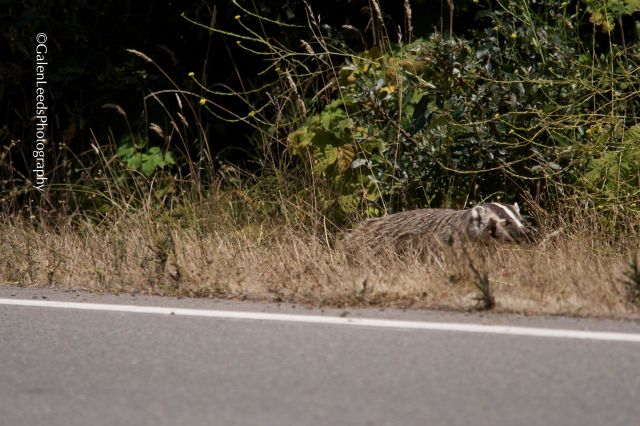
The badger, safely on the there side of the road, moments before it disappeared into the deep brush

And now for a little natural history of the badger-
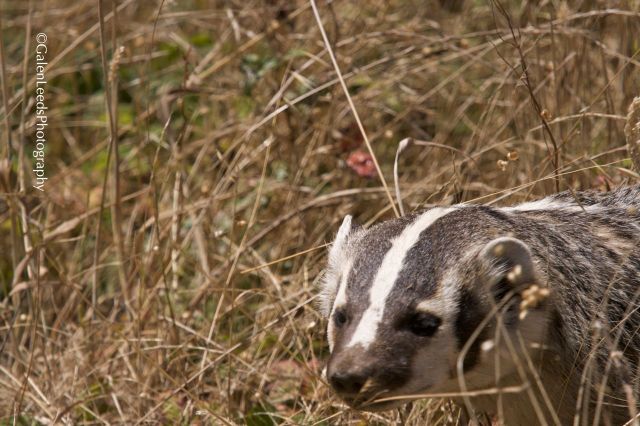
The badger

Taxidea taxus, more commonly known as the American Badger is largely predatory, although it will eat some plant types, such as corn. Known largely for its ferocity and digging ability, it is mostly found in open grasslands and praerie, from subalpine heights all the way down to the ocean. It is most common in the midwest. It belongs to the family mustelid, the same family as weasels and otters. It is a fossorial species (meaning it’s a really good digger. I mean really good, like fantastic.) There are 8 to 10 species of badger, found in North America, Europe and Asia. One of the best names is the honey badger, which likes to eat honey.
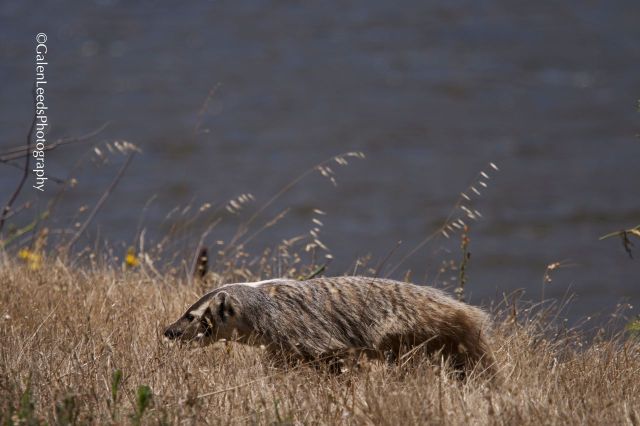
When I first saw the badger it was walking along this large tidal creek

The badger has been heavily hunted for sport, and for perceived dangers to livestock. Their large and numerous burrows are a hazard to the fragile legs of are hoofed friends. There is currently an education campaign to teach people the benefits of these digging dynamos. They are important controllers of rodent and small pest populations, their main diet being mice, pocket gophers, ground squirells, and praerie dogs. They also eat amphibians, reptiles (even poisonous snakes!) and insects. They will eat bees and honey cone. Sweet! Old badger dens also serve an important function by providing cover and habitat for a wide range of species, such as the cotton tail and skunks. The digging of badgers also helps with soils aeration and building.
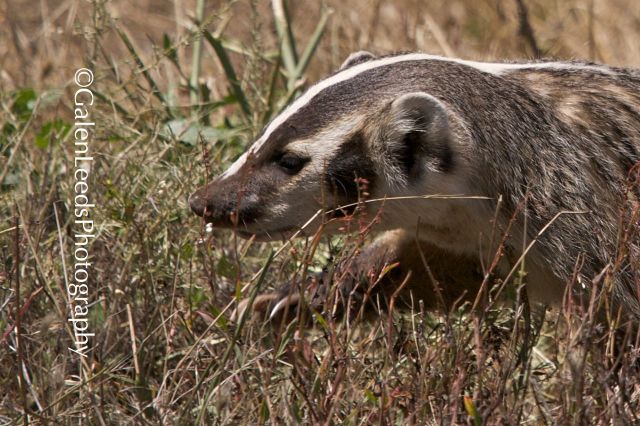
Taxidea taxus- The North American Badger. You can just make out its long digging claws

Their main method of hunting is to dig out their prey. Their long front claws (1 to 1 and a half inches long,) short powerful legs, and shovel like back paws make them fast and furious diggers, and their thick and course coats work well for shedding the loose soils. While it is normally a solitary species (doesn’t even really hang out with others of its species, unless they are getting it on,) coyotes and badgers have been seen hunting cooperatively. The coyote waits beside the badger as it digs, waiting to seize any animals dashing from the burrows to escape (coyotes are poor diggers themselves.) The badgers while unable to move quickly, are able to dig out prey that escapes from coyotes by running into holes. They do not share any prey they catch with each other, but neither do they really steal prey from each other. Coyotes and badgers have also been seen at play together.
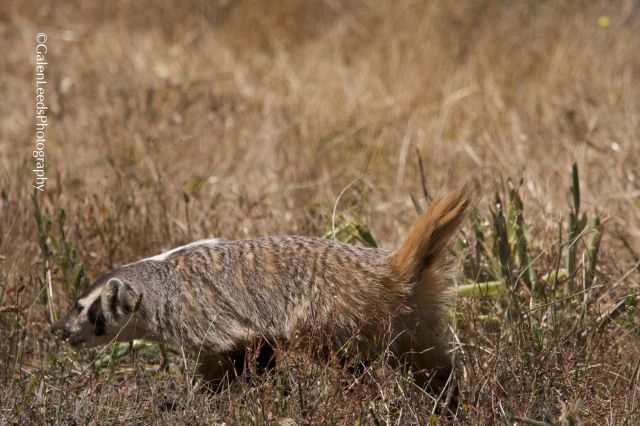
Not the best of pictures, but fun because you can see its tail

Badgers are generally 18 to 30 inches in length and can weigh up to about 25 pounds. The females are often somewhat smaller than the males. They have a short tail, usually 3-5 inches long. They have powerful scent glands towards the anal region, which they can use to mark territory and occasionally as a defense mechanism. Their most common method of defense though is to back into a den, facing out with their teeth and claws, and sometimes blocking up the entrance with dirt. Their main danger comes from them big two legged critters (humans) and the smaller furry four legged critters that they have specially bred (dogs) to hunt them down. Actually those little sausage like dogs- dachshunds (dach is the german root for badger) were specially bred to hunt badgers. Agriculture (aka habitat loss,) development (aka habitat loss,) and the fun of killing things (aka man) have led to a significant decline in the number of badgers during the last century. Occasionally badgers suffer predation from golden eagles, bobcats, cougars (mountain lions,) bears and grey wolves.
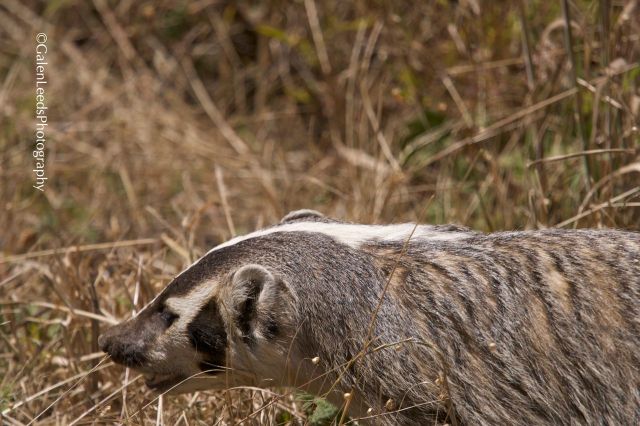
The badger steadily making its way through the grasses

They are mainly a nocturnal species, all though it is not uncommon to see them out and about during daylight. They do not hibernate, all though during the winter, in colder climates, they will go into a torpor, where their temperature drops to seven degrees celcius, and their heart rate slows. This torpor often lasts for an average of 29 hours. During the summer months they are much more active, often digging a new burrow every day or two, sometimes returning to and using old burrows. Summer is also their mating season. Crazy thing is though, while they get laid in July or August, the fetuses don’t actually start to develope until January or February. They are able to hold them in a quasi suspended animation for about 5 or six months, then they experience a six week gestation period, giving birth around April. The young head out on their own around August. The birthing den is often a grass lined den with a thirty to forty foot shaft, that can reach ten feet below the surface of the ground. It is much more complex than their summer dens.

Their range is generally 1.6 square kilometers to 2.5 square kilometers, all though population densities of up to 5 badgers per square kilometer have been noted in areas with very abundant food sources.
Posted in badger, nature photography, Photo Essay, photography, road side, wildlife photography | Tagged , , , , , , | 12 Comments

The Hazel-Atlas Sand Mines: A tour of photographs


New

This slideshow requires JavaScript.

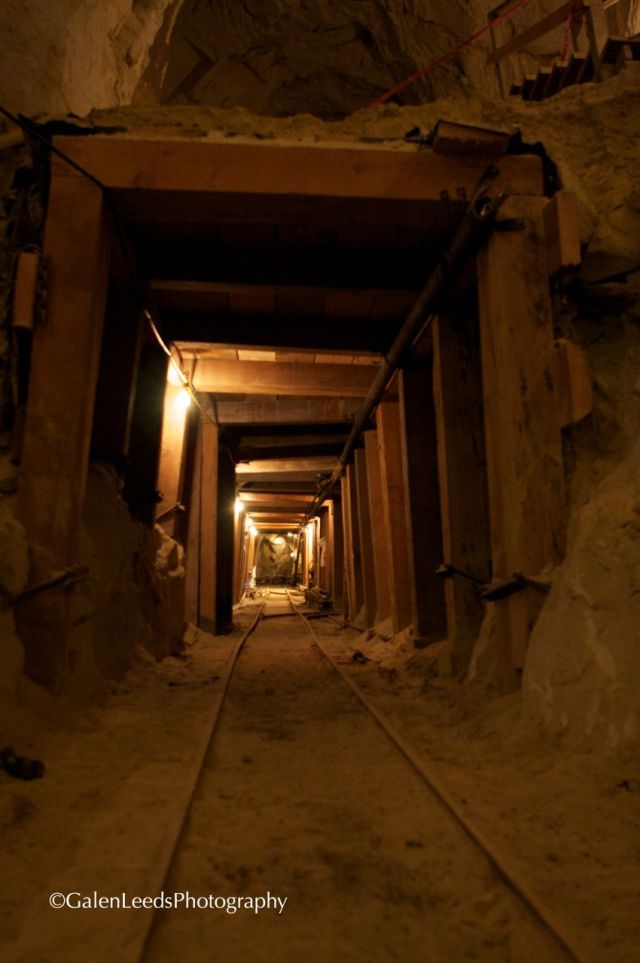
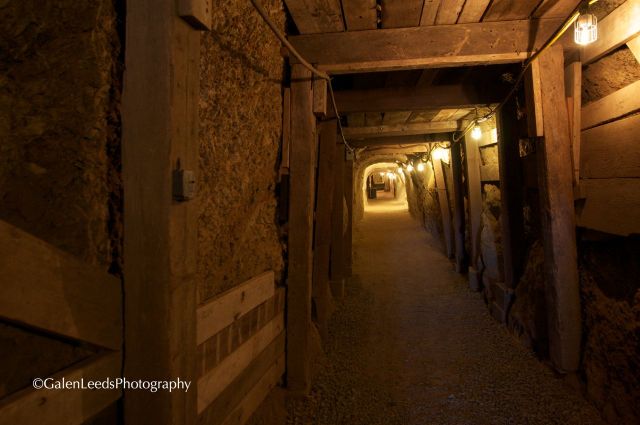
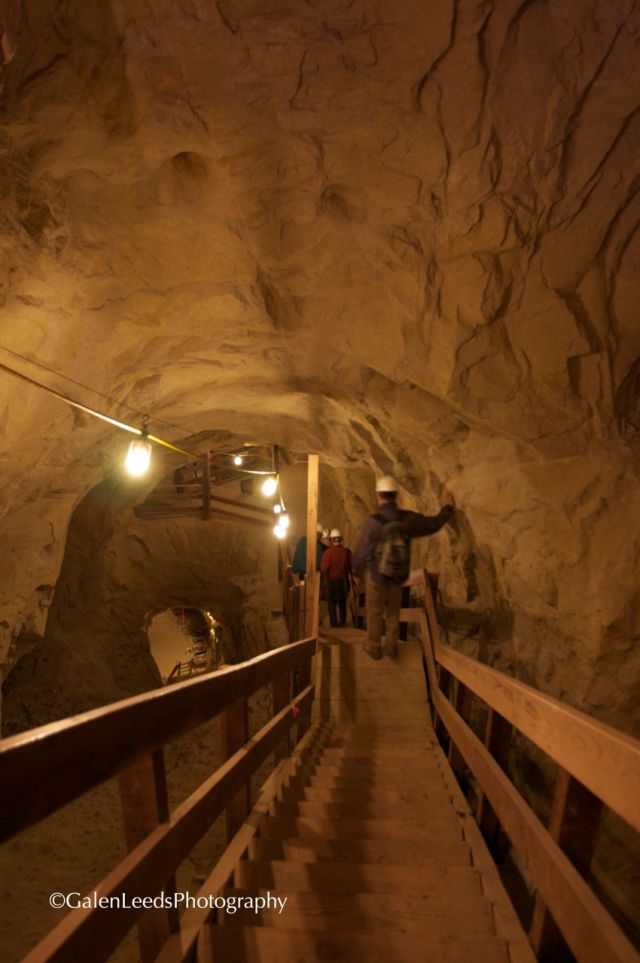
The heat of a summer’s day faded away with the noises of the outside world as I strode into this tunnel in time. I visited the Hazel-Atlas Sand Mines in the Black Diamond Regional Park, where they once gathered silicone to make ketchup bottles and also castings for the steel foundries. I was there to take photographs for a magazine.
Rails running through the the sand stone tunnels

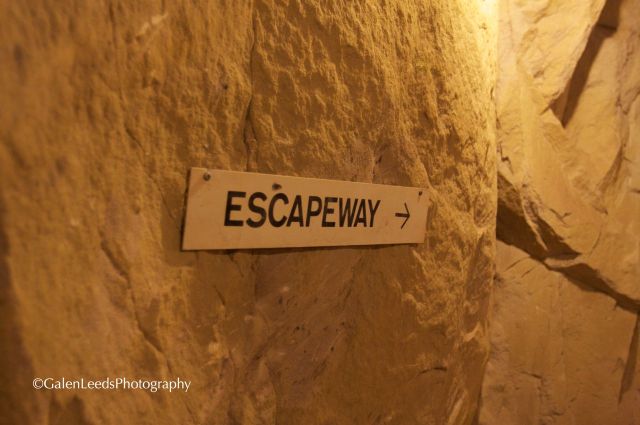
Rails run along the floor for the carts that once carried the sand to daylight, while the sandstone ceilings show the marks of ancient water drops. Vast caverns and stopes open up, supported by thick timbers and patterned columns of sand, left in place to provide structure. The feel is of a different world and a different time. The signs on the walls are almost in another language—”Escapeway” has replaced “Exit.”
This means "exit" in mine talk

I visited these carved tunnels nearly an hundred years after they were dug, as the park they are now located in was renovating them to make them safe for visitors to tour through them. The photoshoot was in in preparation for the reopening of the mines to the public. (There are some areas however that are still shut off, where various universities are running experiments, or areas simply aren’t safe or are needed for storage or other reasons.) We had a behind the scenes tour, while the work was still going on.

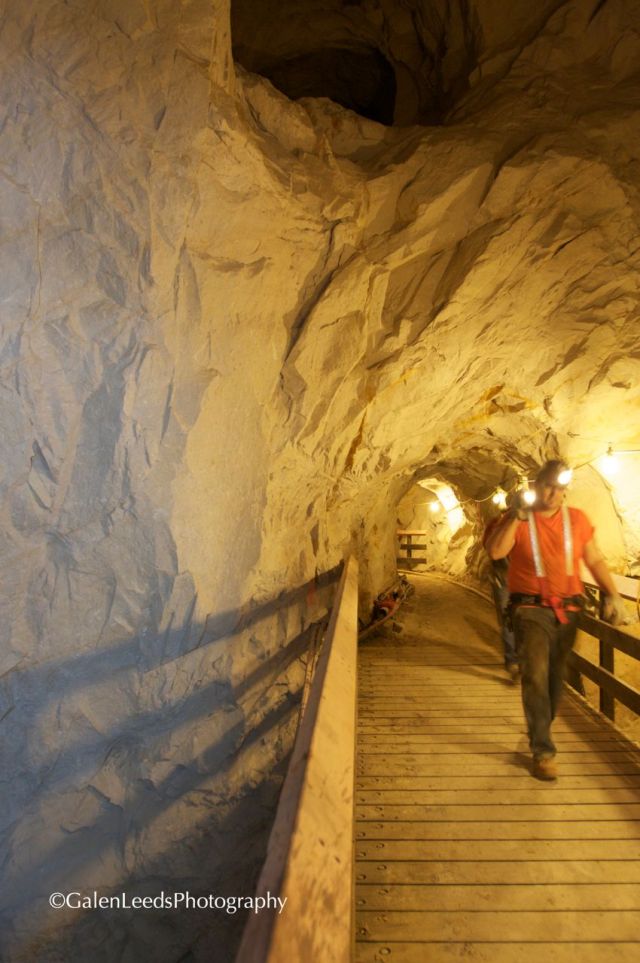
Workers carry a rail through the tunnels, as they re-lay the tracks. The bright light in their hands is actually reflecting off of the end of the steel piece of rail

All of the light down there is man made, with lights strung together through many of the tunnels (though some were almost without any lights other than those we carried with us). To photograph the mines I had to use a collaboration of a tripod and fill flash. Longer exposures on the tripod to maximize the available light, and the flash to fill in dark areas as needed. It was a fun and challenging experiment. When ever possible I relied solely upon the long exposures.

Some of the tunnels had wood supports. These make for interesting dynamic images

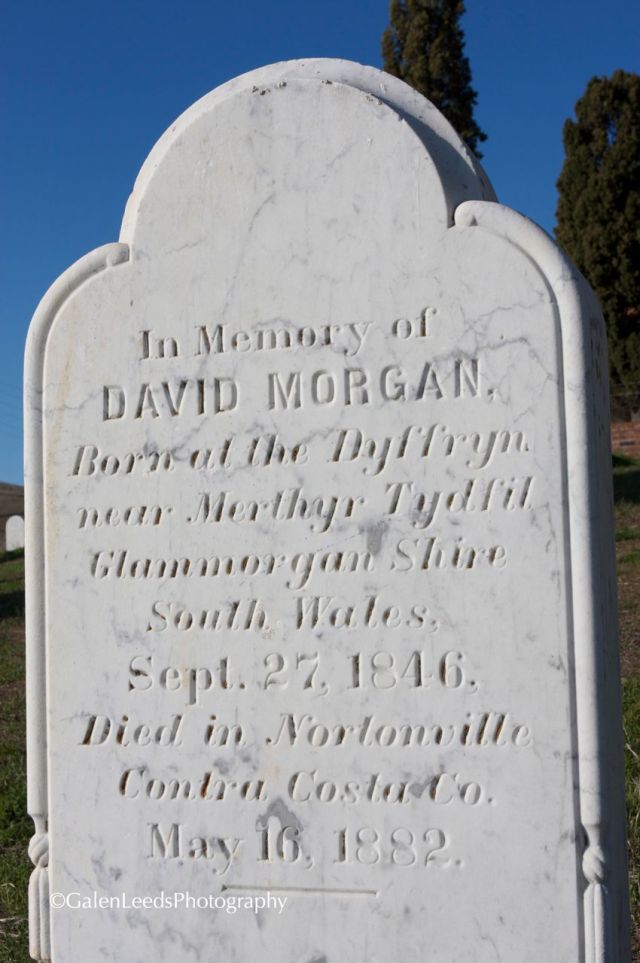
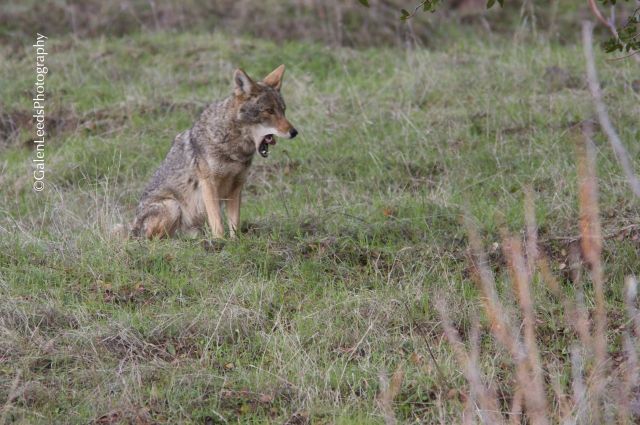
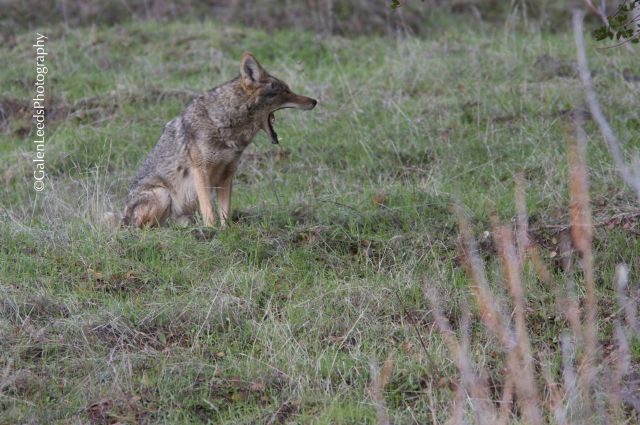
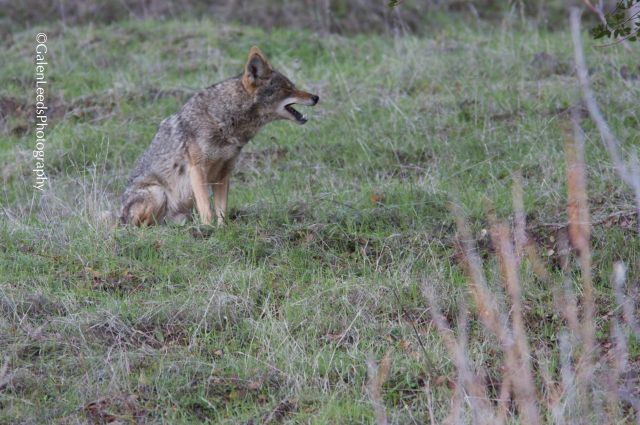
There was of course a lot of park to explore above ground also, complete with a graveyard of the workers that had helped create these mines, along with a coal mine that had been in the same location. There was also a huge variety of birds and other wildlife, including this coyote that I was able to photograph while yawning.

The grave of one of the mine workers

A very interesting place to visit, especially on a hot summers day, when the coolness underground can be a reprieve from the heat of the sun. It is a park that I highly recommend to others, as a slice of history that many of us never realize existed. Also, while there are stories in the papers and movies about mines, they are something many of us have never visited, and this is at least a partial look into that world.

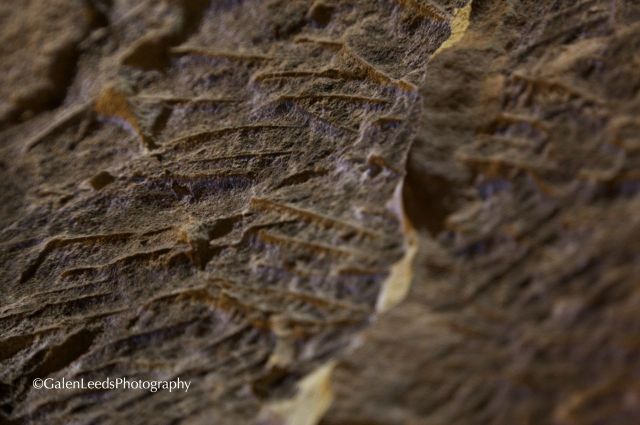
Tool marks on the ceiling of the cave from when they carved out the tunnels by hand

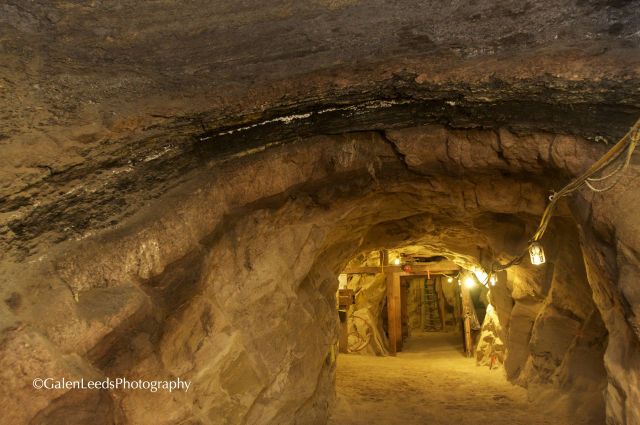
The Black Diamond Sand Mines had two lives, first as a coal mine then as a sandstone mine.

The dark stripe in the ceiling is a vein of coal running through the sandstone

By hand, with only picks, shovels, and carts for the most part, miners carved out this vast cavernous system.

We wandered down stairways that were taller than four story buildings. There were some pretty good vertical drops throughout the mine

There was a long stretch of time however between when the sand mines were operational (I believe they shut down in the 1920’s) and when the park was established and began to turn the mines into somewhere that could be toured. In the interim it was a place that teenagers would sneak of to and drink or have parties. There are several areas of the caves where the ceilings are stained with soot from people having fires. The park had to clean up bottles, cans and more to make it an inviting public place.

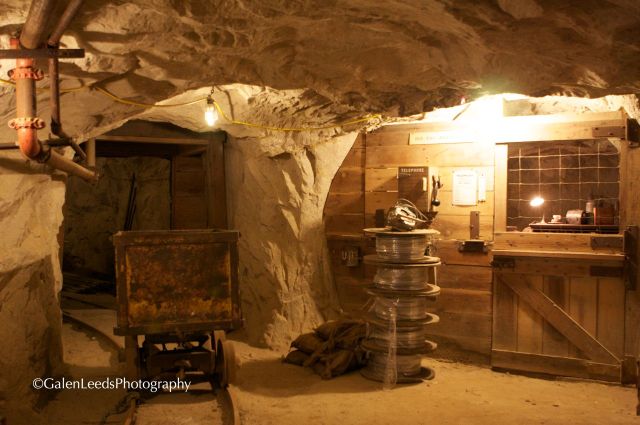
The old mine office is behind the heavy door. The cart is one that was used to haul sand out, endless cart load after endless cartload

Posted in California, documentary, Location, My favorite Parks, Park, Photo Essay, photography, SLR, wildlife photography | Tagged , , , , , , , , , , , | 5 Comments

The Coyote Yawns: A short series of photographs


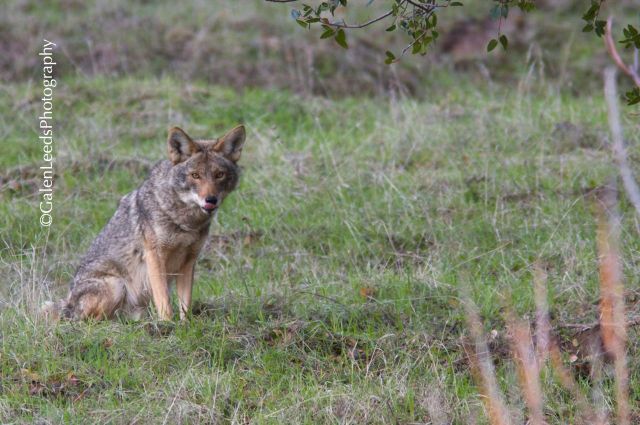
I came across this coyote one day while hiking in the hills of San Francisco’s Bay area. (The East Bay actually, near the historic Black Diamond Sand Mines out towards Antioch and Somersville.) It sat there long enough for me to photograph this huge yawn, and then got up and walked away. I was amazed at how large the coyotes  mouth got when it yawned, and marveled at how big its bite could be. Luckily these are rather timid creatures, and not very aggressive towards us larger humans.

The yawn begins

Amazing how large that mouth is during a yawn

Whew

Who me? (With a self satisfied lip lick)

Posted in California, nature photography, photography, SLR, wildlife photography | Tagged , , , , , , , | 2 Comments

Chickadee in the spider’s web


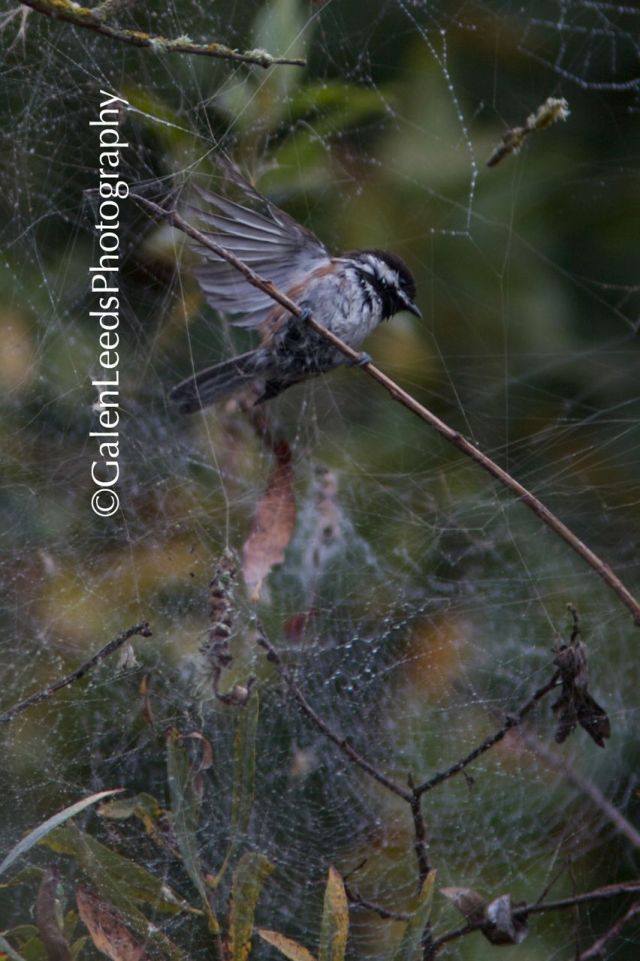
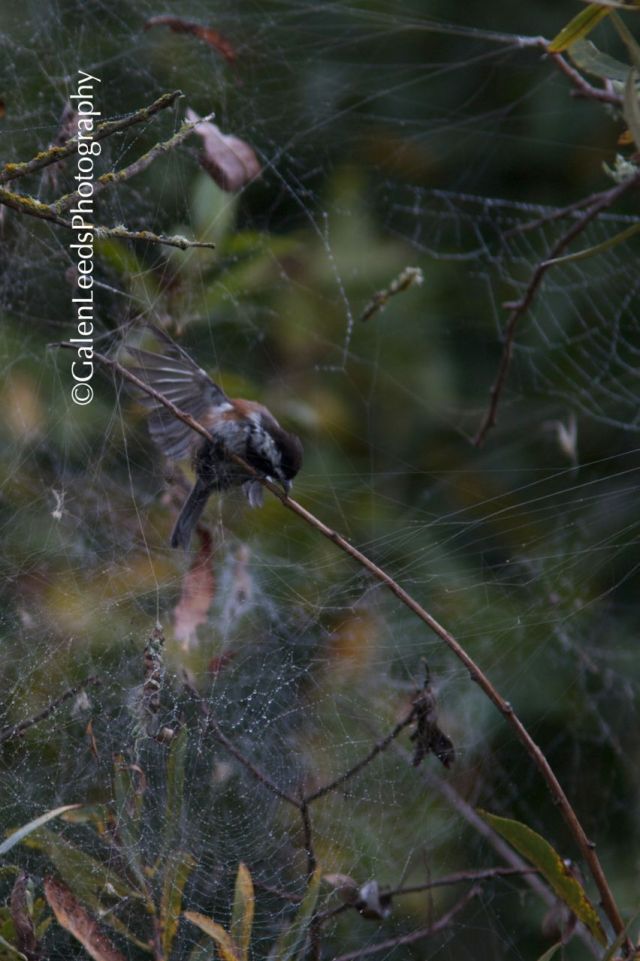
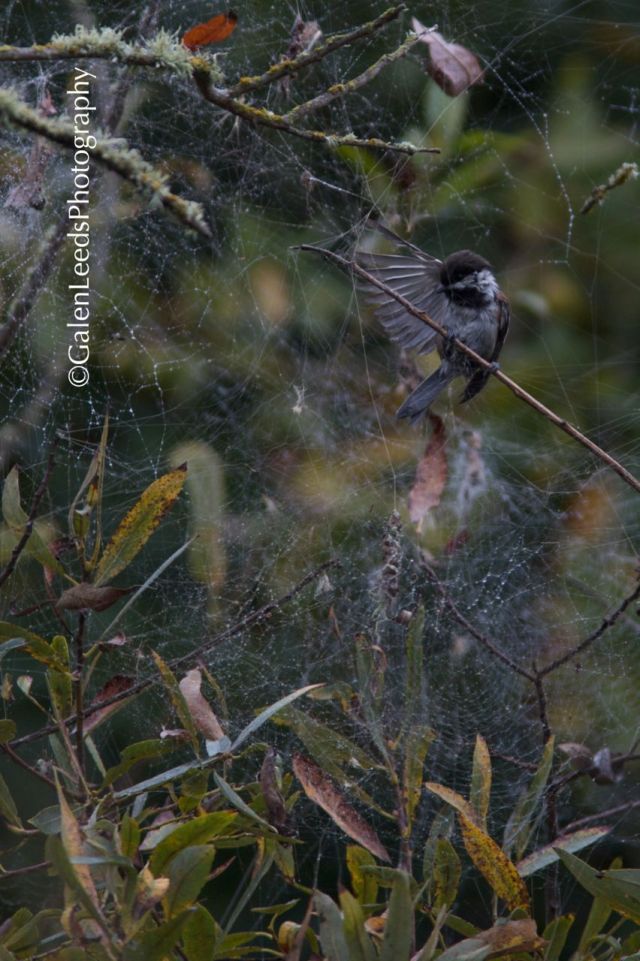
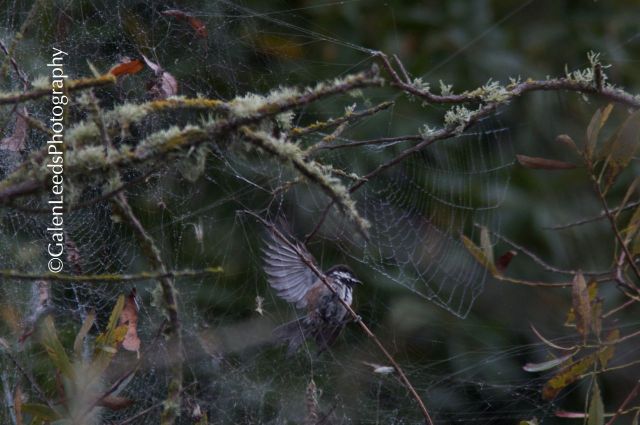
One day while kayaking with a friend, I saw something I never imagined to see. A Chestnut-backed Chickadee with its wind stuck in a spider’s web. There were actually many spiderwebs around, and several chickadees, but only one that I saw with its wing stuck in a web. I took some photographs from my kayak before beaching on the shore to try and free the poor thing, but it was a ways back in some very thick trees.

I searched for a way in, an approach, but before I could find one it finally freed itself. It was stuck there in the web for at least a few minutes however, straining against those gossamer strands.

The Chickadee with its wing stuck in the web

New

So much larger than the frail strands of the spider's web, yet it sits there trapped

Trying to pull away from the sticky strands

Looking to see what has it so firmly in its grasp, its view is blocked by its own wing

Posted in birds, California, documentary, kayak photography, nature photography, photography, SLR, wildlife photography | Tagged , , , , , , , | 7 Comments

Anatomy of a photo #69: Following the tracks of history


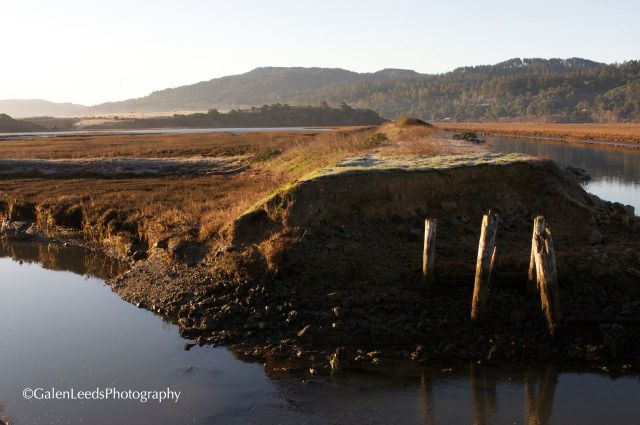
The berm that the old narrow gauge railroad once ran atop as it rolled down Tomales Bay

1930 saw the end of an era in western Marin and Sonoma counties, when the railroad running through this rural area was dismantled. Allowing timber and tourists alike to travel between Sausalito and the Russian River, little remains to hint at its path, except some buildings in the towns along its route, and the names of places like Point Reyes Station. Some of the towns have even disappeared. If a person feels inclined to drive along the east shore of Tomales Bay however, there are a few subtle clues as to what once was. Some of the shoreline is mounded high above the water, and it appears unnaturally straight and level. This “levy” is the bed of the old narrow gauge railroad. It’s easy to spot, once you look for it. Just pick a turnout between Point Reyes and Tomales, almost any of them, and have a look. Then imagine yourself chugging along through the placid waters of yesteryear.

I took this image from one of the turnouts along Tomales Bay where you can see this levy. It’s possible to take pictures of it from right by the road, but instead I descended the hillside to be on a level with where the tracks would have been.

The light is early morning- you can still see some of the frost/dew on the grass. The lens is a wide angle so that it is a full landscape to give a sense of place- the Inverness Ridge in the background, the mesa in between, and the channel running alongside the berm.

ISO 200, f/9.1, 1/80 shutter speed, 24mm lens

Posted in Anatomy of a photo, California, How To, landscapes, nature photography, photography, SLR | Tagged , , , , , , , , | Leave a comment

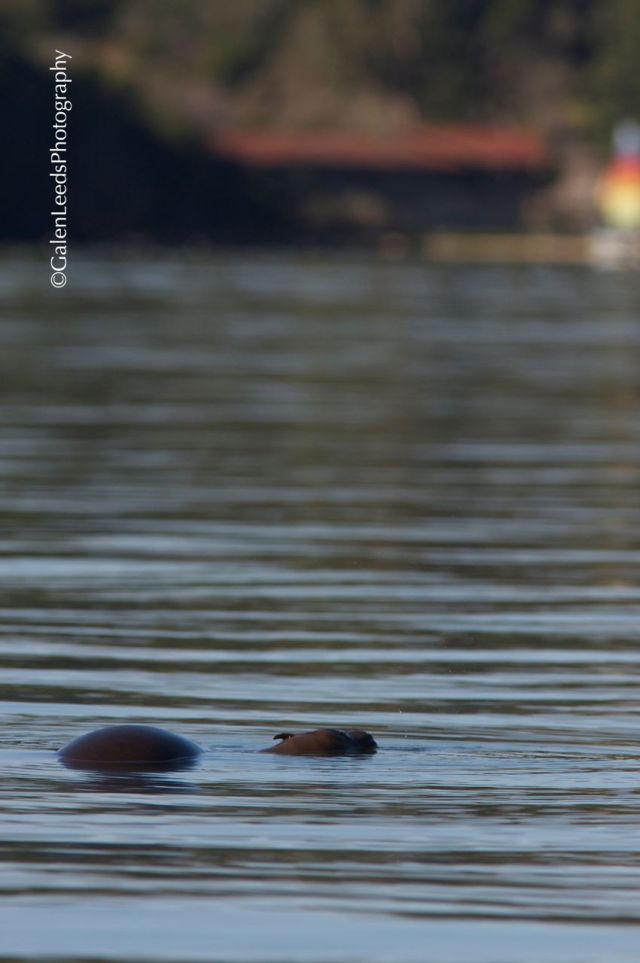
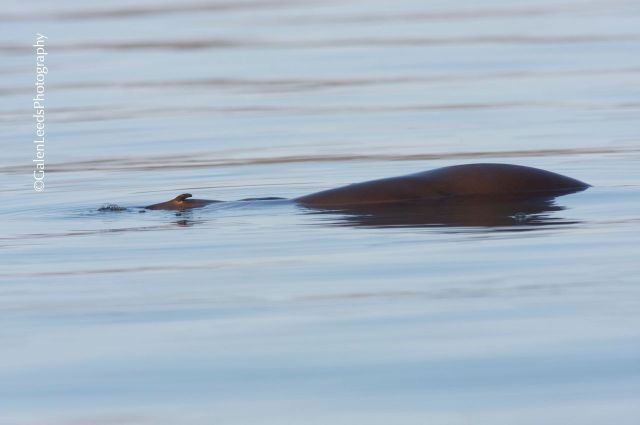
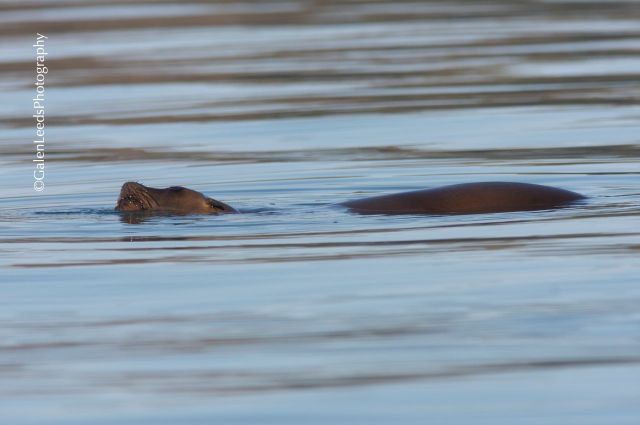
The Languid Sea Lion, Continued…


I just noticed that I had a few other images of a Sea Lion languidly lounging at the water’s surface. I took these images the same day as I took these images of a Sea Lion with its flippers floating in the air.

This slideshow requires JavaScript.

I have only seen Sea Lions floating this relaxed on very rare occasions. This was one of them.

A very relaxed Sea Lion

Its snout was only above the water some of the time

And then the occasional breath of air

These pictures were taken on one of my kayak photography outings. A beautiful way to see nature and to photograph it. Of course, almost as important as bringing your camera when you kayak is what else to bring with you.

Enjoy

Posted in California, kayak photography, marine life, nature photography, Photo Essay, photography, wildlife photography | Tagged , , , , , , | Leave a comment

The Alien Anemone: A brief essay of photos


New

This slideshow requires JavaScript.

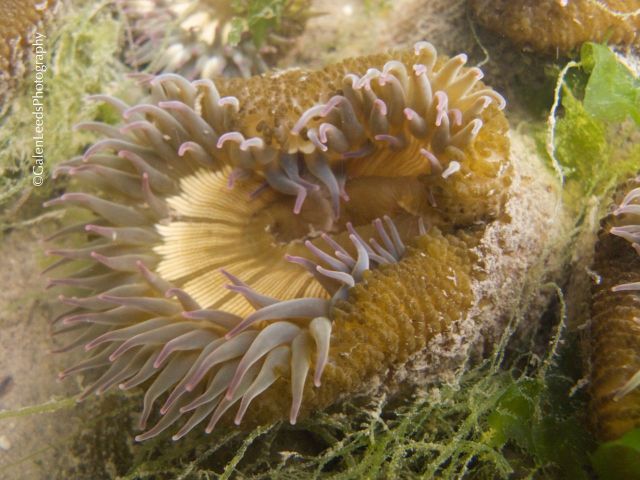
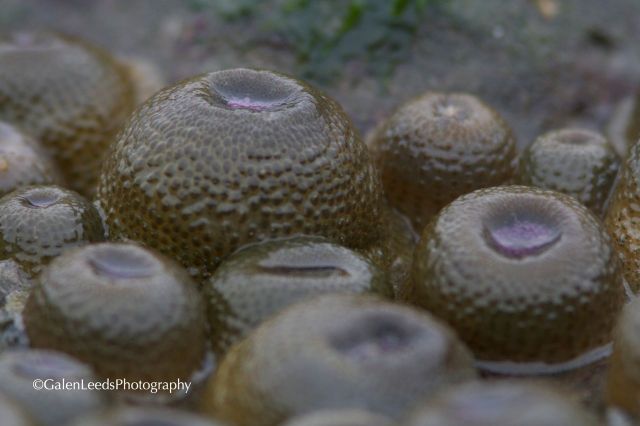
Anemones are one of the more otherworldly creatures I can imagine… which I suppose makes sense, as they are from another world, a more watery one of ocean and sea. Some varieties are more regular visitors to our terrestrial world than others, living a double life at the tides edge.

Anemones are those denizens of the tide pools that draw and fascinate us

It is this life at the joining of two worlds that helps us to know them. Nothing is more fun to a child than an exploration of tide pools, glimpsing, hunting into the unknown. And little returns an adult to that child hood state than peeking into these windows to life in the depths.

Some anemones can protect themselves from drying out at low tide by curling their arms in upon themselves and creating an alien sort of landscape

They live in a harsh juxtaposition of environments, there at the edge of the sea, needing its salty embrace, yet forced to spend a part of their life exposed to the air, where they cannot feed and are little able to protect themselves from more than drying out from exposure. They need to be under water to even be able to support the weight of their small tentacle like armed arms. They stay there, rooted to where they can be subjected to the pounding of the surf and the tread of the unwary.

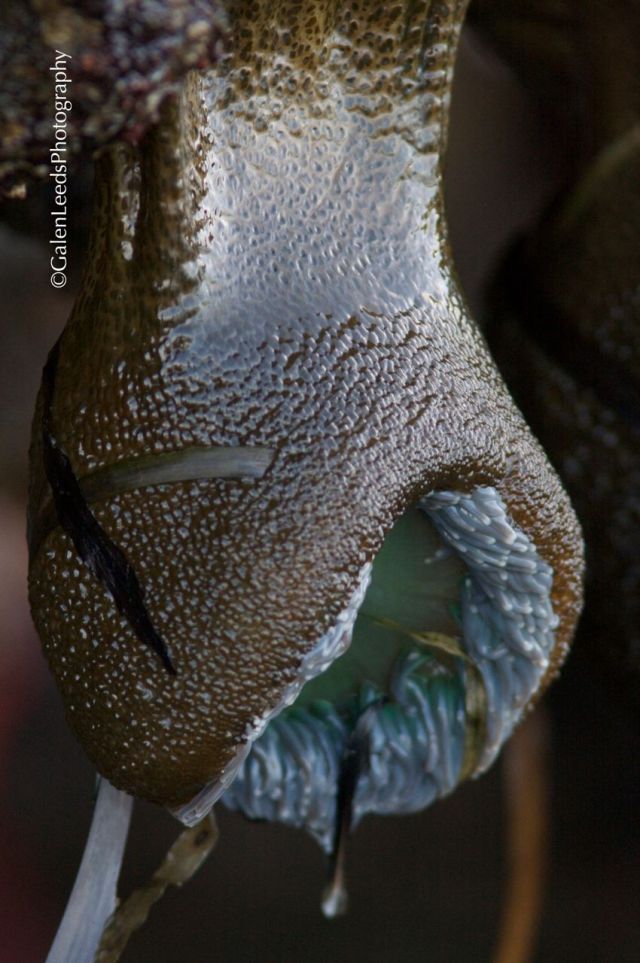
Some species get so large, or are fastened to the rocks in such a position that they cannot fully seal themselves against low tide

I know little about the thought process of an anemone, how it feels about this juxtaposition of two worlds. It has not the hard protective covering of a barnacle or a mussel, where it can seal out the aether, yet they survive- nae, they even thrive at this crossroad of the elements. Praise to the anemone, to the survivor.

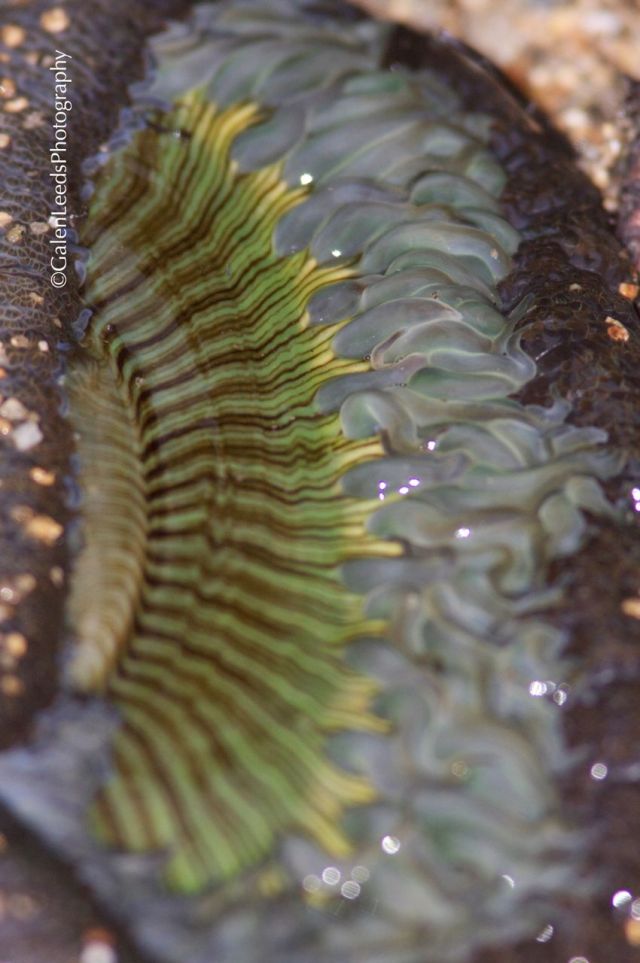
A larger anemone, unable to close itself at the lower tides. Such interesting colors in an anemone

Many of these photographs I took from my kayak. Many from the land of air, but for a few I grabbed my underwater camera and descended into the depths (two or three feet of water). I hope you enjoy them.

Posted in California, kayak photography, marine life, nature photography, SLR, underwater, wildlife photography | Tagged , , , , , , | 3 Comments