Anatomy of a photo #43: Fallen Star a.k.a. Simpsons Cartoon Hands


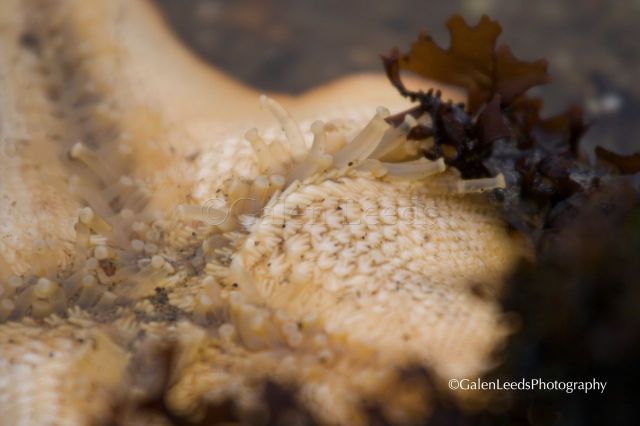
The underside of a star fish. It had peeled off of a rock at low tide and was out of the water

Paddling along Tomales Bay in my kayak one day, at a very low tide, I came across a star fish whose own weight had peeled it off of the rocks. I was enthralled by the various textures and shapes, the sucker-like tube feet reaching from the body, searching for a surface to grasp onto and right the fallen star.

I had a telephoto lens with me, with a “macro” function on the focus, and I began taking pictures at very close range. To do this, I switch the camera to manual focus, and set the focus as close to me as I can. I then move myself in and out from the subject until I believe that the parts I want in focus are so. I hold myself very still as I take several shots, since I know that this practice will often result in a few out of focus shots, no matter how still I try to hold myself, so I try to hedge my bets. If I am not trying to photograph something at the very edge of the focusing range, I will often leave the auto focus on and allow the camera to do its work.

The sun had already set behind the ridge I was kayaking under, so the lighting is very even- no deep shadows. Sometimes shade can be better for photographs than sun, because you won’t lose detail in the shadows. This did however mean that I was more limited in my shutter speed, ISO, and aperture in order to get the proper exposure. Using a 280mm I set the camera to ISO 100 for no noise and f/5.6 to have a shutter speed of 1/125th of a second. I wanted a very crisp image with the maximum detail, because I was so enraptured by the textures. It wasn’t until I was later, as I was reviewing the pictures on my computer, that I realized that many of the suction scales on the starfish’s underside reminded me of the hands of the characters of the animated series The Simpsons. Sometimes, you don’t realize what you have on your memory card, until later.

For photographs of starfish that have peeled off of rocks, only to be snatched up by hungry gulls, try reading Gulls and Starfish: An essay in photos
Posted in Anatomy of a photo, How To, kayak photography, marine life, nature photography, SLR, wildlife photography | Tagged , , , , , , , | Leave a comment

Anatomy of a photo #41: Silhouetted Willet walking on the beach


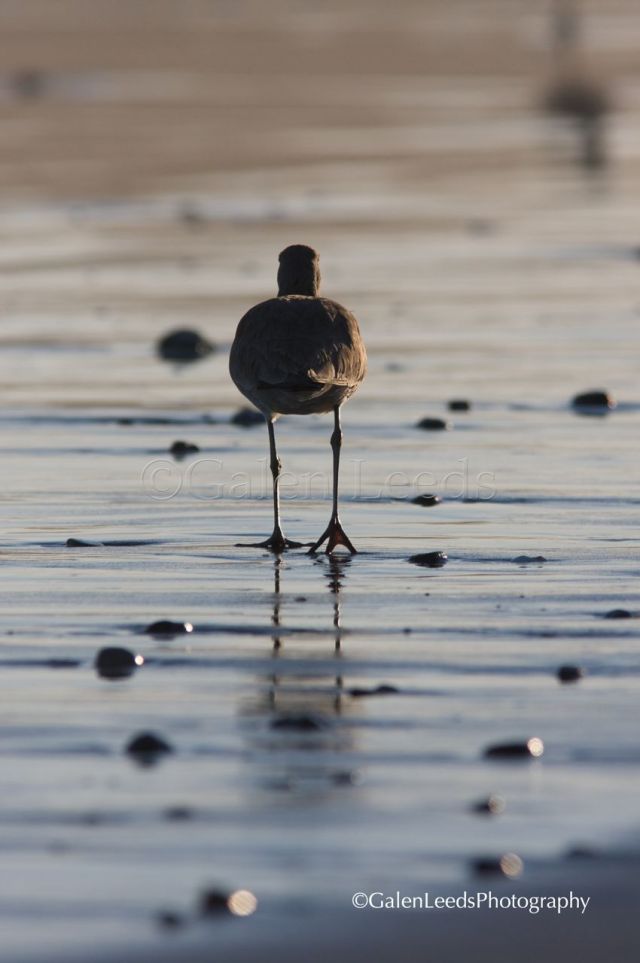
Willet at Drake's Estero

I took this picture towards the end of a very long day of driving and hiking around Point Reyes National Seashore. I had woken up that morning to hear on the radio that the air quality was exceptionally clear, and knowing that it would be perfect for photography played hooky from my duties of the day. And it was worth it. However, one of my favorite images from that day didn’t have much to do with the air quality, since my subject was fairly close at hand and not far enough off to have its crispness affected by haze in the air. The only way that the air quality may have affected this image is the color of the sunlight hitting the Willet in this image, as it was nearly the end of the day and the sun was approaching the horizon.

I had made it down to one of the local beaches, and it was a low tide. Rocks were exposed, doting the shoreline, and the waves were washing the shore farther out, leaving a wide expanse of wet sand… which can be ideal conditions for reflections, if you crouch down low. On this day there were several shorebirds (no large flocks) running along this stretch of wet sand, trying to catch sand fleas, sand dabs, and whatever other tidbits were exposed by the low tide and the washing of the waves.

I watched them for a while, snapping a shot here and there before I did crouch down for a few shots. Not only does this help to grab reflections like the ones coming off of the Willet’s feet, but it is also a much more pleasing perspective to view the bird from in a photograph. It’s closer to viewing the bird from its own perspective, a more natural view. When photographing wildlife from fairly close by, try to get down to their level. Your photograph will usually be more pleasing.

I violated one of the tenets of modern photography with this picture. The subject is centered (gasps of horror and dismay), or nearly so. I did not employ the rule of thirds, I did not offset the subject to improve the “flow” of the audiences attention. I am ready for the razzing, the keel hauling, the chopping block, or other tortures you may dish out. I am unapologetic and will take your punishments with my head held high. There are times when rules must be dismissed.

While I think the composition may have been somewhat improved had I captured the willet at the top of the image, I enjoy how the beach blurs away into hinted reflection beyond. Also, with some fast moving wildlife such as shorebirds, it is simpler to use the center focusing points. That way you don’t risk losing parts of the subject off the edge of the picture.

1/1000 f8.0 ISO 320

Posted in Anatomy of a photo, birds, How To, nature photography, photography, wildlife photography | Tagged , , , , | Leave a comment

Anatomy of a photo #42: Finding the invisible sheep


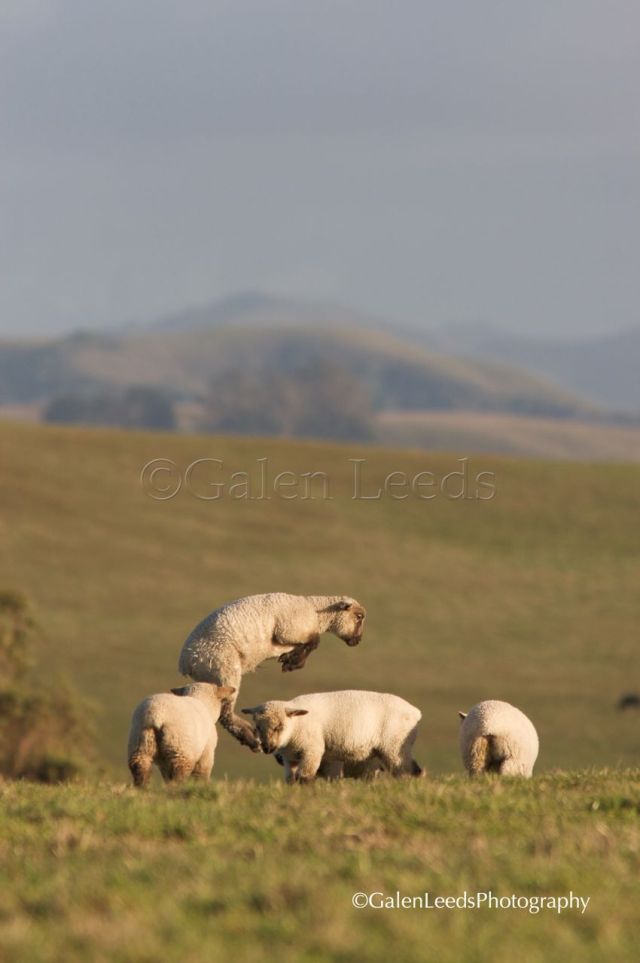
If you look closely, you'll be able to tell where the invisible sheep is

Out here where I live lambs are born in December or early January. This means that if you head out with your camera in February and March you can get photographs of playful, joyful lbs gamboling through the fields and leaping up the hillsides.

I headed out on such a day to see what was out and about when I found this group of youngsters tearing through the fields while placid adults looked on. Sheep are sheepish and rather skittish so I was watching them from a distance, and using a 70-200mm lens to capture the action. (High Shutter speed was my priority on this day, as freezing the action was more important than a deep depth of field.)

I originally titled this image as “Air Lamb,” and while I still think of it that way, someone once pointed out the fact that it looks more like I was able to capture an image of the elusive and rare invisible sheep. Look closely, and you’ll see it, though it is more by inference than actually being able to see something that is invisible.

Enjoy

Posted in Anatomy of a photo, California, How To, nature photography, photography, portraits, road side, ruminating, SLR | Tagged , , , , | Leave a comment

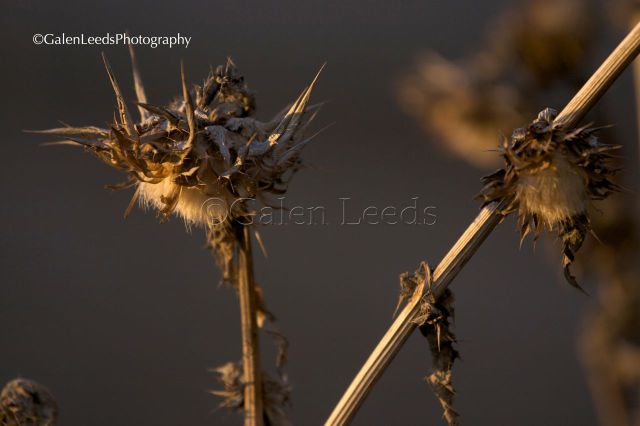
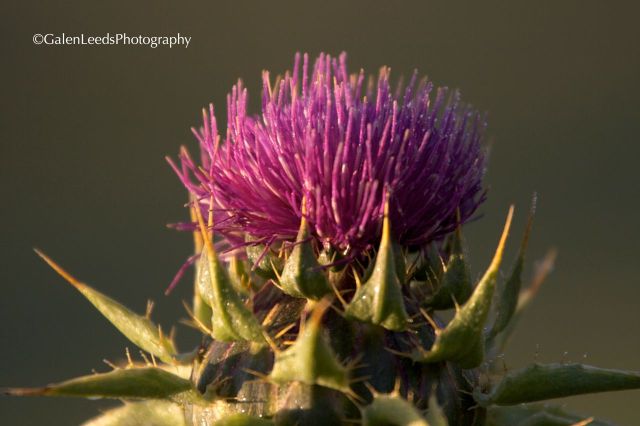
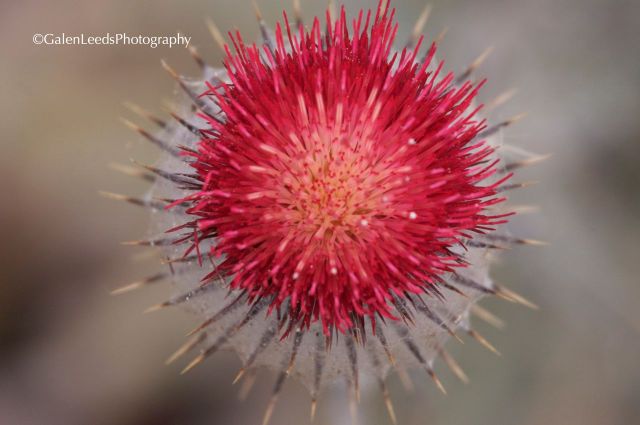
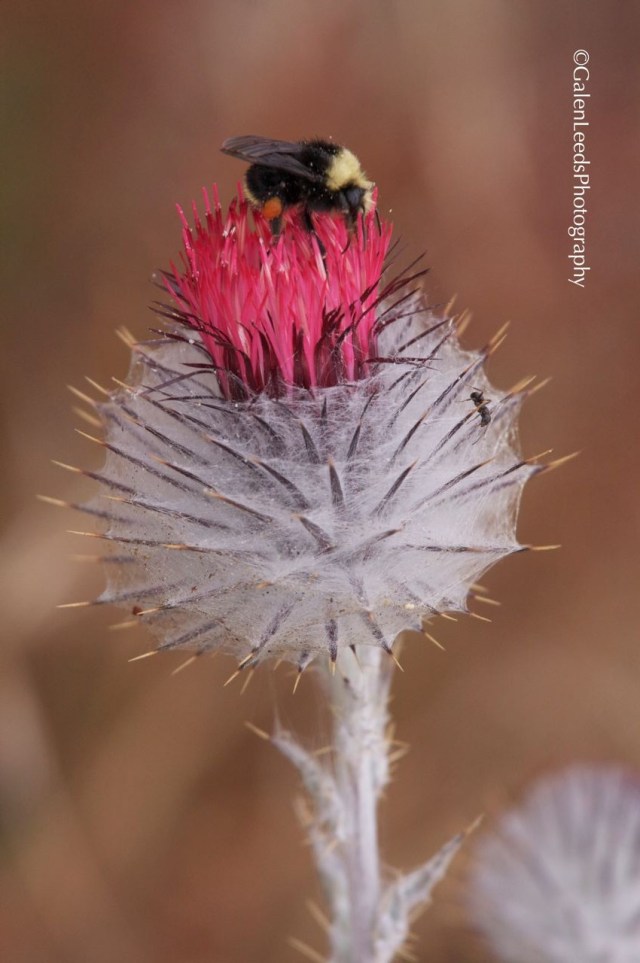
Anatomy of a photo #40: A season of thistles


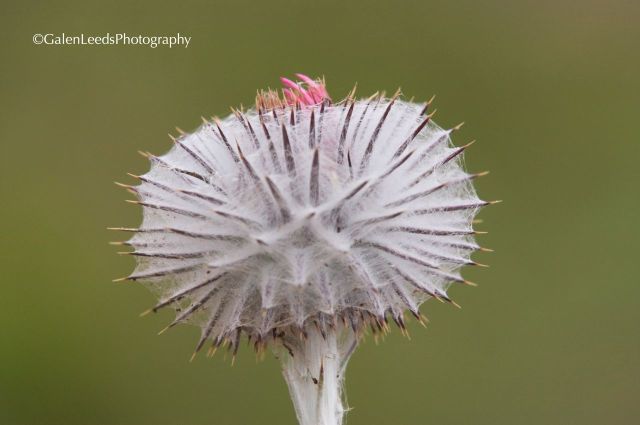
Thistles can have their own elegance if you let them

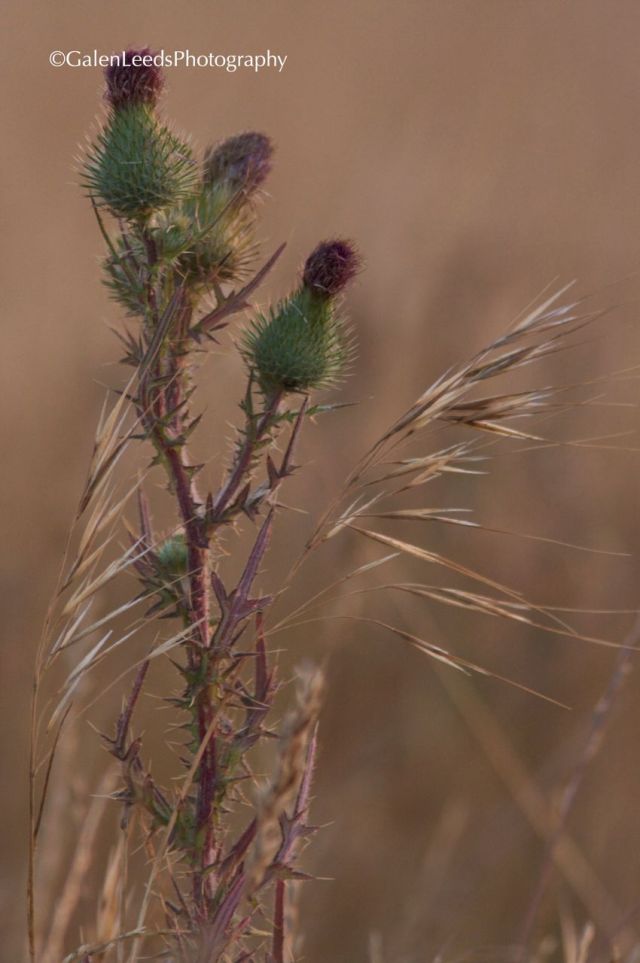
They are a weed. Their spiky heads can leave a child wailing and an adult cursing. They are often a blight, an eyesore, something to be dealt with or avoided. They also can have their own beauty and intricacies, if you take the time to look a them in the right light (figuratively and literally).

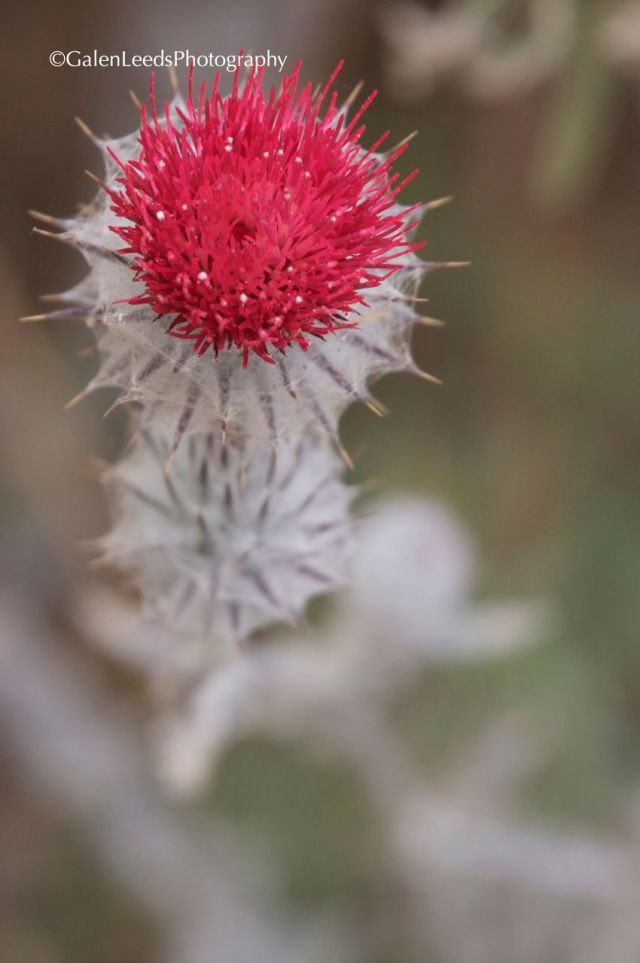
The proud bloom of a thistle in its prime

When they are fresh, they can be an amazing mix of color.

And sometimes those colors can be surprising

And they are important to our bees, as they flower when little else does.

Hurrah for bees and thistles!

Most of these pictures were taken in the same way- with a long lens and an aperture that was opened up wide. This gives a very tight composition on just the thistle, while blurring out the background for a nice even backdrop. It simplifies the picture, leaves behind extraneous details, and gives the audience only one thing to focus on. Thistles.

A little color is added to the golden fields, for better or worse

I had no idea how excited I would get about this post, until I started it and began remembering about some of the many thistle pictures I have taken and wanted to include.

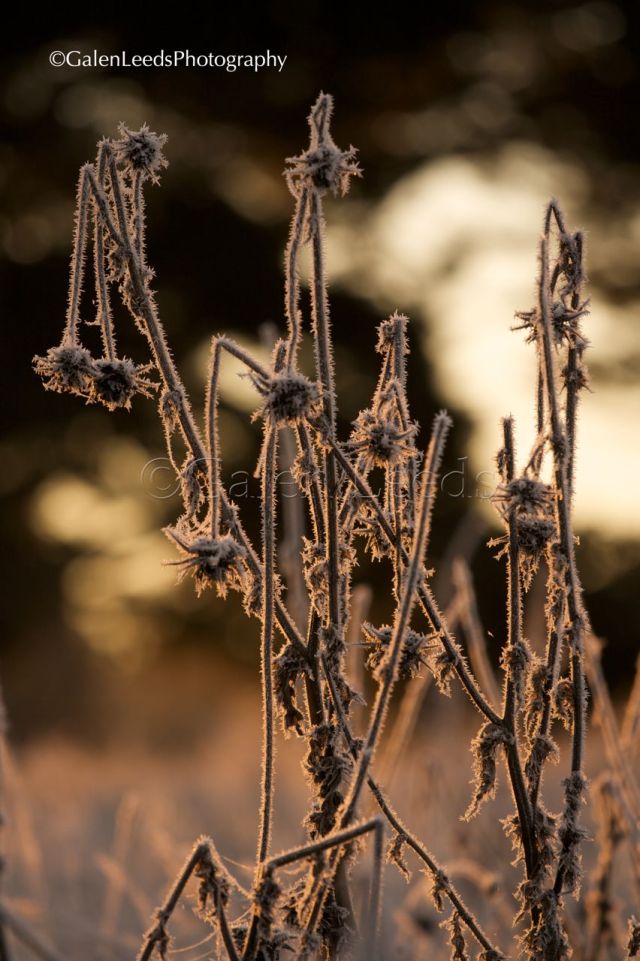
And finally, winter claims the forgotten thistles of the fall

New

New

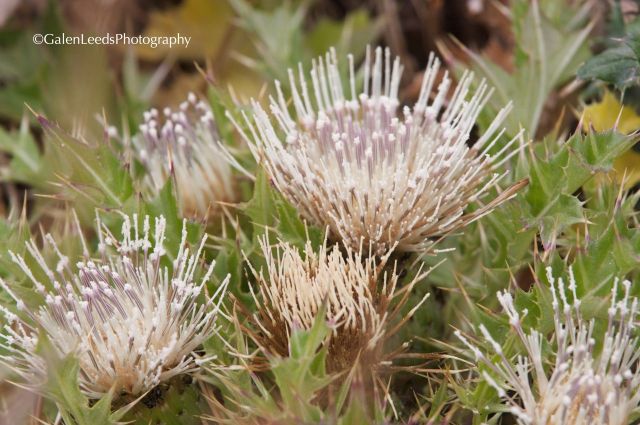
Brownie thistle... sometimes even the name can be a little surprising

New

Beauty and pain mixed into simplicity

Posted in Anatomy of a photo, How To, nature photography, Photo Essay, photography, portraits, ruminating, SLR | Tagged , , , , , , , , , , , , , , , , | 2 Comments

Anatomy of a photo (series) # 38: Hawktopus


This is when I first saw that which I never imagined was possible

It was the middle of winter, less than two weeks past solstice, and there were rumors of whales in Tomales Bay. It was hard for me to put my kayak in the water before 4:30pm that week, but one day I decided to see how far I could make it before I lost all light- Could I paddle fast enough and far enough to make it where the whale had been seen while it was still bright enough to photograph from my kayak? Likely not, but it was worth a try.

I set out paddling hard. I knew it was a pace that would be difficult to maintain for long, but I was feeling driven. I cut across the bay on a different line than I normally would have, driving farther to the north, where I had come across whales before, and where I knew the water was deeper. I kept up the high speed rhythm I had settled into, instead of easing up as my muscles began to burn. The sun was already behind the hills, and the light was fading quickly. I didn’t know why I was carrying on, as my light was essentially gone already.

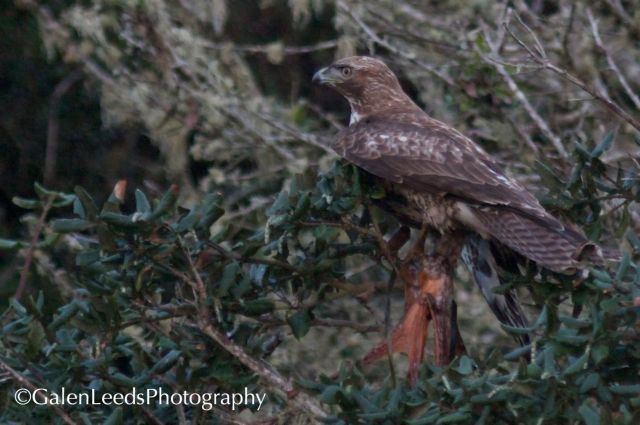
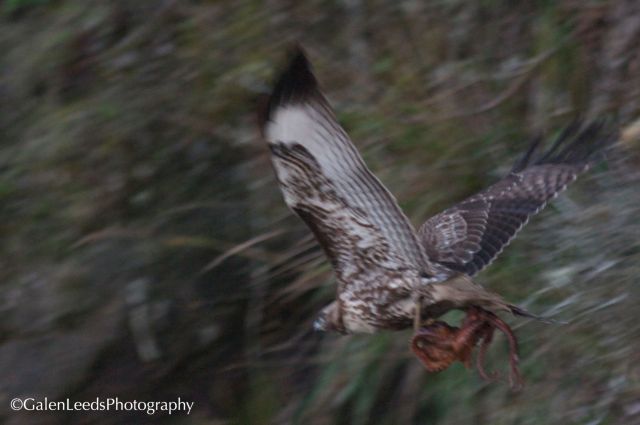
I had just reached the far shore and was adjusting my course more to the north when a juvenile Red-tailed Hawk flew into view, trailing something in its talons. I trained my ever present binoculars on it and felt my jaw drop (well, almost felt it drop). The hawk was carrying an octopus, something I could have imagined from an Osprey, but never a Red-tail.

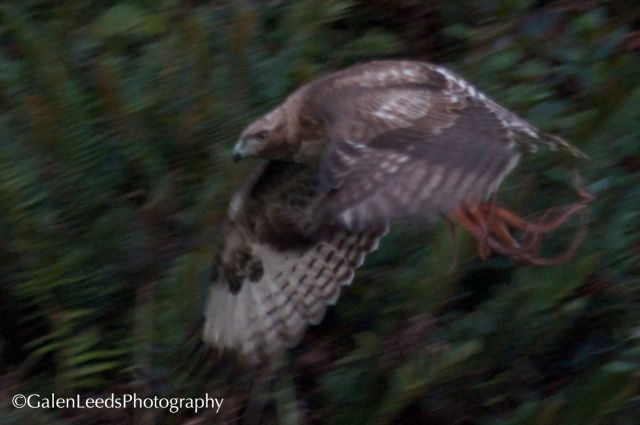
Red-Tail taking wing with its octopus prize

It landed near me in a low tree near the shore. I immediately began retrieving my camera from my dry bag (it was fairly well stowed away, as I thought it was so dark I wouldn’t be using it). I cranked the ISO up higher than I ever would have in normal circumstances- 1600. I didn’t care about noise now, I just new I needed to capture some images of this phenomenon. I opened up the aperture as wide as it would go, saying to heck with depth of field, and then set my shutter speed- 1/200th of a second.

The image was still a little dark, but I didn’t trust myself to be able to hand hold the camera steady enough to capture a crisp shot at a lower shutter speed, especially as I was shooting from my kayak, and a crisp image was imperative. I needed these photographs, I had to capture such an amazing prey in a Red-tails talons.

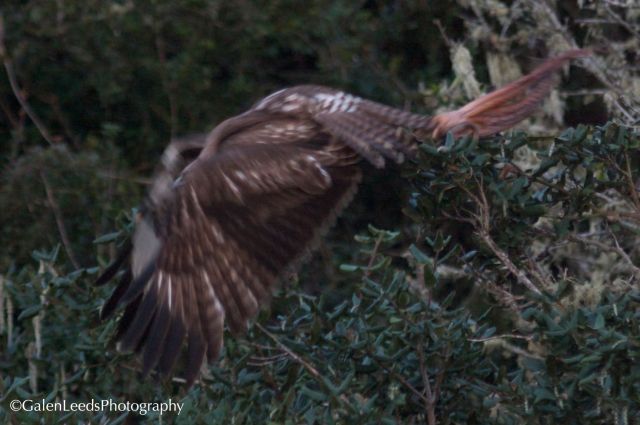
I discretely paddled a little closer, only a few hidden strokes, and then left my kayak to drift with its momentum very slowly toward the bird in the bush. Click. Click. It took wing. I’m not sure if it is because the Tail realized my proximity, or if it was because of the movement of the octopus (which was very definitely still alive), and it wanted a better perch for eating and killing. I captured several images as it flew off. These are blurred from the slow shutter speed that the low light necessitated, but much better these blurred images than none at all… the blurring even adds a sense of movement to some of the pictures.

One of the first down strokes of the wings as it took flight with the octopus trailing from its talons

The bird flew around a small point with the octopus writhing in its talons. I followed, but it had disappeared.
I have since learned that it was an Octopus rubescens, or common coastal red octopus. They can shift their color depending upon their mood, and red is the color that shows they are angry. This one looks very angry with its deep red color.
It is very rare to see octopus on this bay. I had only seen them for the first time a few days previously.

And away it goes

Posted in Anatomy of a photo, birds, documentary, kayak photography, marine life, nature photography, Photo Essay, photography, wildlife photography | Tagged , , , , , , , , | 4 Comments

Anatomy of a photo #37: Least Sandpiper walking on Tomales Bay


Brave little birds, but you still need to keep your movements to a minimum

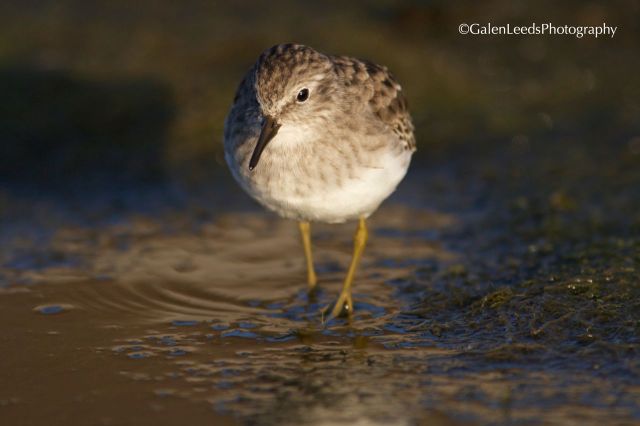
While kayaking one day along the shores of Tomales Bay I’m the Point Reyes National Seashore, I saw a small flock of sandpipers methodically working their way along the line between land and sea. It was easy to see where they were heading, so I paddled up the beach from them and nestled my kayak in the shallows near where they would pass.

I set my camera up for the pictures I wanted to take before settling down to wait- telephoto lens with the autofocus set so that it could focus nearby (some lenses and cameras have settings so that they can focus more quickly on nearby subjects, but this should be switched back to normal when shooting farther away, or it can actually slow your focusing down). These are very active birds with quick sudden movements, so I set my shutter speed higher as it was more of a priority than the aperture. ISO was set low to keep the image as noise free as possible, since it was a slightly older camera. I fired a few test shots.

As I settled down to wait, I was able to stay very still so that I would not spook them as they neared. Since I knew my camera was ready and my exposure properly adjusted, I studied the sandpipers as they approached, scurrying this way and that. I watched how they moved, deciding what angles I wanted to shoot them from. I hunched down lower in my kayak’s seat. They are a very small bird, so I wanted to be very small that I might be closer to eye level.

Click. A shot of several of them together as they pass around a jellyfish that’s washed up on the beach. One splits away, coming closer to me. I track it. Click. It’s reflected on the film of water that covers the sand. It bends down to feed. Click. It’s very close now, walking straight towards me. Click. And then it is too close for me to focus upon as I sit in my kayak, before going by and offering up shots only of its backside.

I glance to where the others are. Mostly they are beyond me, but there are a few that have yet to pass by. I take a few token shots, but I know I already have my best images of them on my camera, and I let out the breath I didn’t even know I was holding.

Once they were far enough from me that I knew I wouldn’t spook them, I slid my kayak back into deeper water before paddling on to my next adventure.

Posted in Anatomy of a photo, birds, kayak photography, nature photography, photography, portraits, shorebirds, wildlife photography | Tagged , , , , , , , | 3 Comments

Anatomy of a photo #36: Surfer and the Bridge


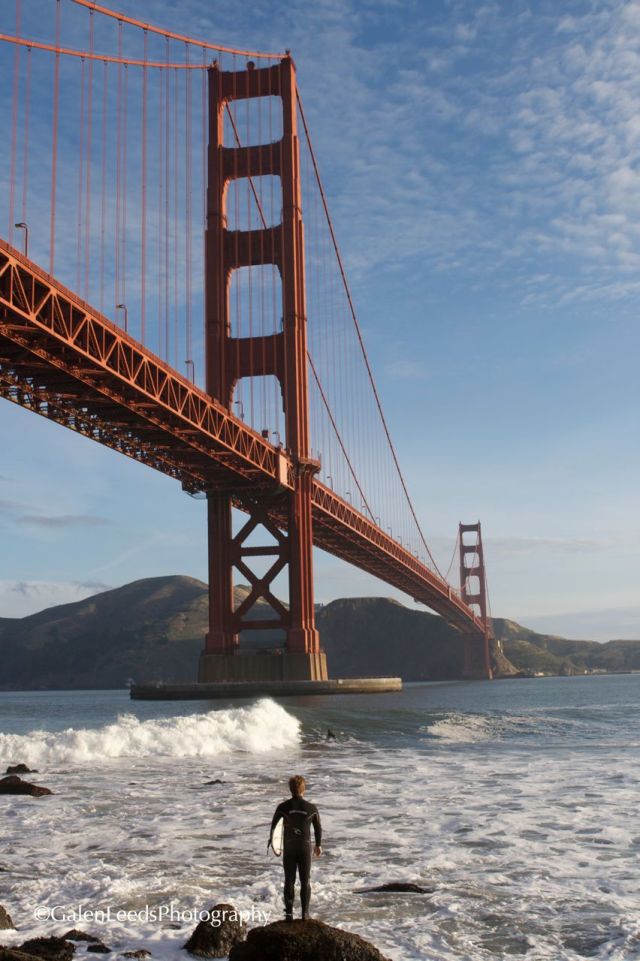
I had fun putting the bridge and the surfer both pointing up like towers

I have no idea how often you can find people surfing under the Golden Gate Bridge. In fact, I hadn’t planned on photographing surfers at all on this day, only the Bridge itself by the early mor ing light, but when opportunity presented itself, I jumped at the chance, with all lenses blazing.

This is an excellent location for photographing suffers for several reasons, the most obvious being that you can include one of the most iconic and photogenic landmarks of the western hemisphere in your surfing photos. There’s more to it than that however. The waves come in through the mouth of the bay, running along the shore instead of into the shore. This means that you can watch surfers as they travel past you, rather than towards you, and sometimes at fairly close distances.

On this day of accidental surfer photography I took many, many detailed images of surfers in action, and while many of them are great action photos, they only capture the water and the surfers, without really giving a sense of place, as this image does. While detail can be great, sometimes it is beast to zoom out and give the audience the landscape that it all occurs in. This can be true for both surfers and wildlife… And even wild flowers.

The surfer in this picture was not posing for me. He was just standing there contemplating the water before heading in, so I had to compose quickly before he moved. I tried to place the towers so that he and they echoed each other without lining up perfectly. I also made sure that the camera was in vertical orientation to not only capture the full height of the bridge, but also to continue the vertical flow. Neither of the towers is in the very middle of the frame, but placed in the left third and the right third of the image, with neither being too close to the edge.

The angle is wide, one that most cameras can also achieve be they SLR or compact digital(in this case 27mm). The aperture is stopped down about half way to give good depth of field, but not so much that it slows the shutter speed down to a point where it would blur the movement of the wave. All action is well frozen. There isn’t anything special about the making of this picture, except its location.

Happy shooting

Posted in Anatomy of a photo, California, documentary, How To, landscapes, Location, nature photography, photography, portraits, road side, SLR | Tagged , , , , , , , , , , , , , , , , , , , , , , | Leave a comment

Anatomy of a photo #35: Elephant Seal and Scientists


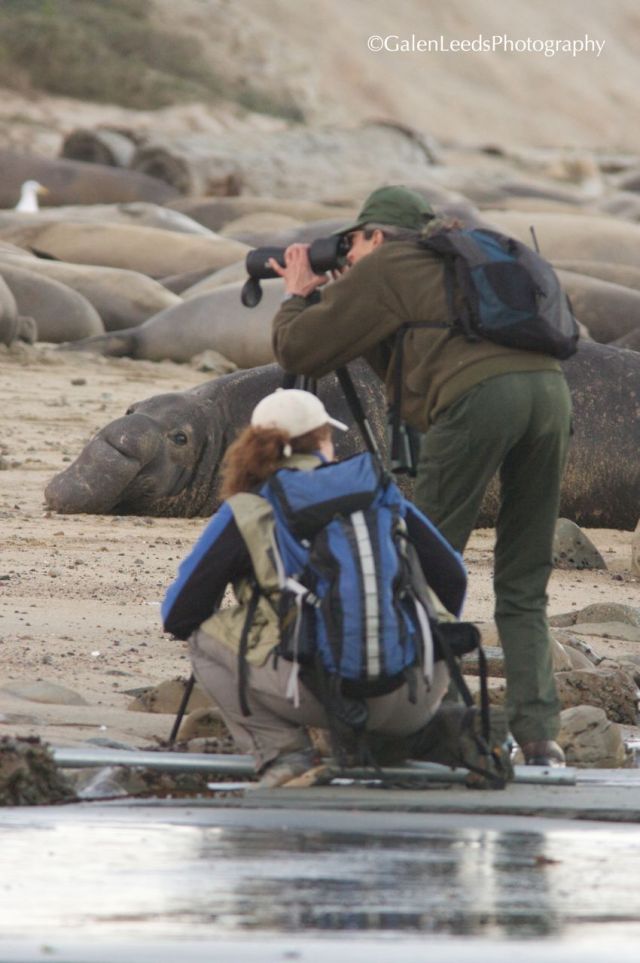
Using a long lens I was able to put the elephant seal in the same picture as the scientists, while keeping their relative sizes. This helps to show the immensity of these creatures compared to people

Wide angle lenses exaggerate the distance between between two objects, while long lenses and telephoto lenses can actually compress the appearance of the physical distances between objects. Notice the size of the elephant seals head, relative to the size of the scientists. The pinnipeds head is much larger, even though you can tell that there is some distance between them.
 
If I had used a shorter lens for this photograph the relative sizes of the people and the elephant seal would have changed, unless I was far enough away that none of the subjects would have taken up much space in the picture. All of the detail would have been lost, and it would have become more of a landscape image, with scientists and elephant seals in it.

I originally learned this lesson from the movie Stand by Me during the train scene- where the boys are running along the trestle, trying to make it to the other side before the train can catch them. Listening to the directors commentary, they explained how they wanted to film the boys running from the train, without actually putting them so close to the train that they would be in danger if they tripped and fell. They explained how they used a very long lens (I believe it was 500mm or more) to visually compress the distance, keeping the relative size of the train, without forcing the boys to be running with the train on their heels, even though it appears so. In this way they were able to get realism and didn’t have to resort to a blue screen (this was before digital effects).

While I have never tried to film people running from a train, the lesson has stuck in my mind, because it can help show different objects without overly skewing their relative sizes. It can be used to frame someone  or something silhouetted within the moon (making them move away from you until they are the same relative size as the moon, or a little smaller than it). Or by showing someone relative to something that they may not be safe being directly next to- trains, elephants, elephant seals, lions, etc.

When using a long lens to compress distance, there is one important thing to consider- aperture (which determine how in focus objects at different distances are). When the aperture is opened wider (i.e. f4 or f5.6) you will only have a small stretch that is in focus. Stop down the aperture, and the deeper your focus will become (i.e. f8-f22). That is more will be in focus at one time.

For this particular photo the aperture was f8.0, which is still fairly wide. This is why the people are somewhat blurred, while the bull elephant seal is fairly well focused. I would have liked to have the aperture closed down even more, but the light was very low, and my shutter speed couldn’t have dropped lower without having movement blur. My ISO was also as higher than I was comfortable with (1600), and I couldn’t have changed the aperture more than I already had without having too dark of an exposure.
Happy shooting,
Galen
Posted in Anatomy of a photo, documentary, elephant seals, How To, How to, marine life, photography, portraits, wildlife photography | Tagged , , , , , , , | 1 Comment

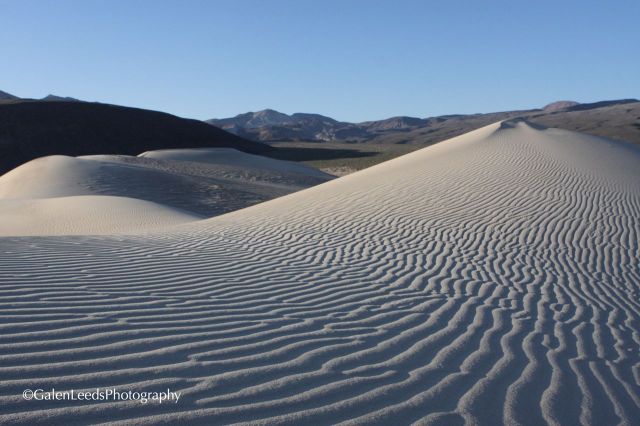
Anatomy of a photo #39: Wind wrinkled dunes


Wind sculpted dunes in low angle sunlight

New

The Eureka Sand Dunes are the tallest range of dunes in California, rising more than 800 feet above the floor of Eureka Valley, part of the Death Valley National Park (though far romoved from Death Valley itself).

A large part of taking pictures of wind wrinkled dunes and getting definition of the dunes is time of day. The angle of the sun is key to giving the wind blown lines that sharp shadow relief. The sun needs to be low in the sky, which means early morning or late, late afternoon/evening. If the sun is high in the sky, the slight angles in the sand won’t cast shadows.

Other than time of day, it is all personal choices- composition, depth of field , and exposure; things each photographer decides for themselves. I personally used a wide lens, since I wanted the landscape to stretch away from the detail of the winds waves in the sand. The main dune is off center for flow. The horizon line is not centered.

The eureka Valley is a beautiful place and is ideal for photography.

For more images from the Eureka Sand Dunes, check out this Photo Essay

Posted in Anatomy of a photo, California, landscapes, My favorite Parks, National Park, nature photography, photography | Tagged , , , , | Leave a comment

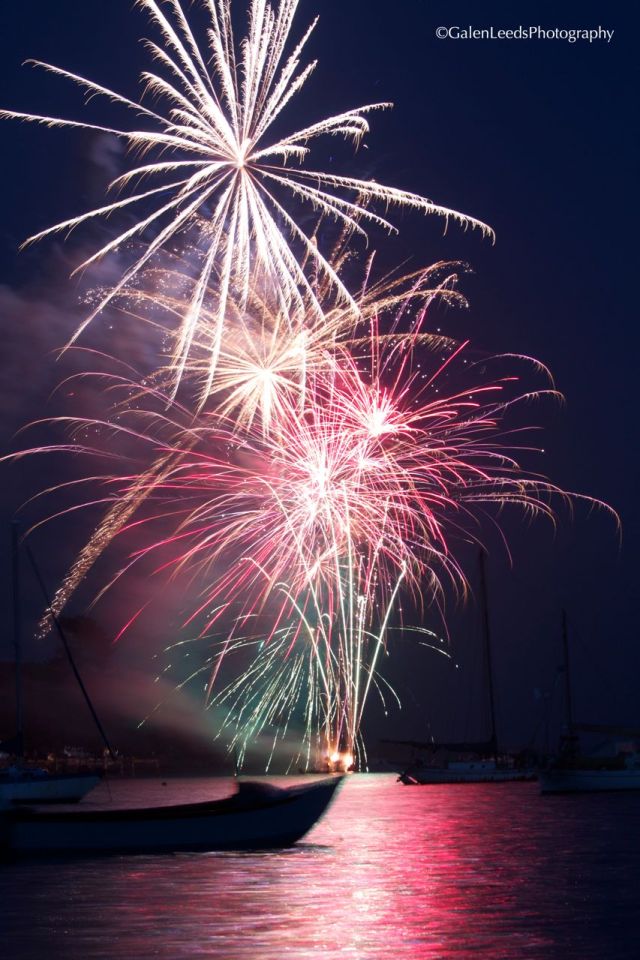
How to photograph fireworks


It’s actually pretty easy to get the technical parts right, when taking pictures of fireworks, which means the important part is to think ahead and decide where you want to be in relation to the firework display, and what else you will want in your photograph.

I learned how to photograph fireworks, well, ummm… two days ago on the fourth of July, and it only took a simple web search and a few minutes of reading. Here is what I learned, but simplified.

1. Use a tripod. Your exposures will be 1-15 seconds long. You need to keep your camera still. Use a remote shutter release or your camera’s timer.

2. If you have the option to set your ISO, set it between 100 and 400. (Many of the articles I read in my search said 100, but I found I prefered 320 so that I could have a faster shutter speed.)

3. If you can set your aperture, set it between f8.0 and f16. This gives a good depth of field, without slowing down the shutter speed to much.

4. Turn off your autofocus if you can and focus on infinity. If you can’t, try to focus on a point near where the fireworks will be and lock your focus on that.

5. Set your shutter speed between 1 second and 15 seconds. The length of the shutter speed should depend on bow many bursts you want in the photograph at one time. The longer the exposure, the busier the image. The shorter the exposure, the more you are focused on just one or two explosions.

6. Start taking the picture when you see the firework launch. Your exposure is long, so it will catch all the action you want and more.

That covers most of the technical aspects. You should also think about what lens to use. If you are close to the fireworks, use a wide lens. You won’t be able to track the rockets very easily, so you will want to improve your chances by photographing more of the night sky. When I took my photos, I was mostly using a 70-200mm because I was farther away, and my only other lens I had brought was my 16-35 mm. The lens I wish I had brought was my 24-70 mm, which would have given me a little more of the boats and water, while still capturing the action.

Happy shooting,

Galen

This slideshow requires JavaScript.

Posted in documentary, How To, photography, SLR | Tagged , , , , , , , , , , , , , , , | 4 Comments

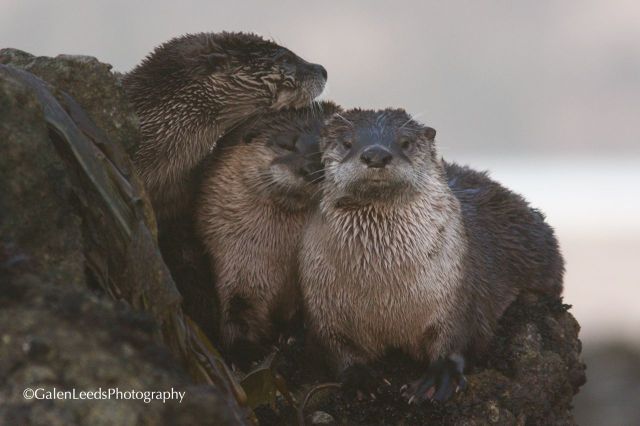
Anatomy of a photo #34: Trio of otters


Otter clan at the end of the day

Some of my favorite animals to watch and photograph in the wild are the North American River Otters (Lontra canadensis). Part of what makes them fun, is what a social creature they are, often intertwining and climbing over one another, touching each other and interacting in a familiar and  playful way. They are hardly ever completely still, always eating, playing, grooming or just saying hello to one another. They are the embodiment of energy.

I was fortunate to be able to capture these images, as the sun had already set behind then coastal hills that I was kayaking along, when I saw this family of otters. I knew it was a likely area to find them in, as I’ve come across them in the same area before. I atched them playing in the water, swimming and diving for fish and crabs. Occasionally, one would stick its head from the water, tilting its head back, as it crunched away at some choice tidbit. Finally, three of them climbed onto a rock that was especially exposed by the low tide. They rubbed themselves on the rock, scratching themselves, and perhaps leaving a little territorial scent, before they gathered together, and watched me.

Wildlife photography can often be tricky, in that you have little control over the situation. Lighting is subject to well, um, where the sun is, natural features such as trees, hills, cliffs… where the wildlife is in relation to the photographer and the natural lighting. This last is the only way we can affect the lighting when taking the photograph, by moving ourselves to where the animal is in better light. We can’t direct the animal or the sun, so we must direct ourselves- something which also holds true for the finding of the wildlife. While we can make educated guesses as to when and where we will find wildlife, there are by no means any guarantees. We must take our chances, and try our best to stack the deck in our own favor, by visiting places where it is likely to come across subjects to shoot, familiarizing ourselves with our cameras, and by respecting wildlife and not encroaching on their comfort zones.

Posted in Anatomy of a photo, kayak photography, marine life, nature photography, otters, photography, wildlife photography | Tagged , , , , , , , , | Leave a comment

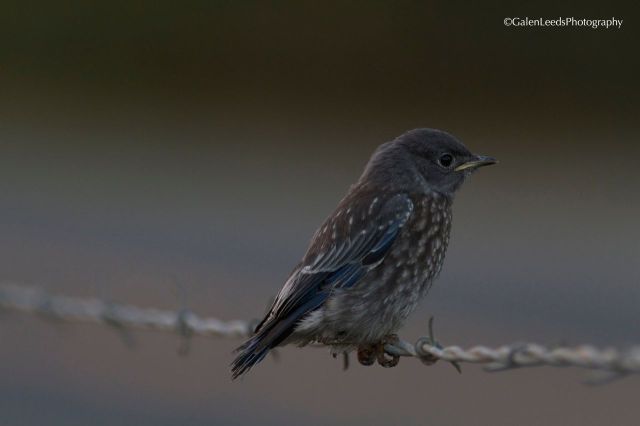
Baby Blue Bird: Anatomy of a photo #33


A recently fledged Western Bluebird chick. Notice the spots and the lack of blue

There are times, when many of the lessons we’ve learned be damned, we see something so exciting or new to us, that the most important thing is to get a picture, any picture at all. That’s nearly what happened to me last night. I suddenly found myself in very close proximity to a bird with a very special plumage for me.

In the photograph above is a very, very young Western Bluebird (Sialia mexicana). I saw it as I was walking to view (and photograph) some Fourth of July fireworks. Night was nearing, and the light was fast disappearing, when this juvenile bluebird that was just learning to fly fluttered along the fence where I was walking. My camera was (foolishly) buckled away in its bag, where I had to waste precious moments retrieving it.

When I pulled it out, I immediately bumped the ISO higher than I like to shoot with- all the way to 1000. Noise be darned, I didn’t have any photos of such a recently fledged bluebird (my guess is that this was its first or second day of flying, by how clumsy it was, especially in the landing department). When shooting at higher ISOs, it is often better to slightly overexposed.

I opened the aperture up wide, because I wanted to be able to use all the dwindling light I could to properly expose this picture, while shooting at a high enough shutter speed to freeze any sudden movements into clarity. I guessed at the settings, and because I was so used to using the camera at in different lighting situations, I was nearly spot on.

I used the focusing points I had preselected earlier in the day, which meant my composition wasn’t what I would have preferred, but I wanted to make sure I could get some shots off while I could. Shoot first and make sure you get a shot, refine how you shoot after. This time I didn’t gave much of a chance to refine my shots, but I am still happy with them.

I would have been hard pressed to capture these images, if I didn’t know my camera already from many, many hours of use.

Posted in Anatomy of a photo, birds, California, How To, nature photography, photography, portraits, road side, SLR, wildlife photography | Tagged , , , , , , , , , , , , , , , , , , , , , , , , , , , , , , , , , , , , , , , | 2 Comments