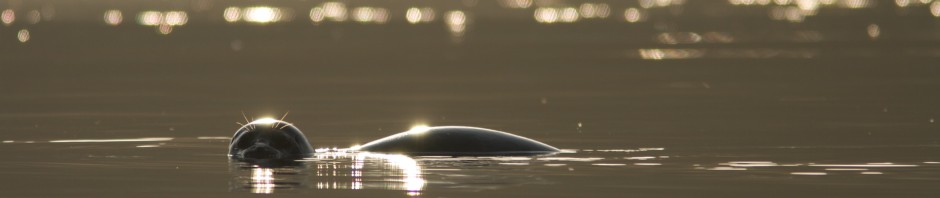
Giacomini Wetlands: An essay of photos and brief history


The auction has ended and I’ve been auctioned off by the group (Point Reyes National Seashore Association -PRNSA) that is responsible for the restoration of the wetlands pictured below, and for making them a part of that same National Seashore. I will be leading a kayak photography tour through them for the lucky bid winner.

This slideshow requires JavaScript.

The Giacomini Wetlands are a magical place. They are at the very southern end of Tomales Bay (a beautiful protected bay about an hour north of San Francisco), and for over 50 years they had been blocked off from the tidal influence of the bay with a series of levies and dams and turned into cow pasture. It was part of a working dairy with a milking barn that was right next to the local fire station and three blocks from the small downtown and Highway 1. It gave the place a rural and bucolic feel, and when the wind was wrong a little too country of a stench. (You can’t be milking a couple hundred cows a day without creating a bit of fertilizer.)

Around the start of the new millennium PRNSA was able to help coordinate the acquisition of these 550+ acres of former bay land, and to help turn them into park property as part of the Point Reyes National Seashore. This land was grazed for a few years as planning began on how to restore these lands both physically and financially.

You see, there was no way real way to restore these lands to exactly what they had been before they were turned into pasture. In the 75 years before that, in which europeans had settled and begun farming the land, that southern end of the bay had silted in a bit and gone from shallow bay to mudflat (which is what made it somewhat practical to become pastureland). There were no surveys of original depths of the water or heights of land. There was no “original” to really be returned to. In a way the restoration project became creation project instead of a “re”creation, since they had to invent their own “ideal.”

They did use old photographs, both aerial and otherwise, to place the tidal sloughs where they had once beens. They tried to remove as much of the soils as they could that had been added on with the cows, trucking the dirt to other locations in the park that had served as quarries before they had become parkland and filling those quarries in to their original land shapes. A massive amount of dirt removal and transportation took place.
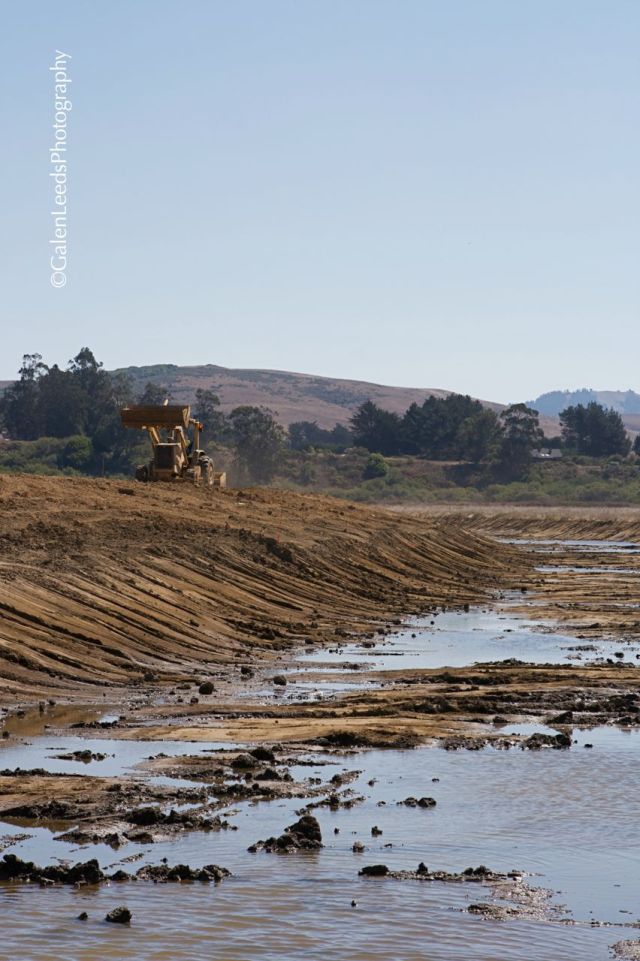
The main tidal slough, dug out to follow its old bed as seen in old photographs

It was during this restoration process, somewhat towards the end of it, that I became at least slightly involved. After talking with the park I was granted access while the machines were in there transforming the landscape, and began to document the project. It was impressive to watch the progress and the scope of what was going on. The area was also rich in wildlife and birdlife and I wanted to see what changes would come to the area when the sea once again regained its influence.
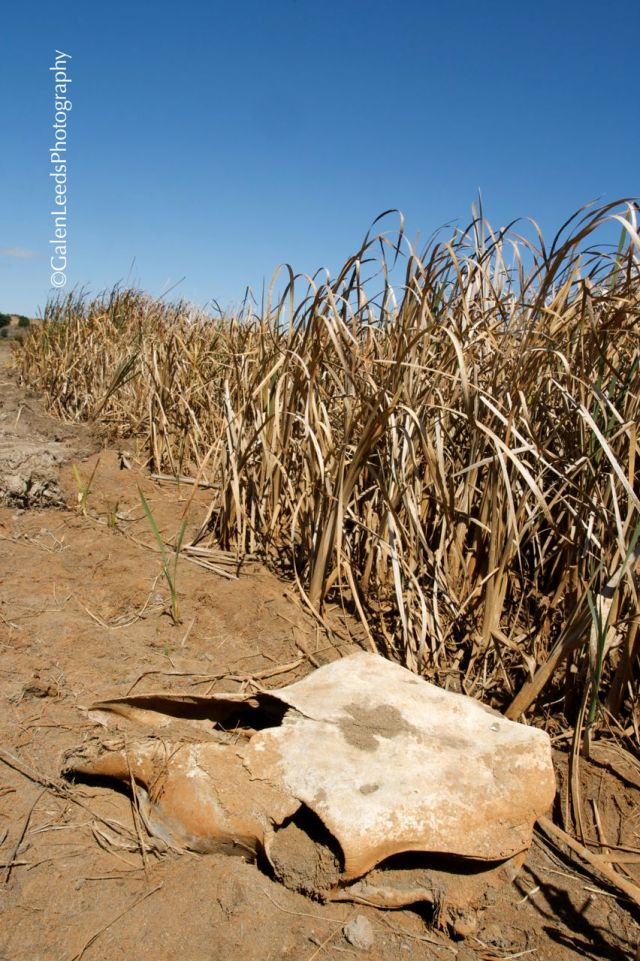
This cow skull I saw out there seemed rather symbolic of the change from pasture to wetland that was about to take place

All of the work began to close in on October 25, 2008- the date when they would breach the levies for the last time and allow the tidal waters of the bay back into these lands (They couldn’t breach the levies until the earth removal was complete, or else the machines would have to work in the water and mud at low tides.) I was able to be there on that day to take photographs for the local paper. It was a beautiful thing to see, even if the instrument of the final breach was an eye jerking orange…
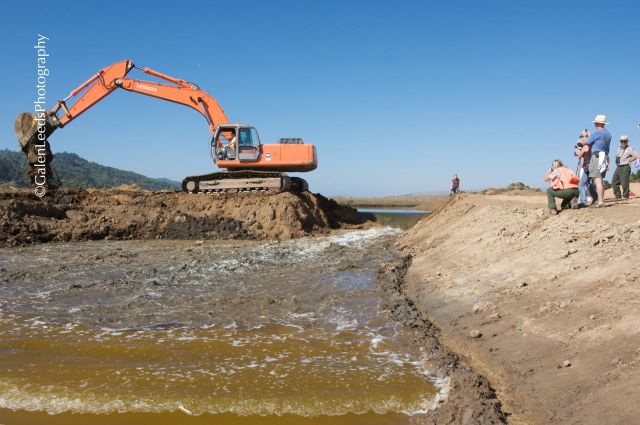
The bay waters surge towards me as I stand down in the slough, photographing the historic breaching of the levies

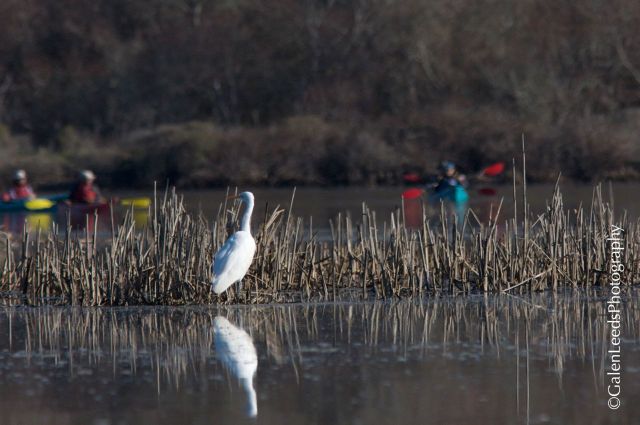
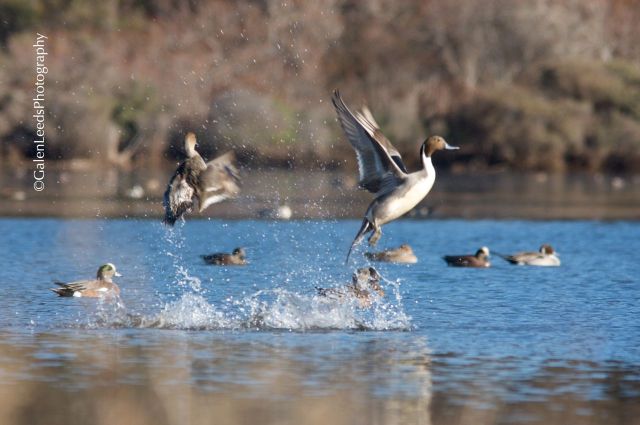
Now the only way to truly get into these wetlands is by kayak. They are a tidal mass, creating critical habitat for several endangered species. They also provide a home for a plethora of life, including various shorebirds that can be seen by the thousands. A wintering ground for migrant ducks (which can also be seen by the thousands). They are a transitioning ground for young salmon on their way to the salty ocean as they leave the streams they were born in. Their creation has also eased the flooding of many homes and of local roads in the wintertime. These wetlands have been a good thing in so many ways that it is hard to list them all. They are even a perfect place for a little kayak photography.
Posted in birds, kayak photography, landscapes, My favorite Parks, National Park, nature photography, Photo Essay, photography, wildlife photography | Tagged , , , , , , , , | 2 Comments

Anatomy of a photo #68: Elephant Seal Pup


New

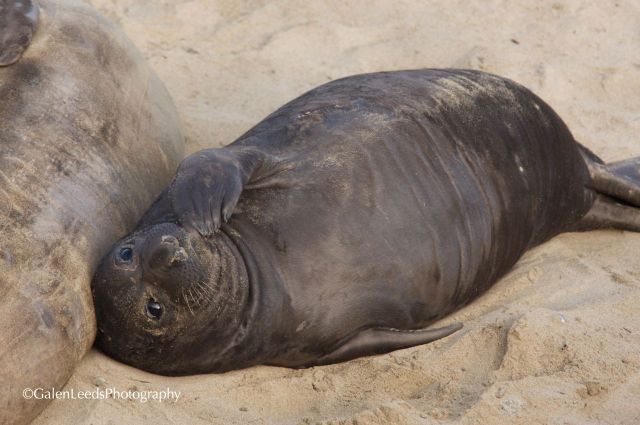
Elephant Seal pup looking cute

Two important factors when taking photographs of wildlife are finding them and safety (for the photographer and the wildlife). Right now, there is a chance to find both at the same place and time. I was able to take this image while aiding scientists in a flipper tagging study, but those interested in seeing these flippered swimmers in the wild don’t have to put in all that work.

Today, we all have a chance to gain ourselves an outing to see Elephant Seals in the wild, either with pups or go through their mating rituals, or when they haul out in the fall to shed their outer coats. You see, the Point Reyes National Seashore Association (PRNSA) is auctioning off an outing with one of the top marine mammal scientists on the West Coast to head out into the field with Doctor Sarah Allen, and to learn about these denizens of the deep. The auction is now closed.

The experience is amazing, and designed to protect both you and the animal. I know Sarah Allen through my work in the Point Reyes National Seashore, in fact some of my images are in her new book Field Guide to Marine Mammals of the Pacific Coast , which she coauthored.

The Point Reyes National Seashore Association (PRNSA) runs a summer camp in the heart of this beautiful national park. The proceeds from this auction go towards a financial assistance fund that helps children that might not otherwise  be able to afford this magical summer camp to attend. The camp is focused on nature, and teaching children about the natural world around them. Some who attend now nature quite well, but others know only the cities and the asphalt jungles that surround them. Many have never spent a night sleeping in the great outdoors. But wait, there’s more. A few years back, the camp began a new program where they’ve created a special out reach to children that have recently arrived in this country as refugees, whose only knowledge of “camp” is of refugee camps. PRNSA’s program immerses them with the other kids, showing them some of the better, more natural parts of the land they are now part of.

Another auction item you can win, is a kayak photography outing with me, and a print. Enough auction talk though. This post is actually supposed to be an anatomy of a photo.

I took this picture from a safe vantage on a small hillside above the winter elephant seal colony at Chimney Rock, in the Point Reyes National Seashore. Elephant Seals cannot climb a steep hillside, so it was a very safe location, even though we were quite close to the beach. Our higher vantage point also kept us out of the pinnipeds direct eye line (they don’t look up too much). There was little danger from our actions and presence of spooking the large marine mammals and setting off a stampede where the babies could get trampled by the adults.

I used a long lens on my camera (420mm). A medium high shutter speed to be able to freeze action (which there was a lot of) and a medium high ISO to allow me a higher shutter speed in the foggy overcast light. Aperture was pretty much open.

Hope you bid on Sarah or my self and support this excellent cause.

-Galen

Posted in Anatomy of a photo, elephant seals, marine life, National Park, nature photography, photography, wildlife photography | Tagged , , , | 2 Comments

The Languid Sea Lion


New

This slideshow requires JavaScript.

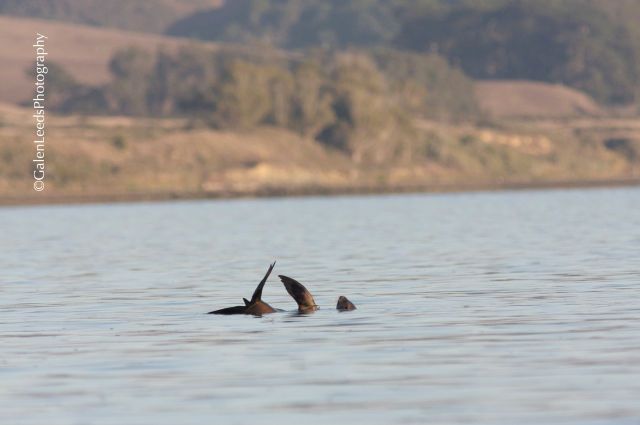
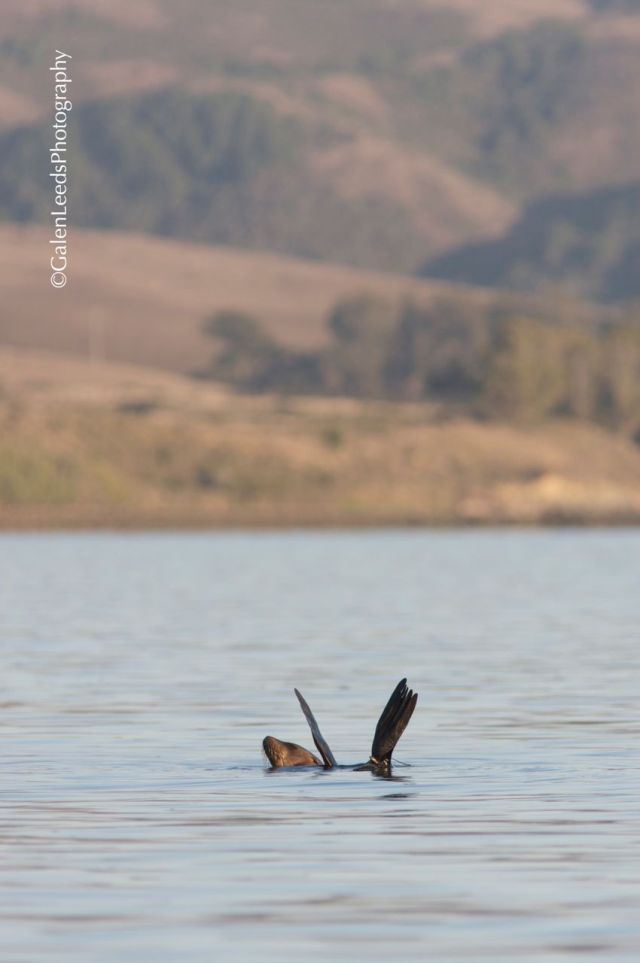
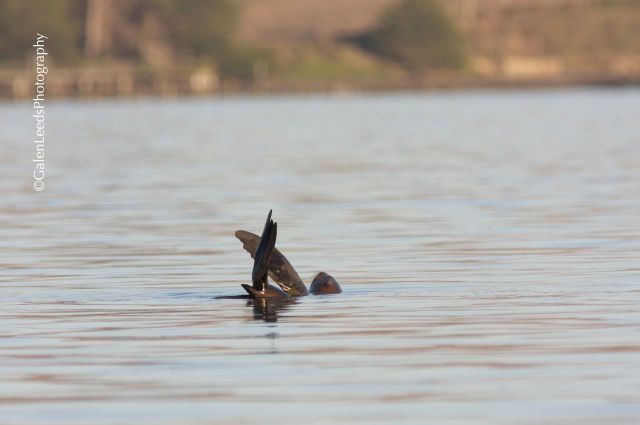
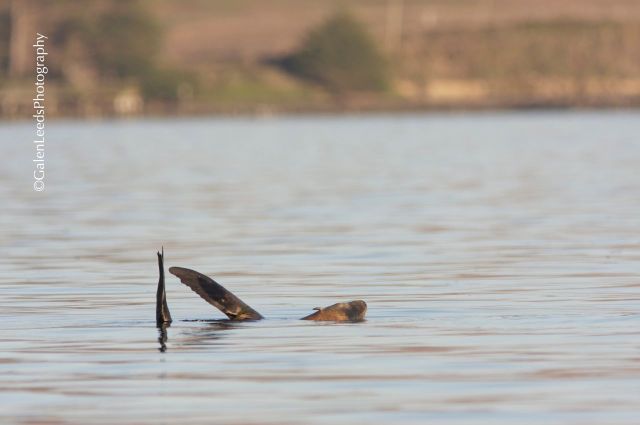
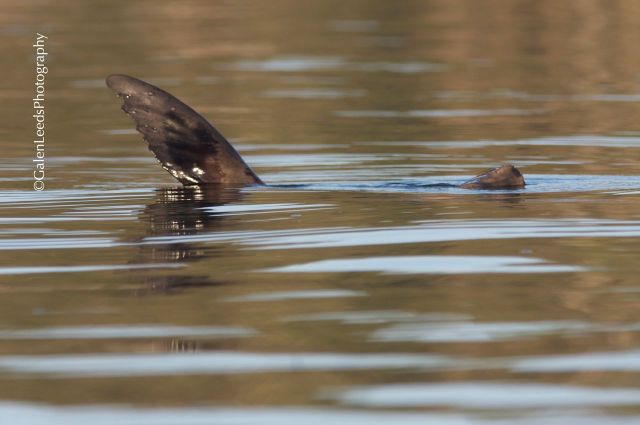
On an afternoon like this, in a year not so far ago, I was kayaking the waters of Tomales Bay, when I came across this Stellar Sea Lion, floating in a dream.

Sea Lion floating peacefully on Tomales Bay. Here you can see its tail

I stopped paddling, and began to drift myself. From a distance I pulled out my camera and began photographing it.

The Languid Sea Lion

Slowly, with the very slight breeze and the slight currents I floated a little closer. Using my paddle, with the quietest, gentlest strokes imaginable, I directed my kayak to pass a distance to the side, not heading directly towards the sea lion, as I did not want to scare it or disturb it.

Slowly it turned in circles as I watched

The gentle, warm sun washed over us, filling me with a calm that I may have borrowed from this flippered soul floating at a distance. There was a stillness to the day that encouraged this sort of calm, this torpor.

Its nose was barely above the water, at times dipping below it

I barely breathed, not knowing how much it could hear, how far it was removed from the world. The day was so calm and quiet, that I imagined my slightest noise to be magnified. Each time I dipped the paddle into the water, I tried to do it so that there was no sound.

And I got closer, and closer, as it lay there, dreaming

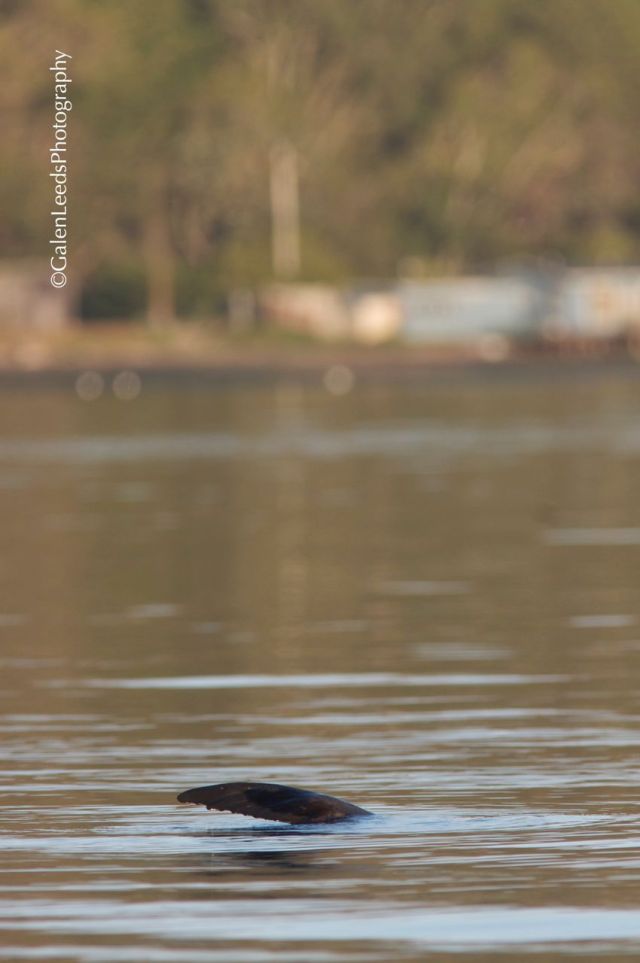
I began drifting closer than I had intended, so I began to paddle backwards, my paddle split in two, and I using only one half that I might not make too large of a movement, in case the Sea Lions eyes fluttered open at the wrong moment. It seemed so peaceful, so content floating out there alone in the bay, the late afternoon sun warming its flippers as they stuck out of the water, miniature, organic solar panels collecting the last heat of the day.

And at times the Sea Lions snout would dip under the water, leaving only a single flipper above the surface

And ever so slowly I backed away, and away, leaving it snoozing, unknowing that I had ever been there. I felt incredibly lucky to have witnessed this creature, at rest on Tomales Bay, floating there alongside my kayak, creating the perfect photography subject as I drifted on my own dream…

Posted in California, How to, kayak photography, marine life, nature photography, photography, SLR, wildlife photography | Tagged , , , , , , , | 4 Comments

Bonapartes Gull: An essay of photos


New

This slideshow requires JavaScript.

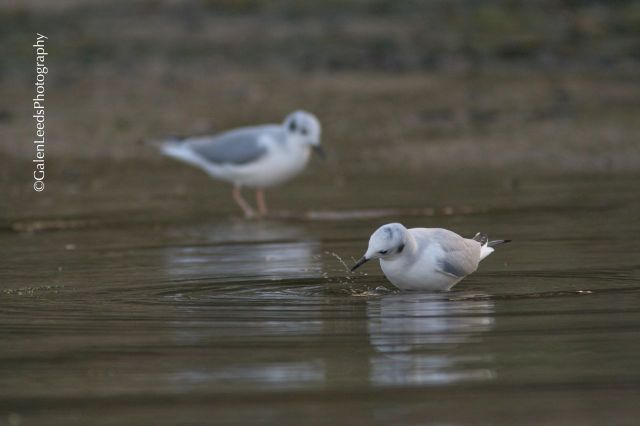
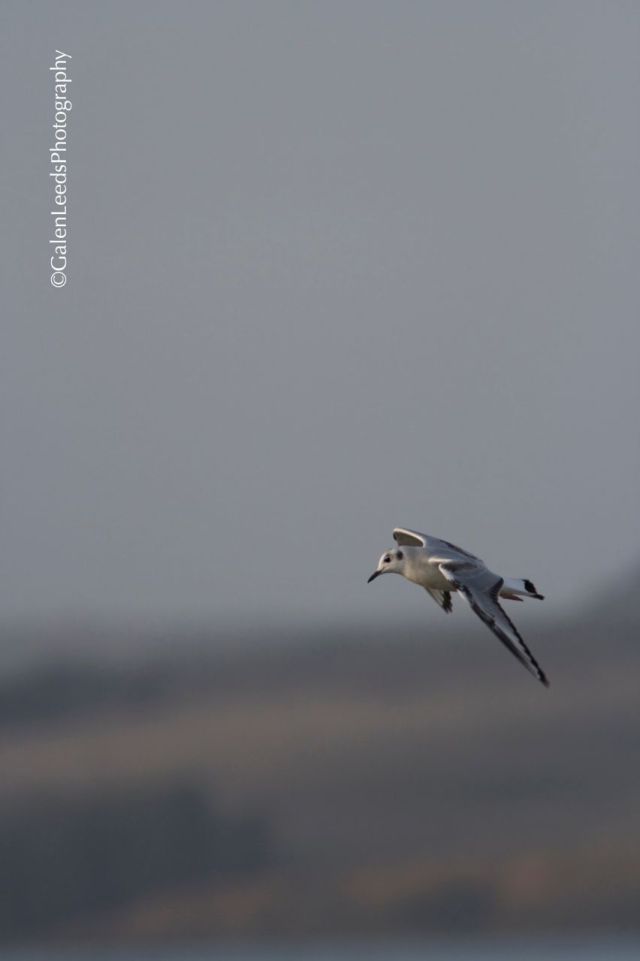
One of the more diminutive gulls to be found out here on the West Coast, the Bonaparte Gull is fun to watch as it skims food from the waters surface while flying or wading in the shallows. While it is one of the more common gulls, I see it rarely enough that I am happy every time that I spot one. Occasionally I spot a single one, but more often I come across it in a small group of three or four.

Its smaller size makes it much more maneuverable in the air, bouncing and dancing as it darts from side to side. It has a grace that is missing from many of the larger gulls.

It is fairly distinctive from the other gulls that are common (there are a couple of rarer birds that look similar), so even those that do not know gulls can often identify it with only a little practice. It is smaller with a black bill. Its head is usually all black (depending on the season) or white, with a single black spot where a person would guess its ear to be. It has black edging on the front and back of its wings.

Posted in birds, California, kayak photography, nature photography, photography, SLR, wildlife photography | Tagged , , , , , , , | Leave a comment

Tomales Founder’s Day: Photos of Parades Gone By


This years parade will begin at 12 noon on Sunday, September 4th, 2011. There is a party in the town park afterwards.

The town is already filling up. The smell of home made sausages, Indian food, and tri-tip are starting to commingle and dance through the air. The old cars are already rolling into town. I am very excited for this year, as there is an especially good line up of foods being prepared in the town’s newly renovated park. The sky is grey, but there is a feeling of anticipation building evenly towards what will hopefully be a grand crest.


This slideshow requires JavaScript.

I live in a small town. Every year at Labor Day, we have a small festival to celebrate the founding of our town. There is a short parade with fire engines, tractors, old cars, and small children with their toys or pets. It is like many another small town parade, except that it is ours, and so to us it is special.

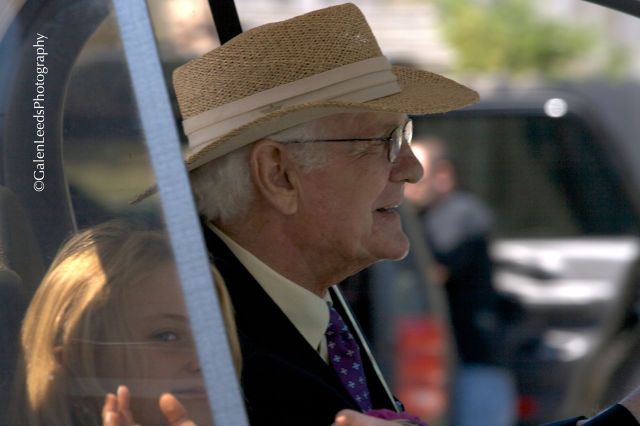
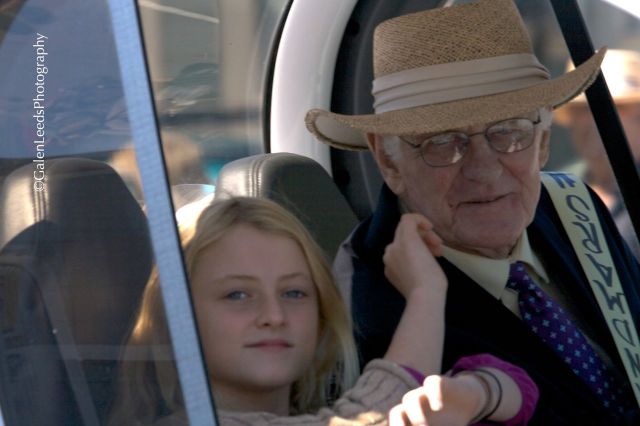
This post is especially dedicated to an octogenarian that had graced our parade in the past, but who is no longer with us. Blair, your town misses you. Your smile, your wit, your laugh… and your electric car.

Blair as parade Marshall one year

A genteman and his grand daughter

Posted in documentary, Location, Photo Essay, photography, road side, SLR | Tagged , , , , , | 2 Comments

The Marsh Wren: An Essay of Photos


New

This slideshow requires JavaScript.

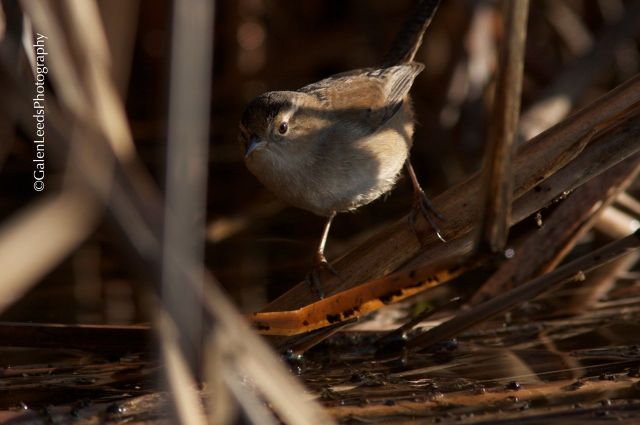
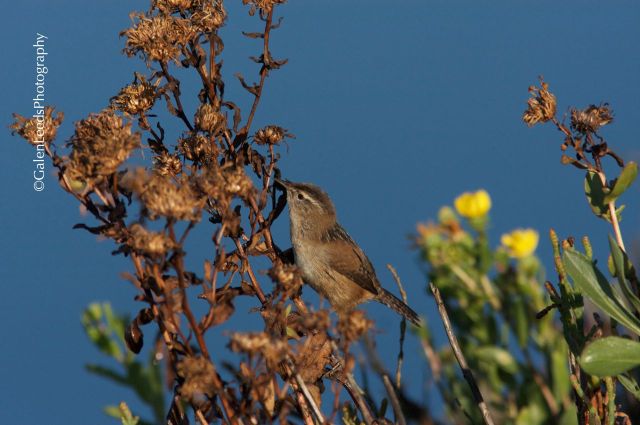
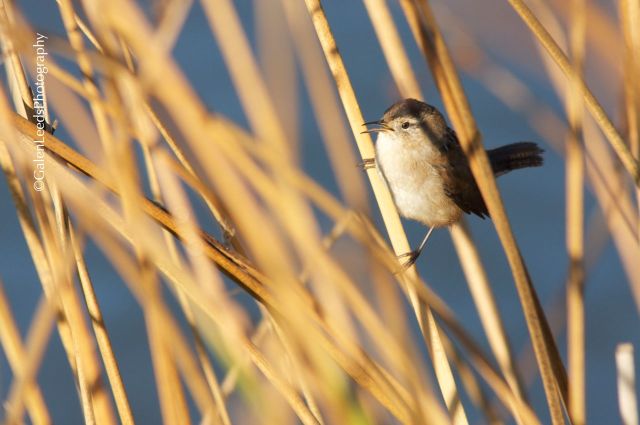
The Marsh Wren can be a secretive bird, but often times its own voice and its curiosity help the interested party to find this diminutive bird, and even to photograph it. I have memorable images taken on kayak photography outings, but I have also captured pictures of these birds while on foot. Usually all it takes is a little patience, and they will approach you.

Marsh Wren hunting in the reeds

I prefer the low down view that can be captured from a kayak, like in the view above. You can see the bird, the water, everything, and it is more or less from the eye level of the wren itself. It tells the story of the wren, draws the viewer in so that they don’t feel so much like an outsider, but a part of the wrens life.

Marsh Wrens are seed eaters. Find a seed they like in an area that they frequent, and yur chances of photographing one increase

Marsh Wrens enjoy dense stands of reeds and plants. They often will have one or more stands that they feel territorial about. If you hear their buzzing call or their trilling crescendo coming from a grouping of vegetation, approach it a little and settle down. Their curiosity and territoriality will make them approach the edges of the vegetation, where they will peak out, allowing a shot or two before they disappear back inside. Often they won’t show themselves more than once or twice while they figure out what you are, so use your chances wisely. This seems fairly true for kayak photography as well as land based.

The Marsh Wren often can't help itself. It has to sing when it feels territorial, and this can help you to locate it

Posted in Anatomy of a photo, birds, California, kayak photography, nature photography, Photo Essay, photography, SLR, wildlife photography | Tagged , , , , , , , | Leave a comment

Anatomy of a photo #67: The Kestrel and the Tail


New

The kestrel will often refuse to admit its own size

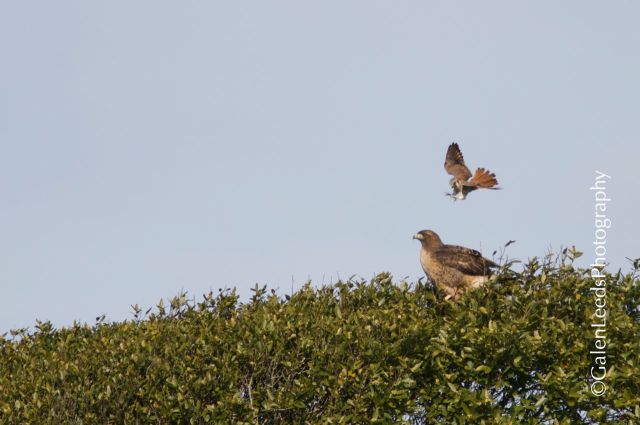
Most of us have seen it one time or another. A larger bird being mobbed by smaller birds- Red-tails being harassed by ravens, ravens being harassed by black birds. It happens all of the time. It is the preemptive strike of the birding world. And it often happens between different species of raptors.

The Kestrel (smaller of the two birds) while small, is very territorial, and will defend its territory quite vocally and physically against larger predators. While they don’t really do any damage (except the theft of a feather or two) their persistence can often drive other birds away. While they are smaller and not as strong as many of the birds they sass, they are much more maneuverable and are not in too much danger, as long as they have a little care.

I managed to capture this shot while I was driving down one of my local country highways, and I paused to take a few images of this female kestrel (you can tell from the coloring of her feathers). It wasn’t until I got out of my car that I heard her cries and realized that she was protecting her territory from a larger intruder. I studied her cycle of diving and was able to time this shot as she neared the Red-tailed hawks head.

I of course used a long telephoto lens to capture this image from a considerable distance away. Shutter speed was maximized to freeze the fast paced movements. Everything else was arranged to compensate.

Posted in Anatomy of a photo, birds, nature photography, photography, SLR, wildlife photography | Tagged , , , , , , , , , , , | 2 Comments

White Pelicans: A prehistoric (bird) essay in photos


New

This slideshow requires JavaScript.

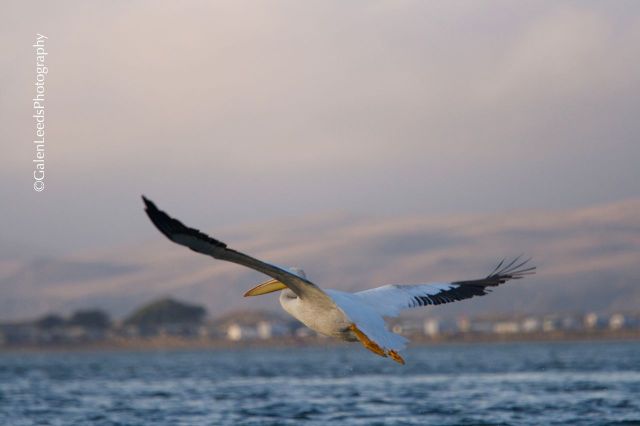
When I thought of the idea of doing a post on pelicans and images of pelicans, I had not considered how many images I actually have of them. A lot. A single post I realized is not really feasible, so I am breaking up the posts into pelican categories. Yesterday was Brown Pelicans taking off from the water. Today is dedicated more towards white pelicans.

White Pelican flying over Tomales Bay

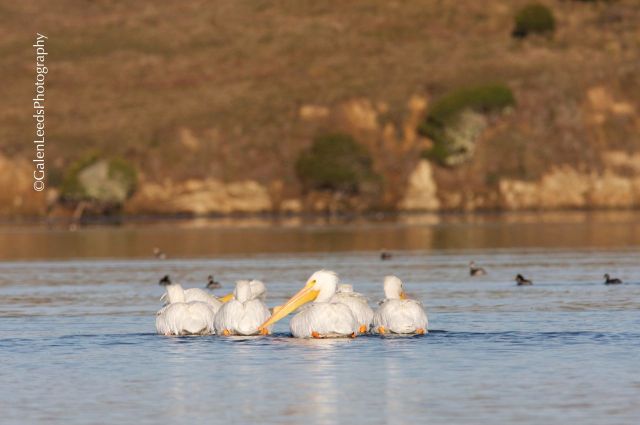
While Browns and Whites are similar in structure, they vary greatly in coloration and habits. The Brown Pelicans fish by diving from lofty heights and twisting as they plummet, striking the water head first. White Pelicans by contrast will often feed in groups as they swim along, herding fish in front of them, and scooping them up with their large sack like bills (which are only used to catch fish, not store them).

Whites swimming as a group that they might herd the fish in front of them

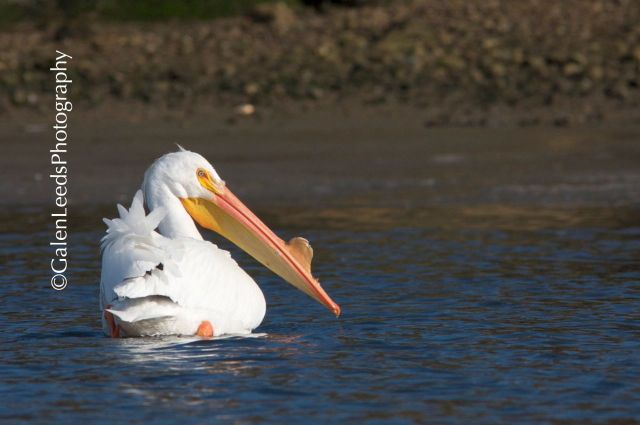
Another difference is during breeding season. Both Browns and Whites have color shifts, but it is only the whites that grow a horn from their bills, giving them an especially prehistoric look. (They already look like some sort of feathered dinosaur to me, with that large ungainly head and its elongated shape.)

Notice the hornlike protuberance on the pelican's bill. The ladies find this growth quite sexy and masculine...

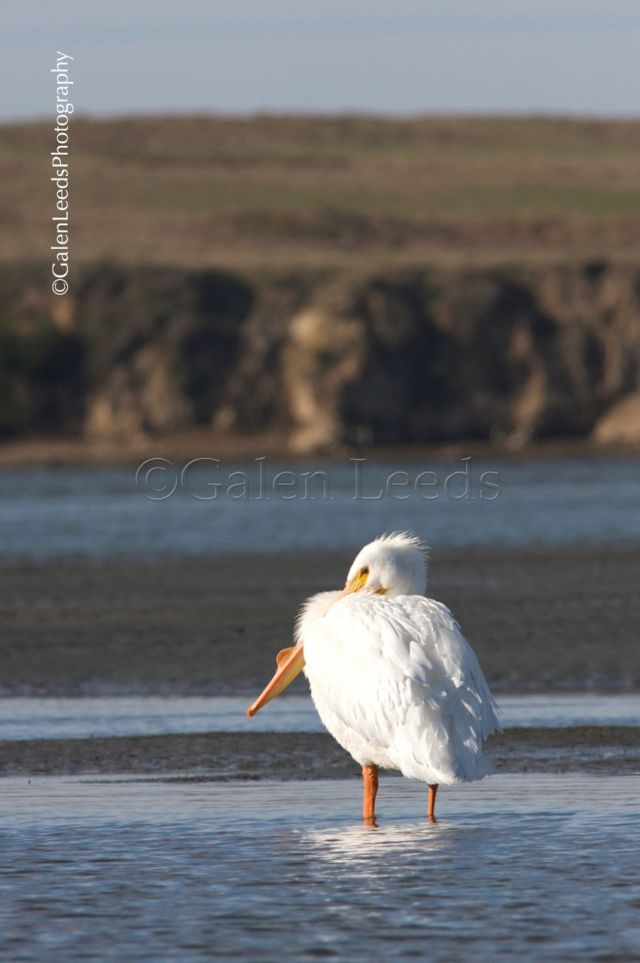
However, simply because the White Pelicans fish as a collective, doesn’t always mean that you will find them as a group.

A lone Peli, hunched in a resting position, its head tucked in tight

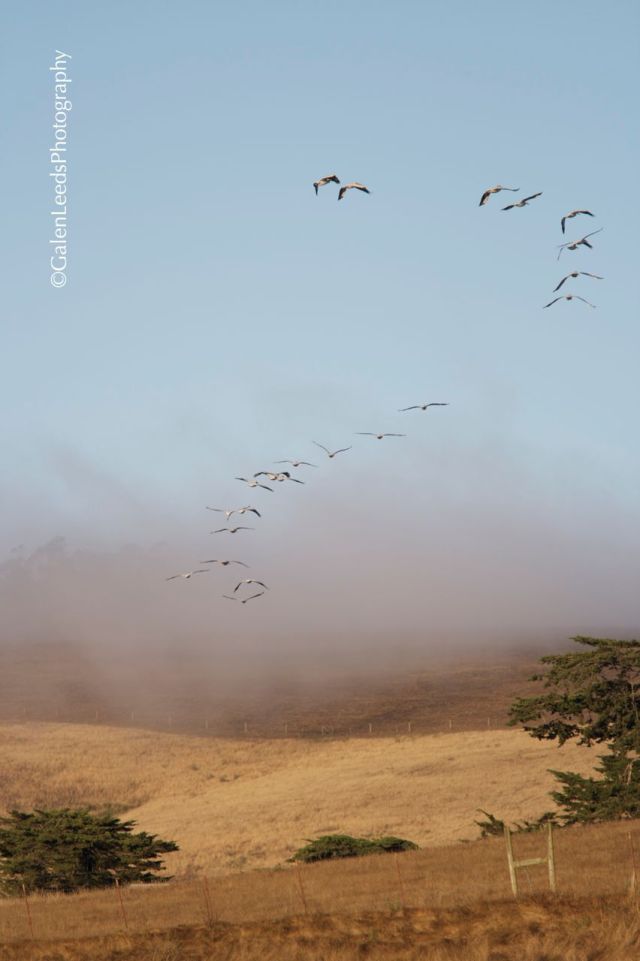
Although, finding them in a group will be the most likely. Whether they are swimming or flying, they are a social bird, and can often be found as a unit, albeit one that is constantly being reconfigured as new pelicans join up and others wander off. Unlike some of the gangs of today, membership in a flock is not for life.

Pelicans wrapping their way down a valley. I love the black edging to their wings

Posted in birds, California, kayak photography, nature photography, photography, SLR, wildlife photography | Tagged , , , , , , , , | Leave a comment

Pelicans taking off: An essay in action photos


This slideshow requires JavaScript.

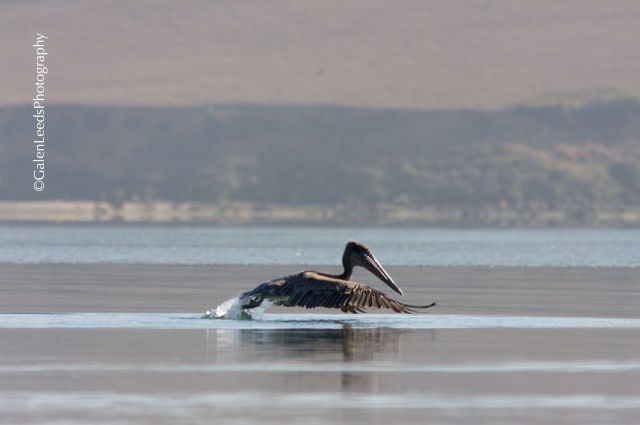
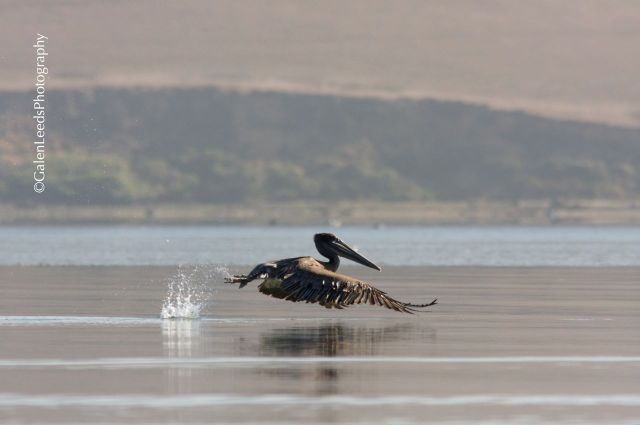
The marvelous, prehistoric Brown Pelican. It spends its time diving into the waters of the world, scooping up fish with its long ponderous beak. For every dive however, there must be a return to the air. These pictures explore part of the laborious process that it takes to return these long winged wonders to the air.

Over the next few days I will be providing more views into the lives of these large sea faring birds, showing both the White Pelicans and the Browns at different times of the year and in different states- feeding, flying, swimming, and resting.

In the meantime, enjoy these images.

Brown Pelican beginning its slow deliberate take off

Once they burst from the water, they actually continue to slap both wide, webbed feet on the water for several more wing beats

And bit, by bit they rise

From a different angle the pelican begins its launch

Posted in birds, California, kayak photography, nature photography, Photo Essay, photography, SLR, wildlife photography | Tagged , , , , , , , , , | 3 Comments

Pelagic Cormorant: An essay of photos


This slideshow requires JavaScript.

I was just sitting here, watching part of The Blue Planet series- Tidal Seas/Coasts and was feeling overwhelmed by the marvelousness of the world and of some of the footage that people have captured of it. Truly remarkable how complex this world is, and how little of it I’ve explored.

I realized I can either stop now, leaving the capturing of the natural world to others, people that seem very capable of capturing the beauty and the magic that is out there, or I can let those images inspire me to greater heights, to continue to perfect my own techniques that I might bring my own visions to others. As I further my own understanding of the natural world, and here on these pages I can share my dreams with you.

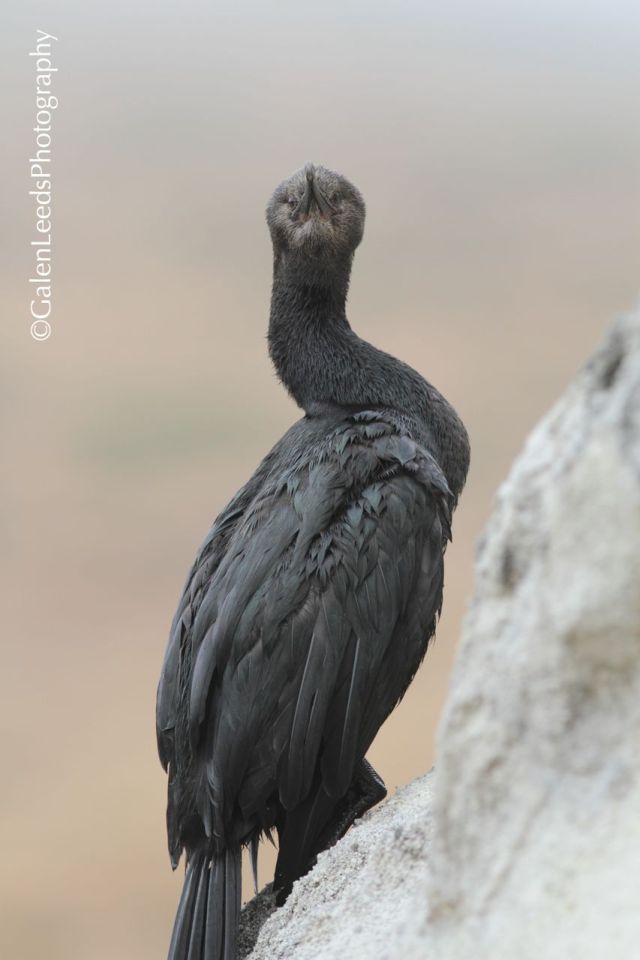
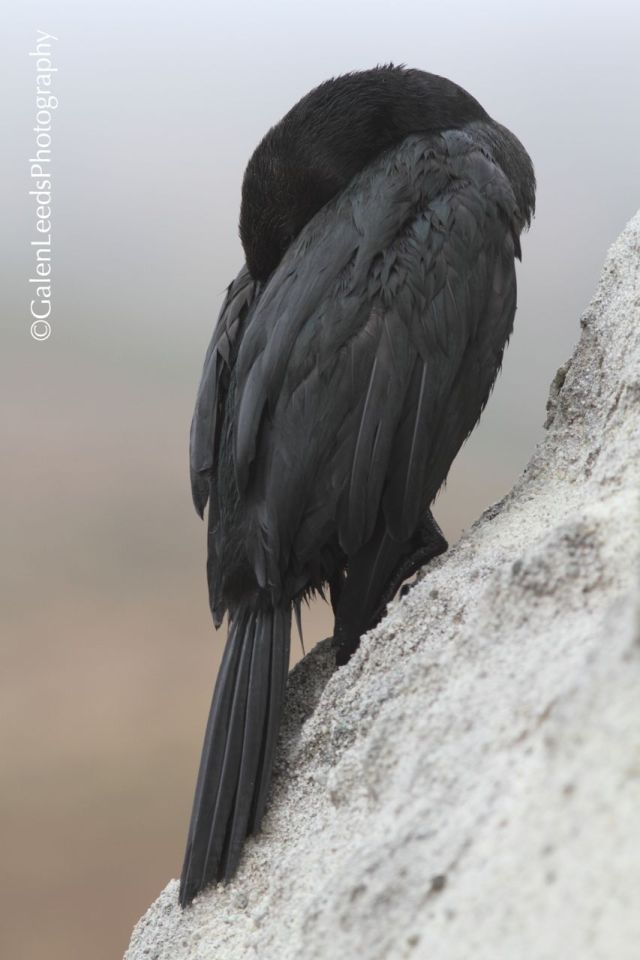
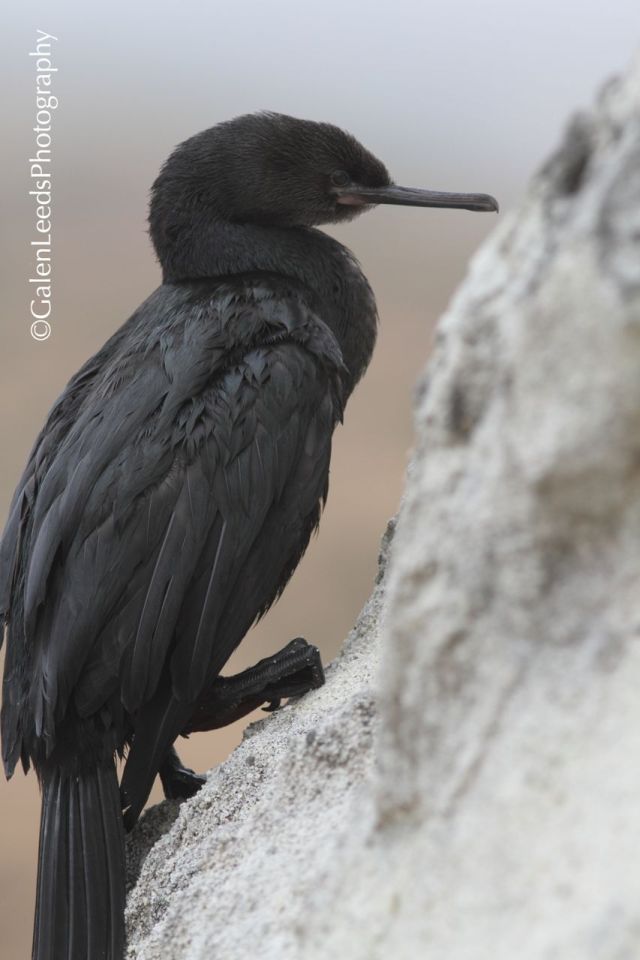
Not so very long ago I was kayaking my local waterways, photographing creatures of interest whose watery paths crossed my own. A gull and a sea cucumber doing lunch (to the sea cucumbers chagrin). A family of otters herding their weir of fish along. Godwits and dowitchers probing the depths of the shore. A barn owl playing peek-a-boo (with me). And, among many others, a gift of a Pelagic Cormorant perched upon a sheer rock face, drifting between this world and one of gentle slumber, posing for my every shot.

And while the cormorant would turn to look at me from time to time, it would always return its head to a resting position

The Pelagic Cormorant is not a rare bird out here, especially as one approaches the mouth of Tomales Bay, but they are not nearly so numerous as their cousin who abounds here in such great numbers- the Double-crested Cormorant. (I hear some of the old timers around here just group the two of them together however, naming them as a single bird- a shag.)

Said resting position

This is the smallest of our local cormorants

Posted in Anatomy of a photo, birds, California, kayak photography, nature photography, Photo Essay, photography, SLR, wildlife photography | Tagged , , , , , , , | 2 Comments

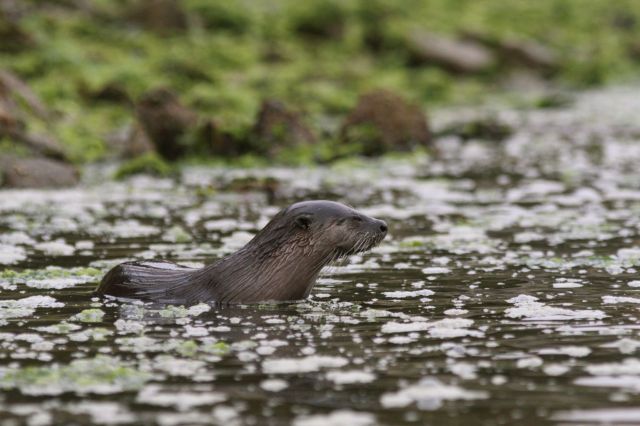
Marine Mammals of Tomales Bay: The River Otter (A video)


I’ve been experimenting with a little voice over on my newest footage of River Otters. Please, let me know what you think and if any of you would like me to continue with the natural history narrative that I am supplying. Let me know what you think by commenting below or by emailing me directly, or by letting me know on Facebook.

Most of this video was taken on the same day as these photographs, although I included a little close up footage of an otter eating a fish on a different day.

Most of the natural history information supplied on the video was gleaned and gathered from Field Guide to Marine Mammals of the Pacific Coast by Sarah G. Allen, Joe Mortensen, and Sophie Webb, a well written guide that includes one of my photos.

Thank you

Galen

Posted in kayak photography, marine life, nature photography, otters, SLR, video | Tagged , , , , , , , | 2 Comments

North American River Otters: An essay in photos and words #2


For video of a River otter eating a large fish visit here For the story behind that otter eating the fish visit here.

This slideshow requires JavaScript.

I rose early and headed out for a little kayak photography on a gray and foggy morning. I arrived at my put in, and somehow there was just something in the air… or maybe the water. It just felt like an otter sort of day, and I thought to myself that I would get lucky and have an encounter.

I paddled across the silent still waters of Tomales Bay. The occasional yet very distant seal head rose above the surface. A few fishing boats were about already, motoring their steady way along the bay, getting ready for a little trolling. I snapped a few shots of the fog enshrouded bay, nothing too exciting, but fun nonetheless. When I reached the far side, I turned north and began making my way along the shoreline. I only went a few hundred yards, before I came across them.

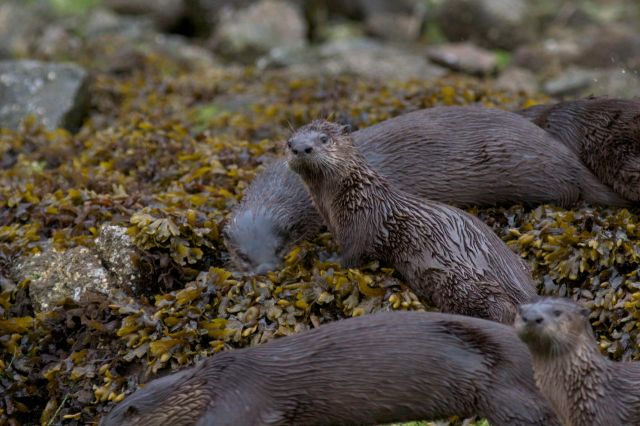
River otter watching its crew

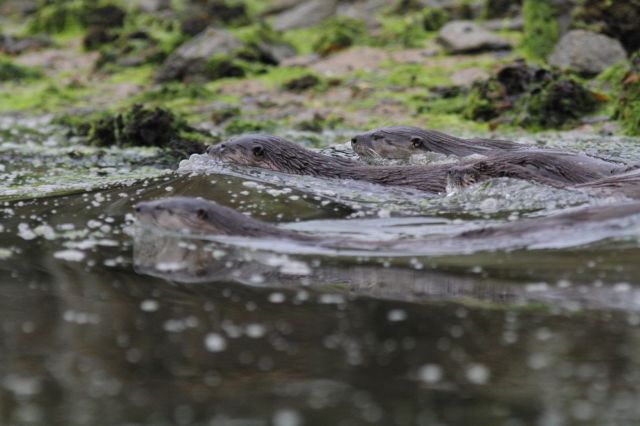
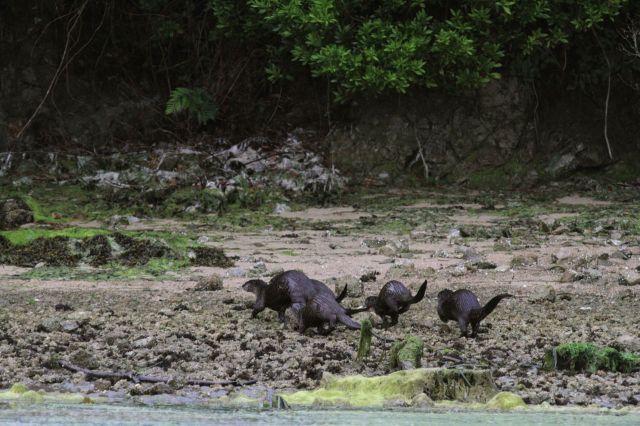
I watched them as they hunted the waters close to the shore, herding fish in front of them and also searching for crabs and other invertebrates. After a short while they became aware of me, but did not seem overly concerned, as I had not approached especially close. As I sat there in my kayak, watching them, they romped their way towards me.

Younger otter with its pod, taking to the shore as they passed where I sat in my kayak

I was fairly close to shore, and as they passed me, they decided to take to land for a short stretch to avoid the small piece of water that I was occupying in my unmoving kayak. Once they passed me, they returned to the water. Not wanting to disturb their routine, I headed farther from shore to shadow them and watch from a greater distance.

The otters returned to the water and continued their hunt along the shoreline

They seemed to work and hunt in unison, winding and threading their way amongst each other, changing direction with each other. Then they seemed to reach a spot that they all knew. In a charging romp they left the water together and went charging up the shore into the twisted roots and branches of a small copse of trees on the shore. I assume it is where their den was. I could hear the crashing and breaking of branches as they played and wreaked havoc inside.

As a group they left the water and bounded (as only members of the weasel family can) toward a spot on shore that they all knew well

It was at this point that I stopped taking still pictures. I sat out there, far from shore, and decided to wait a short time to see if they would come back out, that I might film them… and they did. The story continues with video here.

For more photographs of otters, you can visit this page- River otters: An extensive essay in photos. There is some text, but it is mostly images.

Posted in kayak photography, marine life, nature photography, otters, photography, wildlife photography | Tagged , , , , , , , | Leave a comment