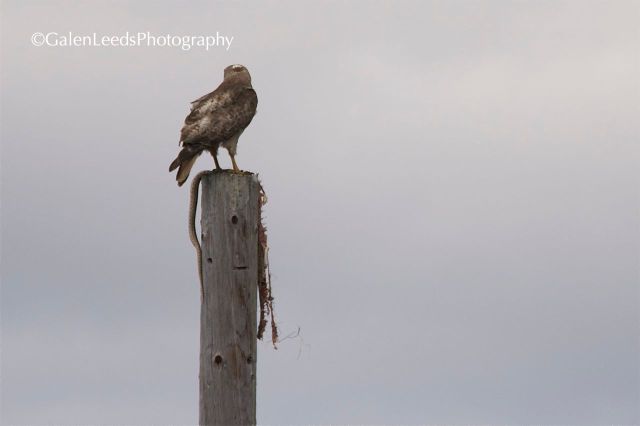
Red-tailed hawk with a gopher snake: A mini essay in photos


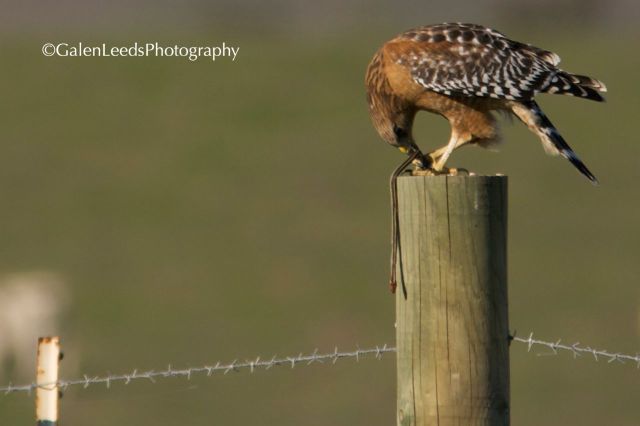
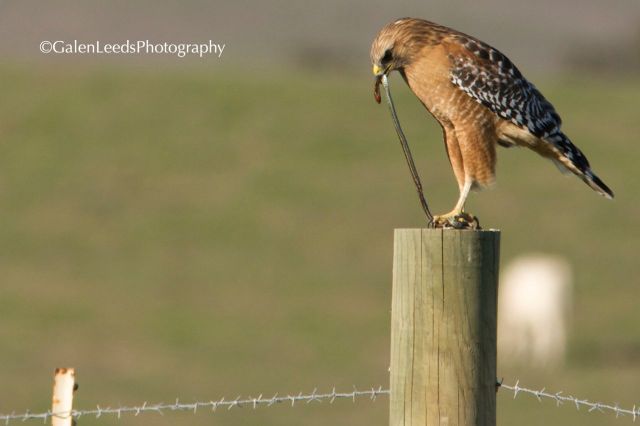
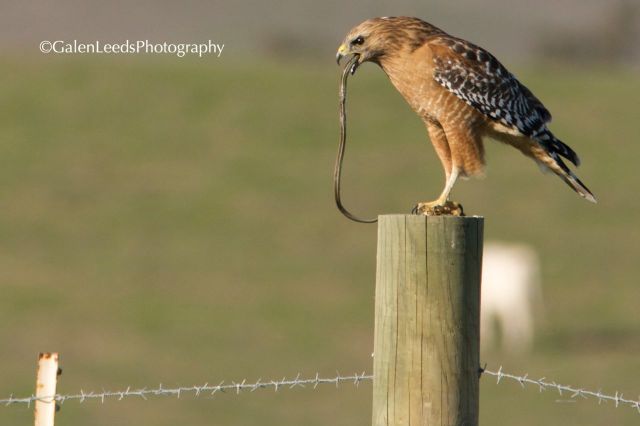
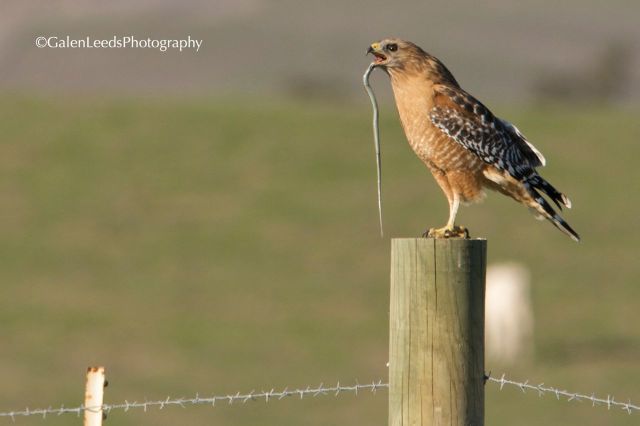
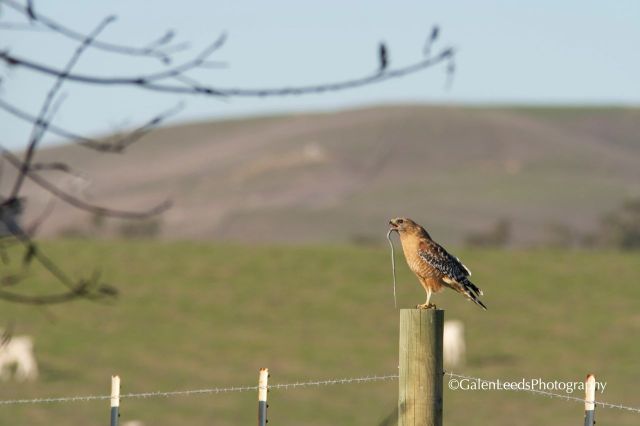
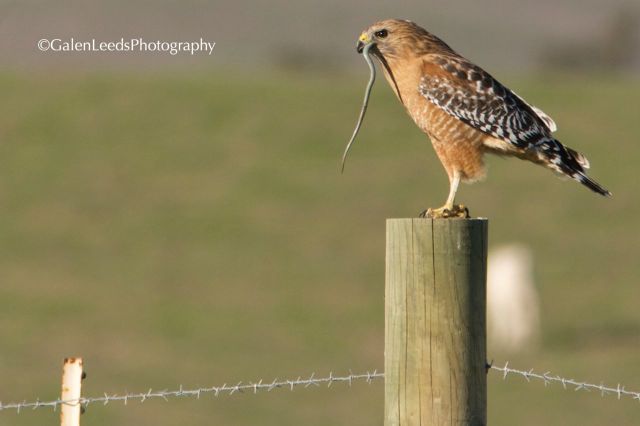
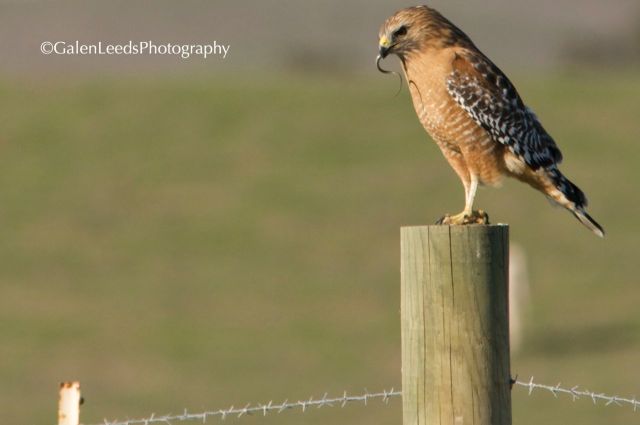
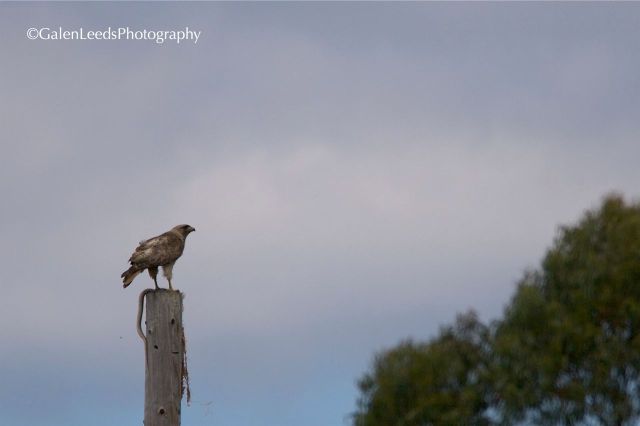
This is a mini essay, because there are only two photos in this series. This post goes with one of a few days ago- Red-shouldered Hawk swallowing a snake. It shows and contrasts two very different ways in which raptors can eat a snake. I am guessing that the two different styles are at least somewhat dependent on the size of the snake. It would be much harder to swallow a gopher snake the size that this Red-tailed hawk is eating, so it shreds the meat, almost looking like it simply unzipped the snake.

Posting these pictures was inspired from a comment on the other post. Thanks Pamalah.

Enjoy these two pictures,

Galen

I took this photograph from slightly farther away

After walking a little closer I was able to capture this image which showed at least a little more detail of the snake being "unzipped"

Posted in birds, nature photography, photography, wildlife photography | Tagged , , , , , , , , , | Leave a comment

Anatomy of a photo #52: Marsh hawk hunting the wetlands


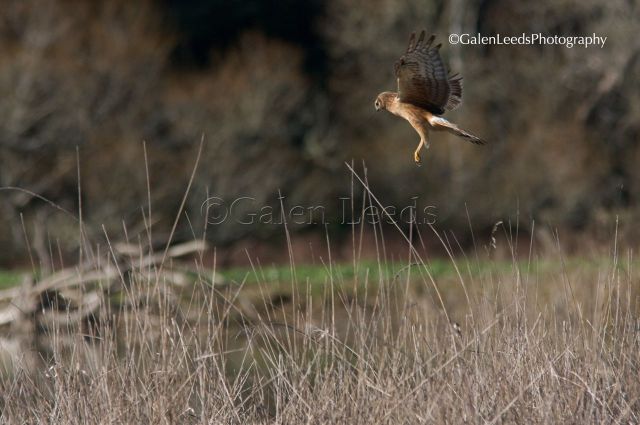
Juvenile Northern Harrier (aka Marsh Hawk) hunting the Giacomini Wetlands, as high tide flushes mice and voles from their holes

This picture is a bit older, it’s from the early days of the Giacomini Wetlands, when they had only just recently breached the levies for the last time, returning the pastureland back to the tidal flats that it had once been. Rodents were still being flooded out of their homes by this refound inundation of the tides, and it was a hunting bonanza for many animals- coyotes, red tails, kites, and many others such as this Marsh Hawk that was coursing over the border between grasses and high tide, searching for refugees.

These wetlands are an area where the only viable access is by small, unmotorized boat (motors are illegal within the boundaries of this area of the Point Reyes National Seashore). Walking is legal, but very unfeasible. Mud so deep you sink halfway to your knees, if not nearly to mid thigh. Doable, but not very conducive to having clean camera equipment or the energy to use it. Just as I would not generally use a fisheye lens to photograph wildlife, nor would I enter the Giacomini Wetlands without a kayak (which incidentally is a remarkable tool for photography in the right location at the right time).

On this day I was kayaking an especially high tide through the wetlands, documenting the changes that were occurring to the landscape and vegetation, but also capturing the different birds and wildlife, that we could see how populations were changing as this area transitioned from pasture to bay. The rodents were having a decidedly hard time of it, but were creating a temporary increase in many types of predator. Marsh hawks for example still hunt the area  daily, but in very decreased numbers. Where it was common to see five to ten in the early days, when I return there now it is to one or two birds flying over more scattered patches of land.

When I took this picture I was trying not to center the marsh hawk (aka the subject) in the frame. I wanted it to one side, and higher up. Since the hawk was on facing to the left, I wanted it on the right side of the picture, so that it was facing across the entire image. This is something I try to do with most of my wildlife images, seeing which way they face and then placing them so that they are facing towards the far edge of the photograph. It creates much better flow in the image. If they are facing the near edge, the audiences attention is also directed to the near edge and much of the photos space is lost to poor image flow.

ISO 320; 420mm; 0 EV; f/8; 1/800th

Posted in Anatomy of a photo, birds, How to, kayak photography, nature photography, photography, SLR, wildlife photography | Tagged , , , , , , , , | 2 Comments

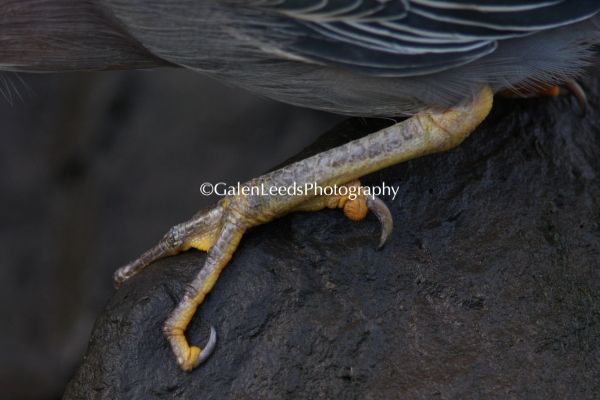
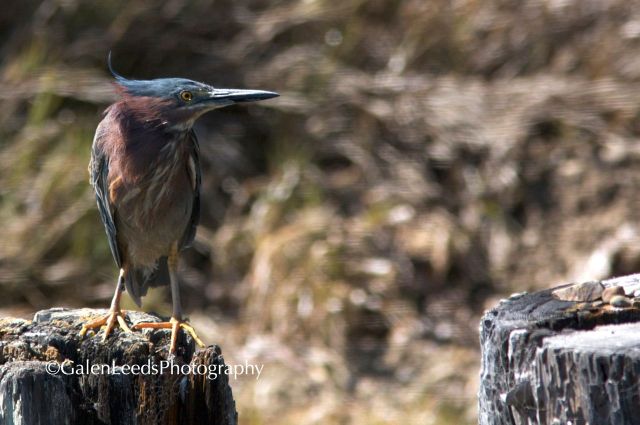
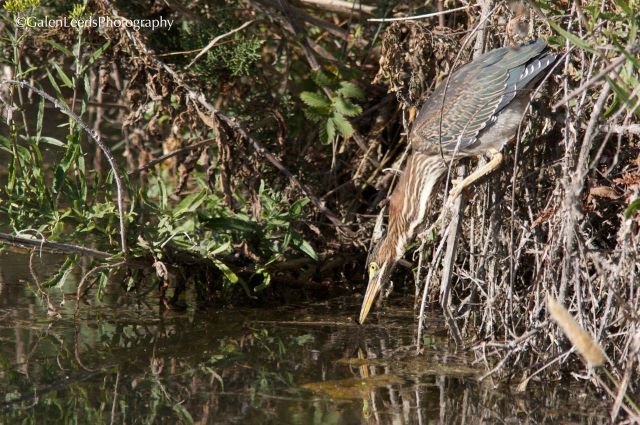
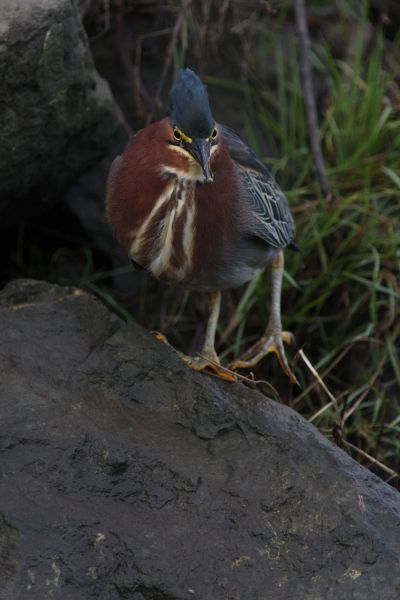
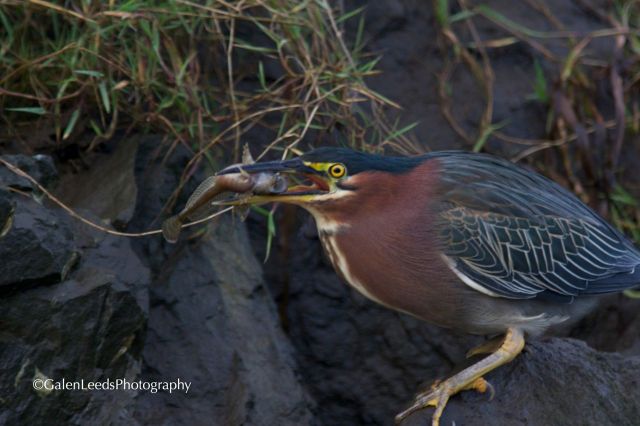
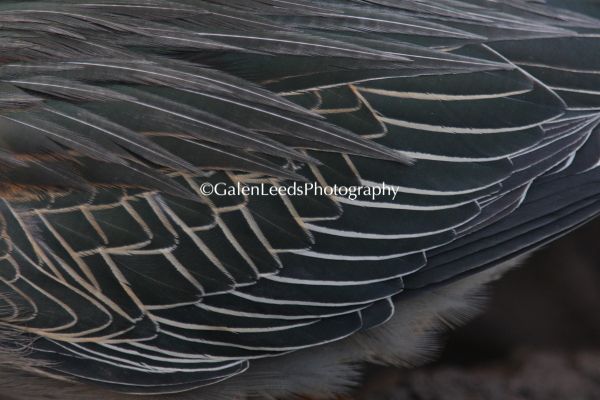
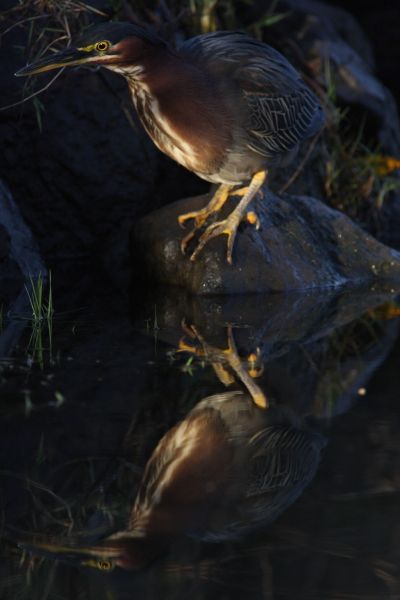
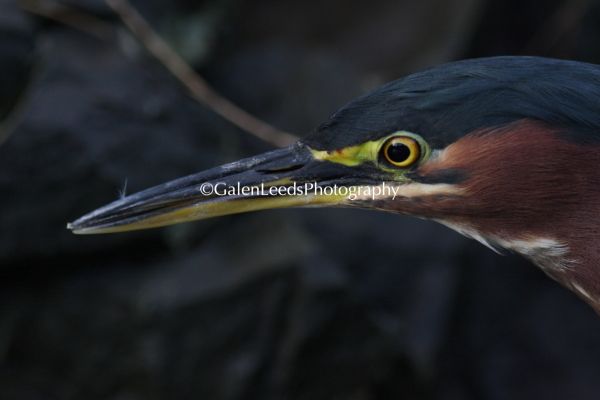
Green Herons: An Essay in Photos


This slideshow requires JavaScript.

Adult Green Heron on an old post


One of my favorite herons. I hope you enjoy them as much as I do.


Posted in birds, nature photography, photography, wildlife photography | Tagged , , , , , , , , , | Leave a comment

Anatomy of a photo #51: Oyster Mushroom


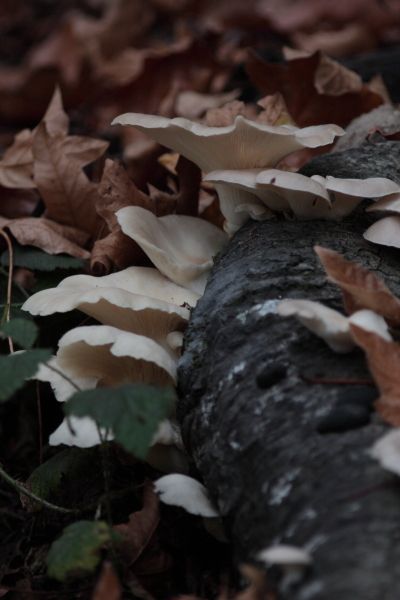
It can be best to get down low if you are photographing mushrooms. Don't be afraid to kneel down- or better yet- to lay down to get a good angle

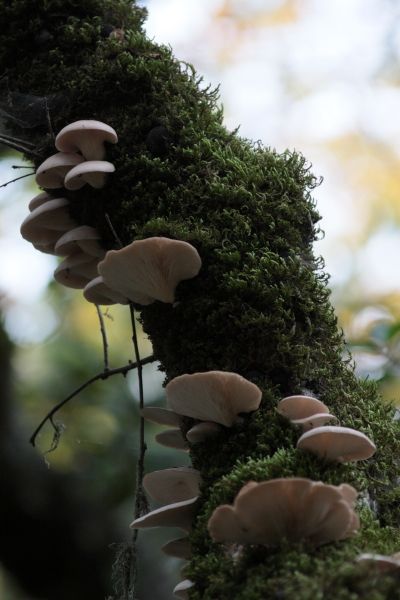
We are now getting into our hot summer days, and I cannot help but day dream about last winter’s wild mushrooms. It was not as stellar of a year for chantrelles as I had hoped, but it was decidedly a banner season for oyster mushrooms. I was able to collect more of these delightful beauties than I ever had before, their soft white grace adorning the decaying oaks, at times on unfallen trunks standing straight, at others surrounded by the fallen leaves of their benefactors earlier incarnation.

I dedicate this post to you, my protein rich fungus. May you continue to bring my stomach joy in my gastronomical searches into the mycological world.

It can also be handy to clearly show the substrate the fungus is growing from. This can help later on if you are trying to identify them

IT is important to remember- Do not eat a mushroom if you are not sure what type it is. Each year we here news stories of people in our local area that think they know what they are doing, but end up poisoning themselves and causing kidney failure or liver damage. Dialysis is not fun, so know before you eat.

I myself am very limited in the mushrooms I will actually harvest and eat. There are only a few species I am confident in, so there are only a few that I will put on my plate or, more importantly the plates of those I care about.

Even if I won’t be eating a mushroom however, doesn’t mean I can’t enjoy photographing it. It’s hard to be poisoned from a photograph.

These images were taken using 300mm of lens. The ISO was high to compensate for the deep shadows of the woods, while still allowing me to use a shutter speed between 1/250th and 1/320th of a second. Any slower and the camera shake would have been too much. The aperture was fairly wide in each of the pictures to give a shallow depth of field, but also to help maximize my shutter speed.

It can be more difficult photographing mushrooms that are still in the tree, if for no other reason than the contrast of lighting between the sky and the shadows of the woods

Posted in Anatomy of a photo, How To, nature photography, Photo Essay, photography, SLR | Tagged , , , , , , , | 3 Comments

Anatomy of a photo (series) #50: Red-shouldered Hawk swallowing a snake head first


While the snake is looking a little limp in this image, there were later evidences that it was still alive or at least still had some synaptic impulses left in its body

When a raptor eats a snake, or at least so my sources tell me, they often begin by positioning the snake so that they may eat it… head first. It makes sense really. The scales of a snake are designed for forward motion, not back, and they would catch and snare the entire way down if an animal tried to swallow them tail first.

While gripping the snake firmly, it positions the head, and makes ready to begin its meal

The snake in these pictures is a Garter Snake. I do not know the exact variety, but it is a fairly common species out here in Northern California. I have seen raptors with some larger species of snake, that were too big to swallow whole, strip the flesh from the snake (such as this Red-tail eating a large gopher snake), but garters seem to be small enough to allow this dramatic method.

And down goes the head

I saw this Red-shoulder as I was driving down the road one day. I pulled over in a safe spot and crossed the road, keeping a copse of trees between us. Hawks have very good eyesight, and I did not want to spook it off.

It takes a lot of head movement to swallow a snake

There was a dry stream bed running through the small, thin stand of trees, so I stayed as low as I could, often not having any view of the raptor (if I could see it, it might be able to see me). I stopped before I got too close. I knew I could always crop my images down to have more detail when viewing the pictures.

This is the uncropped image

Bit by bit, the snake went down. And shutter click by shutter click I captured the action. I likely took more pictures than I should have. This is only a small collection of the total, but some images are often lost to such things as a birds nicatating membrane, blur, misfocus, or other undesireable detail.

I was using a long lens of course (420mm). Shutter speed and ISO were set accordingly.(f/8.0, 1/500th, ISO 200)

And then the snake was pretty much gone

Posted in Anatomy of a photo, birds, hawks, How To, nature photography, photography, road side, wildlife photography | Tagged , , , , , , , | 2 Comments

Anatomy of a photo #49: Green Heron at Hog Island Oysters


First time I ever saw a Green Heron, and I was able to photograph it

Sometimes we are involved doing one thing, when something different comes along and we completely change our focus. I’d been taking some pictures of a happening for the local paper, when I saw a bird I had never noticed before.

Birds were still fairly new to me, I was just learning them, and I had not realized that we had this small diminutive heron living in our area. I had no idea who or what it was, only that it was some type of heron. So I switched gears and began photographing a new species (for me). When I got home that afternoon I looked it up and found out that it was a Green Heron.

This is how I learned birds in those days. Photographing them, and then looking them up once I had a chance in my field guides. Same with plants, flowers, rocks, and more. I strove to get the most meaningful images of them, but I was also trying to just capture a record of everything so that I could learn more. Photography isn’t just about capturing images and expanding other people’s worlds, it is also about discovery and expanding our own.

This particular Green Heron began hunting a small tidal slough outside of one of our local oyster farms. One of its chicks was also there, hunting, learning from its parent (I took pictures of it too). I captured them with 420mm of lens at f/8.0 and a shutter speed of 1/640th of a second. This way I was able to capture them from a distance without disturbing them. The fast shutter speed kept the lens shake from becoming an issue, and allowing me to capture a crisp image.

For more images of Green Herons, here is a photo essay of them.

Posted in Anatomy of a photo, birds, California, How To, nature photography, photography, SLR, wildlife photography | Tagged , , , , , , , , , , , , , , | 3 Comments

Anatomy of a photo #48: Cattle chute at sunset


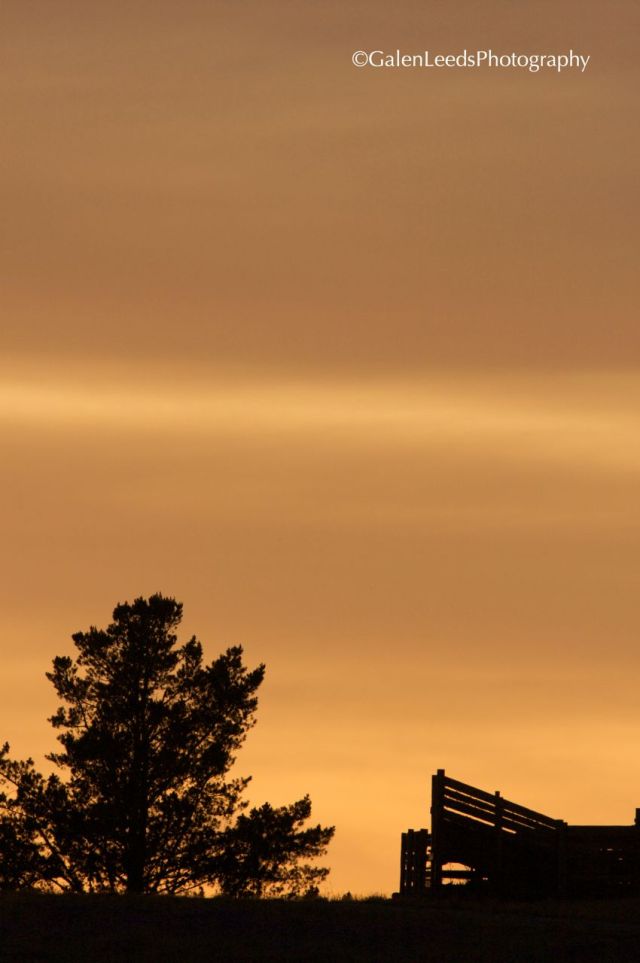
In the evening time, silhouettes can make many things seem magical

Sometimes you see a sky that just begs to have its picture taken, but there are already so many images of pretty skies that you almost have to ask yourself if it’s worth it to put yet another one out there. So what do you do as you stand there with your shutter finger itching? Find a way to make the image interesting.

Silhouettes can be a great way to do this. The simple lines and bold shapes are an excellent excuse to take photographs of a beautiful sky.

Find an interesting shape or object. Position yourself or the object so that it is above the horizon and against the brightest part of the sky, and compose.

When I took this image, it was an incredible sky, just begging to be in pictures. I knew about this cattle chute, that it was nearby, and that it was on a hilltop. Being on a hilltop makes it much easier to silhouette large objects against the sky. As I was setting up my shot, I realized how nicely the trees worked into the image.

I was fairly far away, but wanted a tight composition, so instead of moving closer and using a wide lens, I kept on my telephoto, and took my shot. I hope you enjoy it.

ISO 500; 420mm; 0 EV; f/8; 1/500

Posted in Anatomy of a photo, How To, landscapes, nature photography, photography, SLR | Tagged , , , , , , | 1 Comment

Anatomy of a photo #47: Mt Tam from Mt Vision


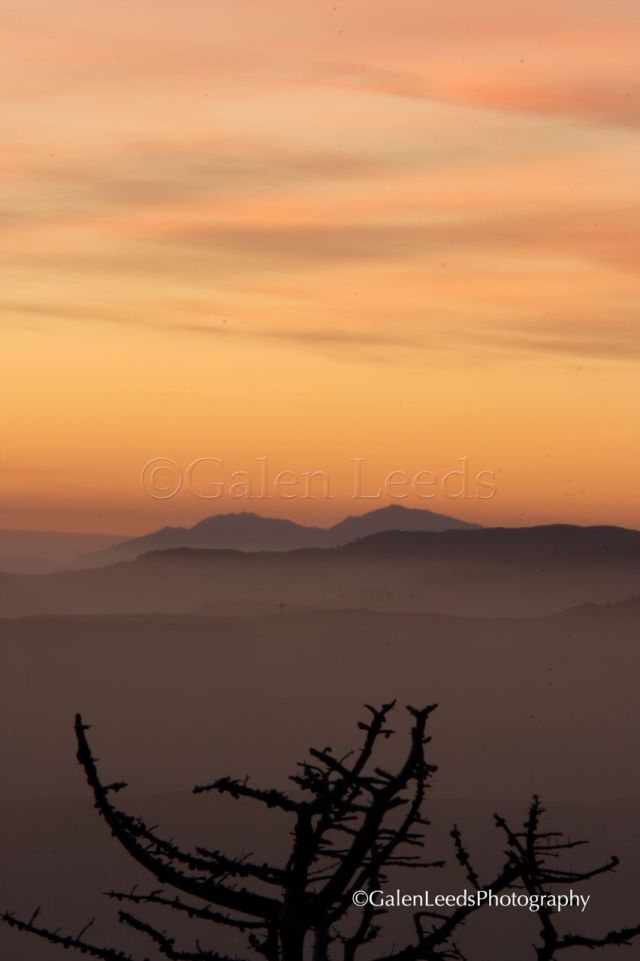
Mt Tamalpais as seen early one morning from Mt Vision, Inverness, Ca.

Early morning. What a wonderful magical time of day. I’ve heard that from a scientific point of view the range of sunrise colors is equal to sunset, and that one is simply the other in reverse, but from an emotional or psychological view they are two very different things to witness. From a photographic point of view it can go both ways. The lighting and coloration can be very similar, and often when looking at a photo without knowledge of the location (like which way is East or West) it can be hard to tell the rising from the setting.

Well, to remove the guess work, this photograph was created at sunrise, which is my preferred of the two. There is a quietness, a slow mysterious awakening to a sunrise that is not often to be found with a sunset. Towards the end of the day, there is usually at least the distant hum of an automobile or an airplane, it is harder to become more removed from the trappings of man. No matter how far out in the wilderness and away from the cities, you know there are millions of others awake and seeing the same sun easing its way into the abyss. In the morning however, when the sky is fading from the dark, and the light is slowly growing, it is possible to imagine that you are alone out, that you are the sole witness to something magical and unique, that the day is beginning just for you. Everything else sleeps, and you get to share a moment with the world itself, a private special moment that will soon fade into the consciousnesses of all the other walkers of the world.

On the morning when I found myself atop Mount Vision in the predawn darkness, it was such a time. The world was there just for me, all else slept, and I was a lone witness, trying to experience the moment and capture it at the same time that I might share it with others. I stood up there, next to my tripod, the shutter release cable in my hand, taking in the moon on one side, the stars above, and the silhouetted mountains and trees growing against the turning sky. I saw one of my favorites, Mount Tamalpais, the aptly named “Sleeping Princess” to the side, barely in view, and thought she was a fine lady to begin the day with. So I pressed a button, and my shutter rose, and for 3.2 seconds light eased itself into shape on the sensor of my camera.

The settings were fairly simple- ISO 100 for a lack of noise. Aperture cranked down to f40.0, and a lens length of nearly 200mm. This combination gives a tight composition, while not causing the depth of field to be too shallow. Both the nearby burnt skeleton of a tree and the distant, misted mountains are fairly well in focus.

I like to use long lenses for landscapes. The composition is often simplified, and distances compressed. It will either flatten everything or layer it, the latter being preferred. So often people head straight for the wide angles when shooting landscapes, trying to fit it all in, but sometimes it is better just to keep the important parts in. It can give more meaning, keep things from becoming diluted.
Posted in Anatomy of a photo, California, How To, landscapes, National Park, nature photography, photography, SLR | Tagged , , , , , , , , , , , , , , , , , , , , , , , , , , , , , , , , , , , , , | Leave a comment

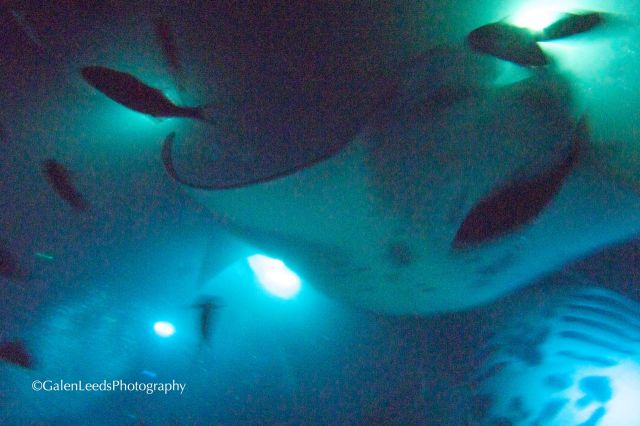
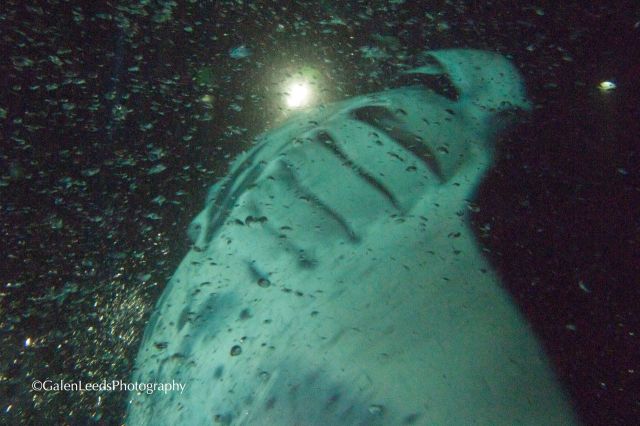
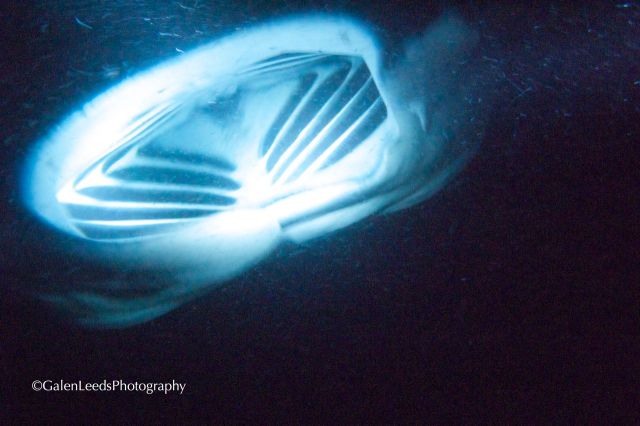
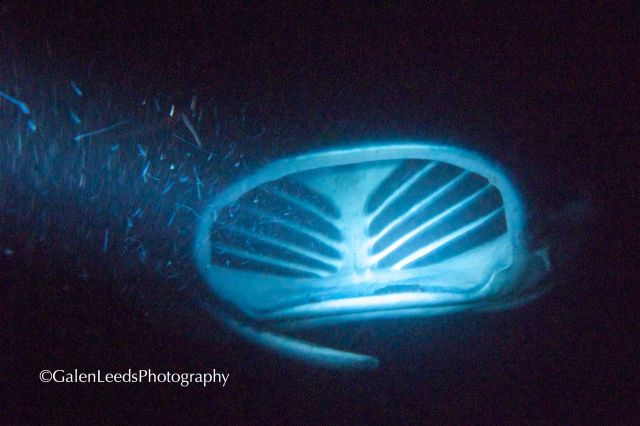
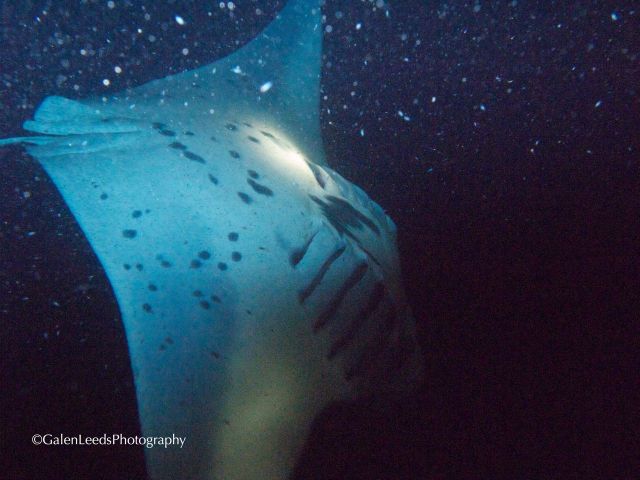
Manta Ray Night Dive: An Essay in Photos


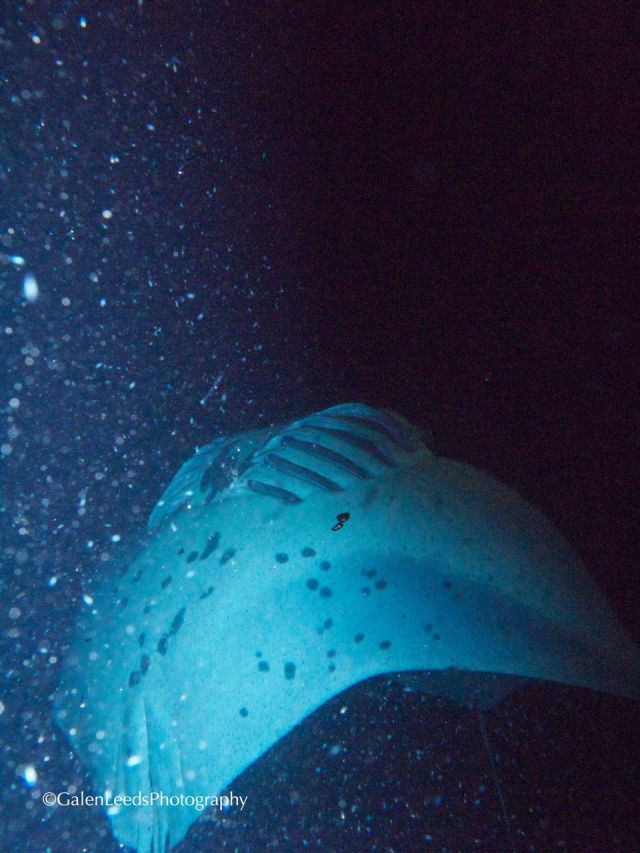
Giant Manta Ray swimming among the fish at night

Darkness beckons on all sides, but I hardly noticed as I stared into a small sea of light. I was afloat on the ocean’s surface, gently bobbing in the swell. An endless teaming column of thousands upon thousands of fish circled up from the bottom where our “campfire” of bright lights was shining up to attract the plankton. Most of this is secondary; I was entranced by the massive 9′ Manta Rays doing slow motion backflips as they grazed upon a cloud of microorganisms. I watch a manta rise, looping languidly. It nears, seeming as though it will gracefully swallow my head in its wide-open, gaping mouth, but it continues its endless loops, making me suck in my stomach; we are belly to belly. The turbulence of its passing bobs me even higher. At first there was nervousness, but slowly, it shifts to awe of this ancient gentle creature.I was in Hawaii, near Kona on the Big Island.

My camera snapped away as I watched these giant creatures continuing their lifelong dance, looping and swirling, looping and swirling.

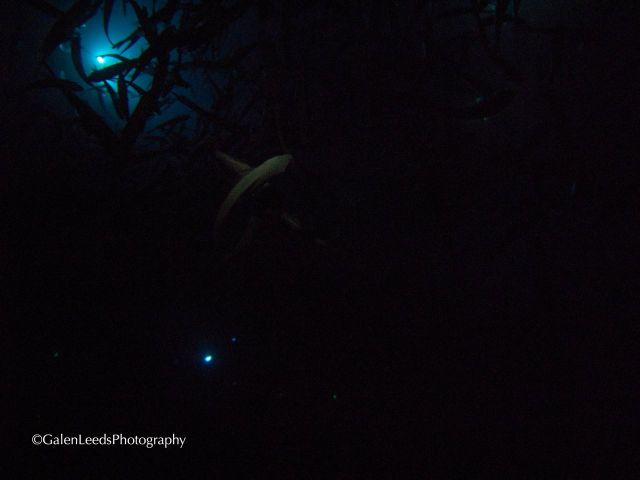
The “campfire” was a ring of lights that several dive boats maintain. The continuous light at night attracts the plankton and other microorganisms that the mantas and other fish feed upon. You can sometimes also see the mantas swirling in the waters of hotels and bars that keep their lights on through the night, or at least enough so that they attract a steady grouping of night time microorganisms.

At times I felt I was about to be swallowed whole


Endless backflips through the night

A single fish lit, with the campfire down below


Posted in marine life, nature photography, Photo Essay, photography, underwater | Tagged , , , , , , , , , , , , , , , , , , , | 3 Comments

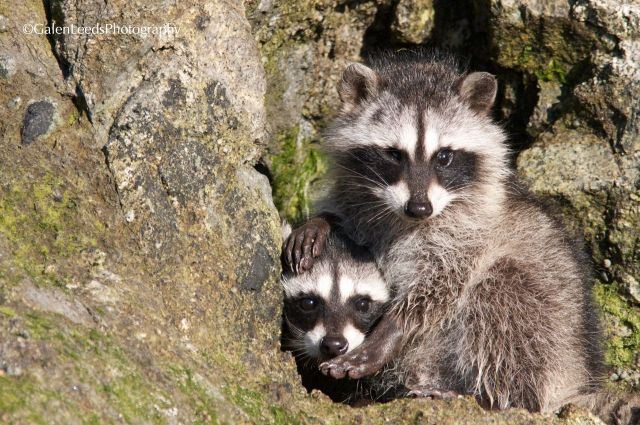
Anatomy of a photo #46: Young Raccoons on the rocks


Two young raccoons found on the rocky shores of Tomales Bay

Early morning, extra low tide, the long days of summer… Put them tgether, and it’s the perfect time to find and photograph raccoons as they search for crabs and tidbits by the first light of the day. The other time that seems to work well is toward the end of the day, as the world starts to get a little sleepy, and the nocturnals begin to awaken.

It was fairly late in the day when I found these two youngsters searching the shoreline for crabs, by feeling under the rocks, just as their mother had recently taught them. (I could tell these two were young from two different factors- short tails that weren’t as fluffy or darkly banded as an adults, and by their more diminutive size.)

I’d been paddling for a little while, and was hugging the shore as I headed north. This can be both good and bad for photographing wildlife from a kayak. It can be possible to get very close to wildlife, however you have no warning before you are upon them (which can make it tricky to get a picture before they scurry off and stress the animal). You can also miss seeing something much farther up the bay or lake, because your view can be cut off by the shore itself.

When you paddle from a little farther off shore, you can scan up and down the rocks and beaches so that you know what to expect and can plan for it. Many times wildlife on the shore doesn’t pay as much attention to things on the water, but you are very much in the open if you see an animal and try to approach more closely.

These two young raccoons I had no warning of. I rounded a corner, and suddenly there they were. And there I was, a little too close for their comfort. They quickly scurried into a hole in the rocks, but nearly as quickly their youthful curiosity and inexperience got the better of them and they had to pop back out to see what I was… So of course I took photographs.

I was using a telephoto lens 300mm plus a 1.4x converter, so that I had at least some distance from my subjects. My depth of field was set to the lower mid range- f8.0 so my depth of field was not too narrow, allowing both of the juvenile raccoons to be in focus. Shutter speed was fast, 1/800th of a second to make sure I captured all of the action.

The two youngsters emerged and resumed their hunting, finding a few tidbits to eat (here is a picture of one of them eating something here. I did not want to acclimate them too much however to the presence of people, so I did not stay long, and left them there foraging in the rocks.

Posted in Anatomy of a photo, How To, National Park, nature photography, photography, portraits, SLR, wildlife photography | Tagged , , , , , , , , , , , , , | Leave a comment

Anatomy of a photo #45: Wild rose with dewdrops


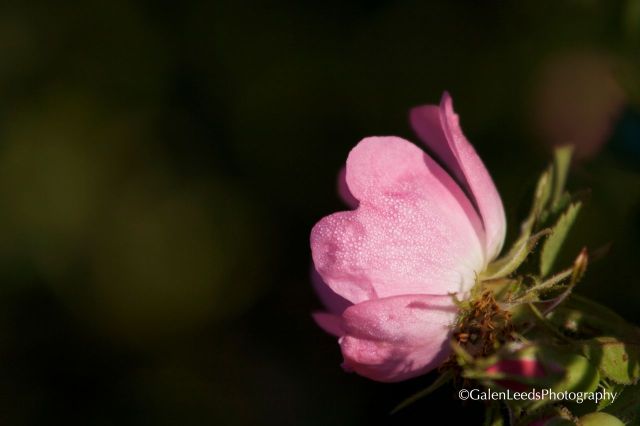
If you look closely you can still see some of the dewdrops on the petals of this Wild California Rose

Flowers are wonderful subjects for photography. In a short space and time they will go through many shapes and forms- the plant iitself, the bud, flowers, and the seed head or pod (or in the case of roses the hip).

They can often be found in the same place year after year and when you find an interesting one, you can watch it as it goes through all of its various forms. You know where to find it throughout the seasons and can do whole series of images throughout its the development and growth.

Also you can photograph flowers and plants from many different sides and angles since they are not a moving creature and will stay still as you decide where to shoot from- the side, or viewing down onto the petals, from above or down low. Just pay attention to where your light is coming from, and how you want to capture it.

This image is of a California Wild Rose and it’s just beginning to blossom. This picture was taken early in the morning- notice to the dewdrops still adorning its delicate petals. I used to a 70-200mm zoom lens to get in close and capture lots of detail.

The aperture I set wide open so that the background would be blurred out, and it would not be a confusion of shadows and lines distracting from the main image. This is one of my favorite ways to focus the viewers attention where I want it.

ISO was set to 100 for a minimum of noise, and the shutter speed was then set to give a proper exposure.

Posted in Anatomy of a photo, How To, nature photography, photography, SLR | Tagged , , , , , , , , , , , , , | Leave a comment

Anatomy of a photo (series): #44 Octopus event on Tomales Bay (the days before Hawktopus)


The other day I was speaking with someone that had seen my Hawktopus post (the Red-tailed Hawk that I was able to photograph as it flew with an octopus) and while they were very enthusiastic about it, they chided me once they learned that I had more pictures of octopi (sans redtail) taken on Tomales Bay several days prior that I had not yet shared with the world outside of facebook. So here are some of those pictures, and the story behind them-

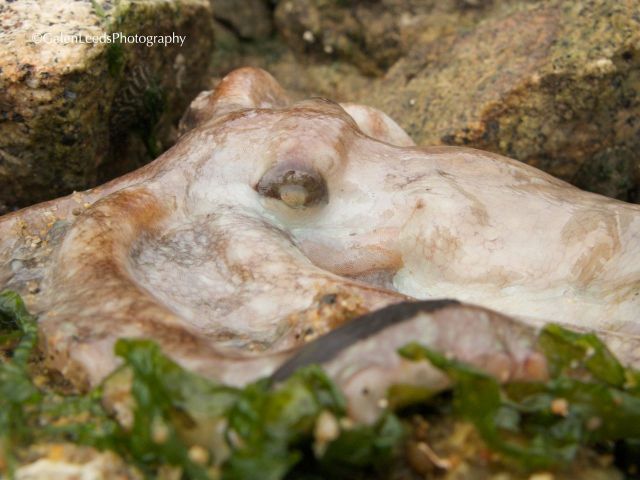
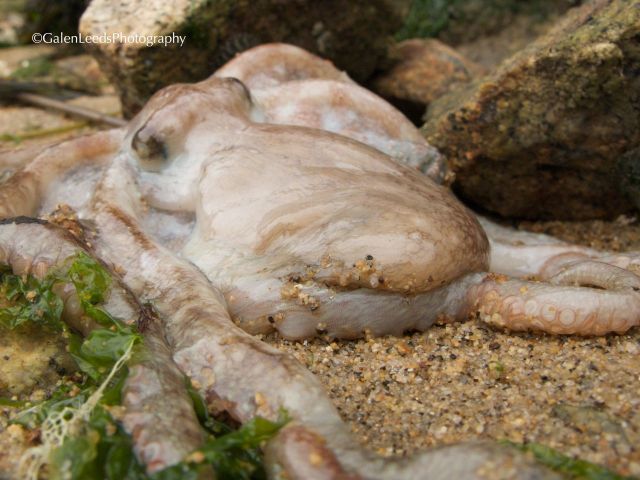
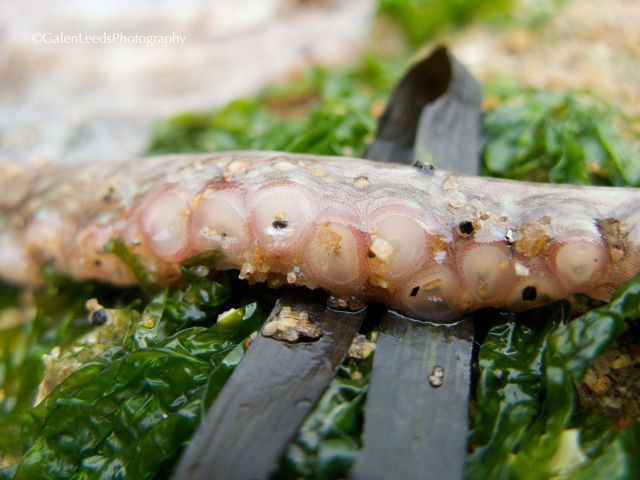
One of the weakened octopus that I found on the shores of the bay

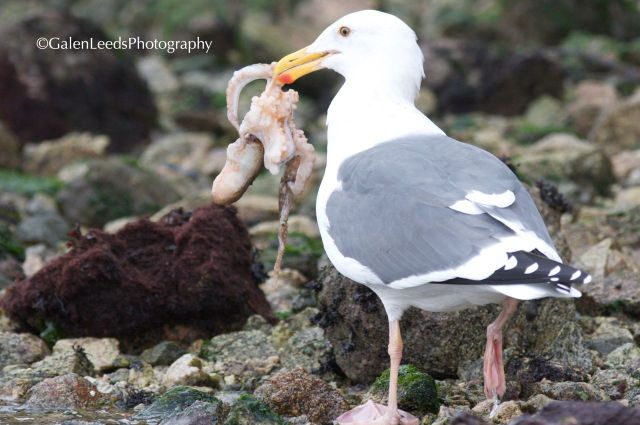
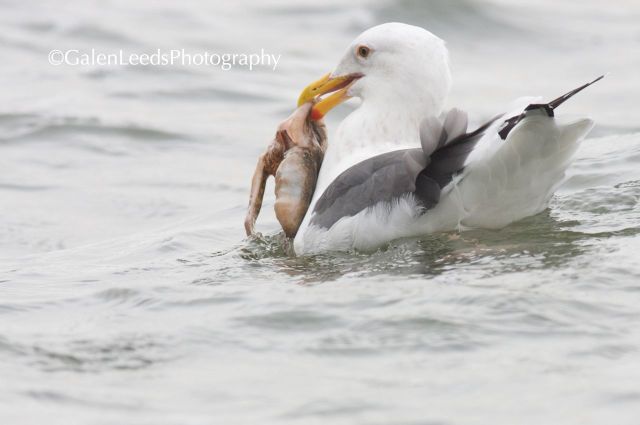
Several days before I saw the Red-tailed Hawk (Buteo jamaicensis) carrying a Common Coastal Red Octopus (Octopus rubescens), I came across the first octopus that I had ever seen in the wilds of our coastal waterways, the wildest part about it however was that it was being eaten by a gull.

Gull with the prized tidbit of an octopus. Can we say sashimi?

Of course I took pictures of something I hadn’t expected to see, never having seen evidence of octopus in my local bay. Shortly after I came across several other octopus that were washed up on the shore and that weren’t yet dinner. They were out of the water, which I suspected to be a bad sign for them. Upon investigating I found they were still alive, but barely so. One I placed into the water, and while it livened up a little, it didn’t seem the active vivacious creature I suspect it once was. Since it seemed there was noting I could do to help them, I took photographs, documenting the event.

Whenever I come across something I haven’t seen before, I try to record it, not just for my own edification, but also because if I haven’t seen it before, perhaps others haven’t as well.

I used a digital SLR and a compact digital camera for the images. I was switching between the two- a 300mm lens on one, and the built in 7.4-44.4mm  Try to see if you can tell which is which from the depth of field.

-Galen

Posted in How To, kayak photography, marine life, nature photography, photography, wildlife photography | Tagged , , , , , , , , , , , , | Leave a comment