Sea Otters: A micro movie of a mother and child


I’ve been enjoying a little vacation in Monterey, and in addition to taking many, many photographs of this beautiful area and its abundant marine life, I have also been keeping on with my wildlife video experiments… Hopefully this doesn’t fall entirely within the realm of home/vacation movies, and if it does, hopefully it’s a little above the usual caliber.

The following micro movie is just a snippet of what I was able to record while kayaking through the kelp beds of Monterey. All movie was shot handheld, as I do not like using tripods or monopods while upon the water. (It’s the whole pendulum effect, that occurs when a boat is rocking on the water.) So you will definitely see some camera movement from time to time, but it is very little compared to earlier attempts before I acquired an LCD viewfinder loupe. World of difference on my ability to both steady the camera and to focus.

I shot the following movie yesterday, which also happens to have been Mother’s Day, and seems to be rather appropriate, as this movie is of a mother and child. So, in honor of mothers of all shapes and sizes, I give you this movie, which I was able to create, thanks to the love and support of my own mother. Thanks mom, I love you.

Posted in marine life, nature photography, otters, photography, SLR, video, wildlife photography | Tagged , , , , , , , , , | 6 Comments

White-crowned Sparrow: a short video


A bit of editing to do yet, before I can post the video of the Long-tailed Weasel, so I thought I would share a short video I was able to shoot while watching the weasels, of a male White-crowned Sparrow.

I couldn’t decide if I should do a short voiceover discussing the bird, so I thought I would let its actions speak for it. Nothing too exciting, but it’s fun. It is also an nice example of the quality of movie that today’s cameras can shoot (of course I reduced the file size considerably to make it easier to play on line).

My videography techniques aren’t perfect yet, but the learning process is a blast.

Enjoy

Posted in birds, SLR, video | Tagged , , , , , , , | 5 Comments

Product Review: Zacuto Z-Finder Pro 3x


As digital SLRs become better and better suited for high quality video shooting, the market has been filling with more and more products to facilitate the process. One thing manny of us stills photographers have to come to grips with as we learn to make videos with our dSLRs is the loss of effective auto focus.

While autofocus remains usable while shooting live, it is no longer as effective as it will often go in and out of focus while it establishes “optimum.” This means that much of the action can be lost to blurriness, as the camera works to effectively acquire the subject. Also, if switching focal points that are not lined up within the “focus” area of the live screen, time has to be taken to move the target area.

Close focusing is possible while viewing the LCD view screen with the naked eye (the eyecup is no longer useable, as the mirror is in the up position), but it is hard to be exact. Fear not. Companies such as Zacuto, Varavon, Hoodman and many others offer “loupes” for your screen- basically a magnifying eyepiece that attaches in one way or another to your cameras LCD screen, and magnifies it enough that you can see what you are trying to focus on. This can be particularly important when shooting wildlife that is in constant motion either towards or away from you, and you need to adjust your focus accordingly.
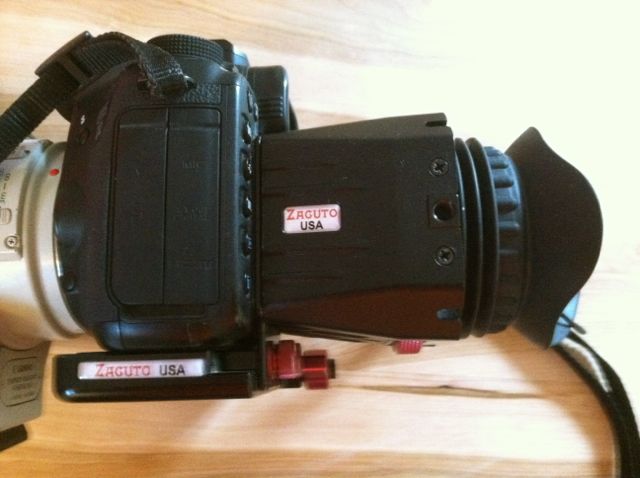
The Zacuto Z-Finder attached to the DSLR’s LCD screen for improved focusing while shooting video

Recently I’ve been trying out one of these LCD loupes- the Zacuto Z-Finder Pro3, and I couldn’t be happier… except for the price tag.

This is a 3x (there is also a 2.5x version) magnifying loupe that attaches to the camera via a baseplate that fastens to the tripod screw hole (it then has a threaded hole that your tripod mounting plate can attach to, so that it can still use the quick release). Other loupes use systems such as attaching via the hot shoe mount, attachments that glue to the camera that the loupe can clicks on and off of, rubber bands… There are many systems.
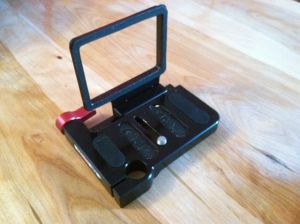
The baseplate that the loupe clicks into
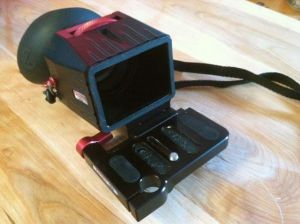
The Zacuto system is simple yet versatile. It has a diopter to -3, anti-fogging lens, large eyecup (which is quite effective at blocking stray light and comfortable), and seems sturdy and well made. I do not think that I would be as happy with hotshot attachment- although if you are shooting movies, you won’t be using the flash anyways. I definitely do not like the idea of glueing a plate around the LCD screen, and the idea of the specially made rubber bands seems cumbersome (I’ve also read reviews where the bands can interfere with some of a camera’s function buttons).
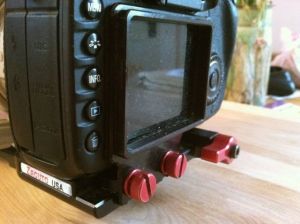
Function buttons are still easily accessible, when the plate and mount are attached

The Zacuto baseplate also allows the camera to attach to the standard 15mm rods that are used with several different camera support systems (15mm seeming to be the industry standard), whether those supports are Zacuto brand or not. The baseplate and mount also work on most DSLR brands (although a different mounting plate is necessary for cameras with battery grips or large bodies). In addition to the 2.5x and 3x, Zacuto also makes a Jr. version which costs significantly less, but is not as versatile.

Additional points in favor of using an attachable loupe (there are several for sale without attachment systems) on a DSLR for videography, is that it adds an additional point of contact when shooting handheld, greatly increasing a cameras stability. Also, having the camera close into the body instead of held at arms length (to be able to view what is going on in the view screen) greatly reduces how tired your arms will get.
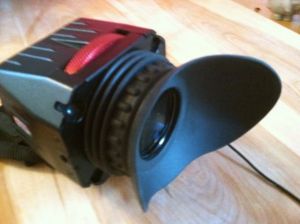
The eyecup adds a point of contact for additional camera stability

The price of the various LCD loupes ranges from $30 up to nearly $400. Zacuto is near the high end of the list, but you definitely get quality, as well as lifetime replacement for worn parts, something that lowered models don’t offer (although at the lower prices, you could easily buy several for the same price as one Z-Finder).
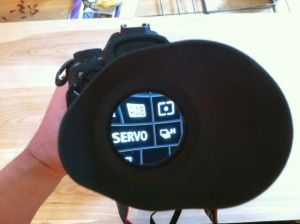
Clear, detailed views of the LCD screen are possible with these simple attachments

If you will be shooting video with your DSLR, any sort of LCD loupe will make a huge difference, and is nearly indispensable. Would I recommend the Zacuto line? Yes, if you have the money to spend or can find one on sale or a used one in good shape.

This article was in no way sponsored by Zacuto or any other manufacturer. The views are my own opinions and unsolicited by any commercial enterprise. No compensation in any form was received, this is simply my attempt to help inform others of some of the cool and handy gadgets that are available to DSLR photographers and videographers.
Posted in photography, product review, SLR | Tagged , , , , , , , , , , | 1 Comment

Long-tailed Weasel… at last!


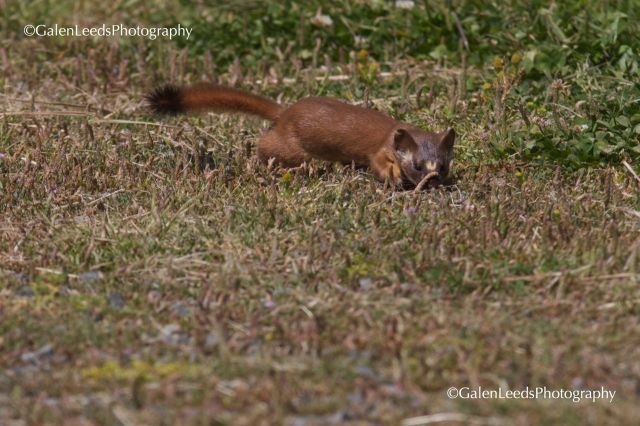
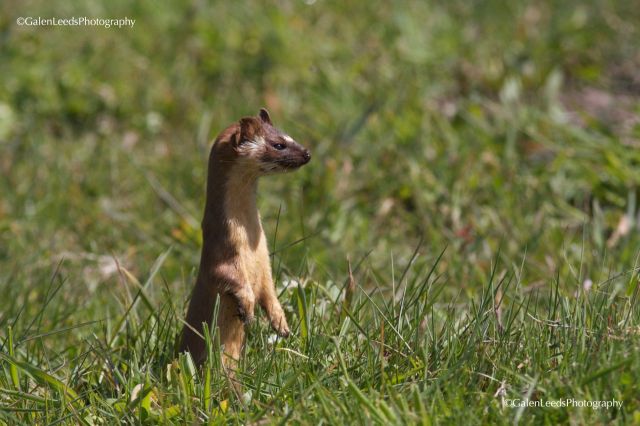
For years I’ve been trying to get photographs of a Long-tailed Weasel, but all I’ve ever seen was a frozen figure an instant before it disappeared or a dead one on the side of the road. I’ve had a couple of sightings a year for the last three or four, but something I was able to photograph? Not a chance… until Sunday and again yesterday, and then I was able to get some really good photography sessions in with a wild female that I came across in my wanderings.

The Long-tailed Weasel

Here is a little teaser of what I was able to capture with stills, plus I was able to get some fantastic HD video, using some of my new toys for my DSLR. The one place where all of my shooting is truly lacking however is action shots- This is one fast little animal! I’ll post more images later, along with some of the video footage (I’m just too excited to wait, and have to give you all something). I’ll also give some of the details on the experience. Enjoy

Notice the long tail, usually 10-40% of its whole length

Posted in long-tailed weasel, nature photography, photography, wildlife photography | Tagged , , , , , , | 13 Comments

Oysterscapes: An Essay of Photos


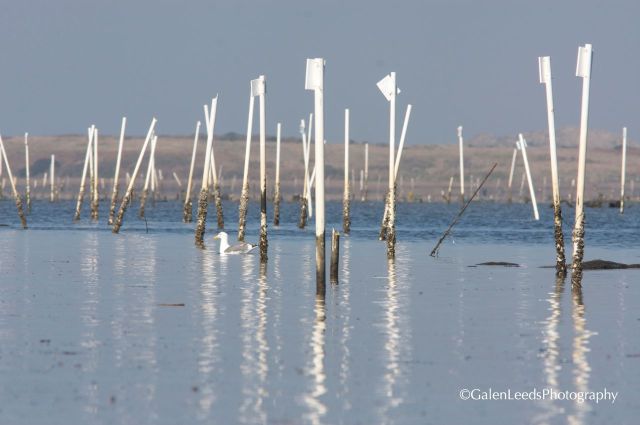
Water seems to be a central theme here in this bucolic stretch of northern California. With Tomales Bay and Drake’s Estero, here in my lap, I find myself hardly able to escape aquaculture during my many paddlings. Millions of visitors pass through this area each year, and many of them feast upon oysters, both barbecued and raw. While oyster farming is not the only way of life out here, it does touch upon many lives, for better or for worse.

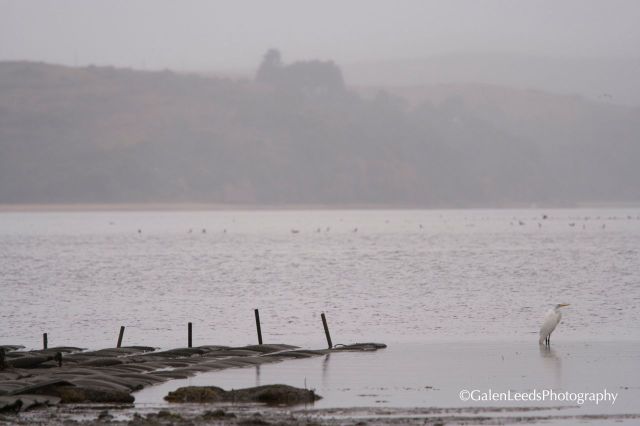
The oyster beds uncovered at low tide, near Tomasini Point, Tomales Bay

Here are some images of my local oyster beds. These pictures likely won’t help you decide if oyster farming is a good thing or a bad, but it will give you visions of how the oysters pass from the sea to your table, and I doubt you will have trouble swallowing these images in this, their raw form.

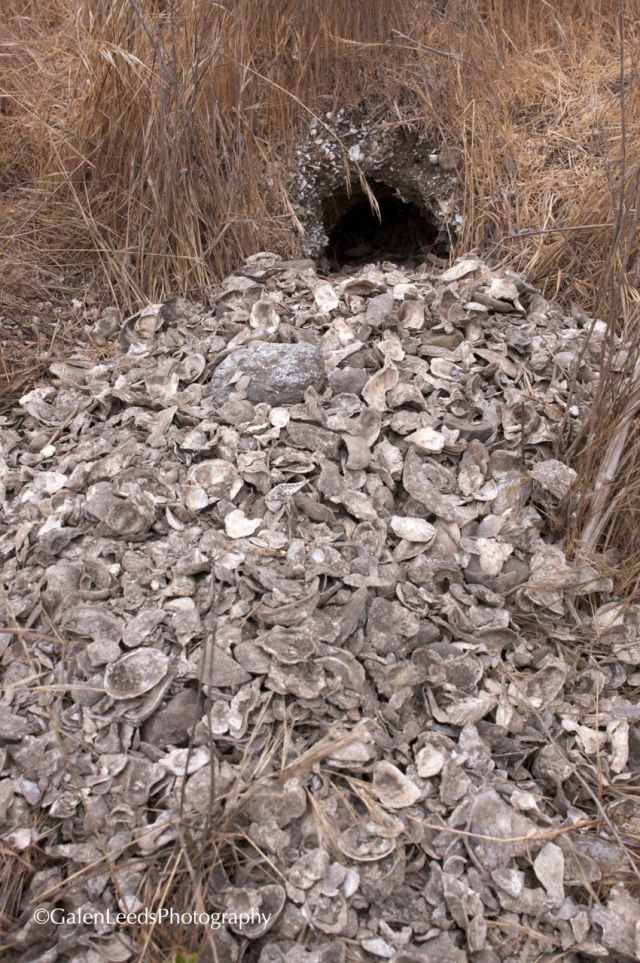
Oyster shells scattered at the entrance of a badgers burrow that was dug into a midden pile from decades or centuries before

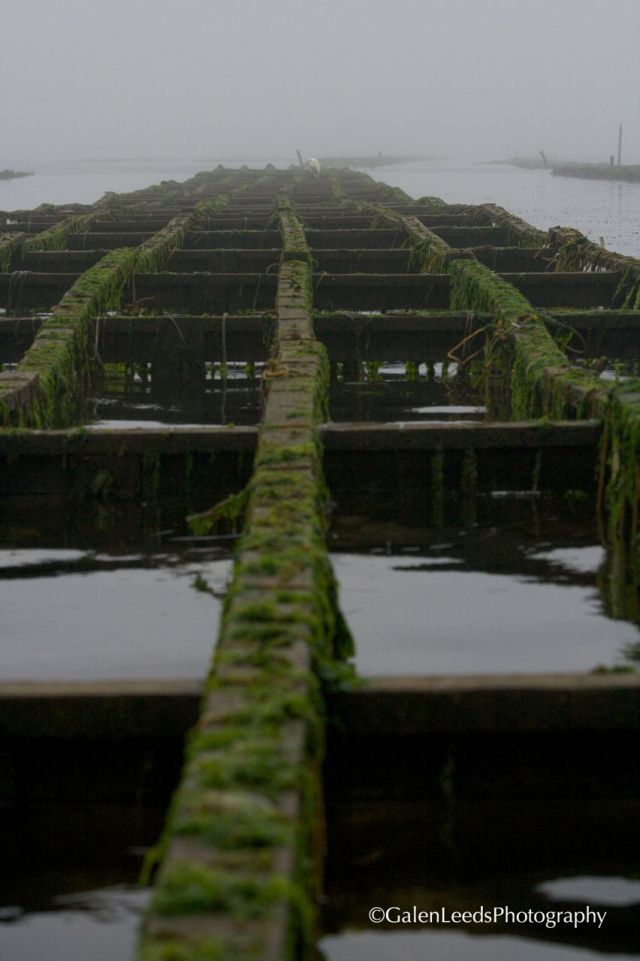
Entrance to the rows of oysters near Tom's Point at high tide, Tomales Bay

“Oysterscapes” is my own term, meaning a photograph where oysters or oyster farming is central part of the image (though not necessarily the focus), be it of landscape or other creatures. Nearly all of these photographs were taken while out kayaking on my local waterways… in fact, there are few areas out here connected to the salty pacific that can be kayaked but have nothing to do with oysters.

Enjoy,

Galen

This slideshow requires JavaScript.

Posted in kayak photography, landscapes, marine life, nature photography, Photo Essay, photography, wildlife photography | Tagged , , , , , , , , | 6 Comments

The “Why” of Photography


When I am out with my camera, creating photographs, I find one of the most important questions I can ask myself is “Why?”. Not so much “why am I taking photos?” but rather “Why am I taking this photo? Why does this scene inspire me?” which makes me pause and think about what in the scene it is that really interests me, inspiring a slew of other questions that can help me take a better picture in the end.

Is it how the subject blends with its background, or is it how it stands out from the background? If it’s about how it stands out, that can make me rethink my composition, my aperture, even the lens I am using. Why does it stand out, and how can I emphasize it in my picture. How can I draw people’s eyes to it. Should I blur the background? Or try for detail in it, that may just distract from the main subject? Which elements of the background will either add or detract? This helps me choose what angle I will be shooting my image from, and how much depth of field I want.

Once you realize what is important to the image that you see in your mind, you can begin to find a way to make those same factors important when your shutter clicks. The “why” helps to filter the image in the mind.

Posted in How To, photography | Tagged , , , , , | 4 Comments

The shore is not the horizon


I spend a lot of my time photographing on the water and near the water. As such there have been a few things I’ve had to learn- water reflects light, water is bad for your camera, your feet get wet if you only watch your subject (and not where you are going,) and that the shore is not the same thing as the horizon.

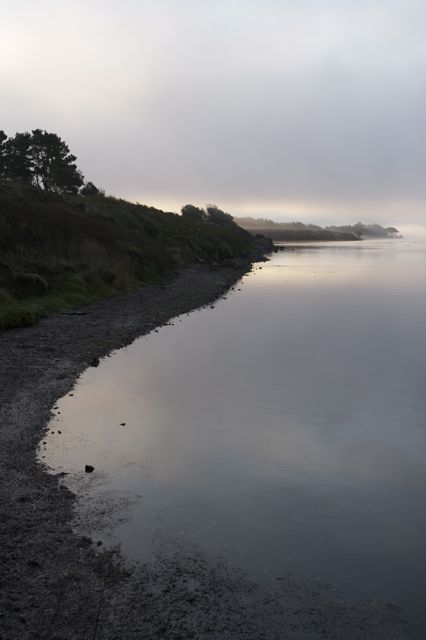
Image taken with a level on the tripod head

What does this mean? Have a look at the two images on the right. Notice the top one looks skewed compared to the bottom one.

Which of these two images is level? Which version is more pleasing to look at?

Image falsely leveled to the shoreline

The top picture was taken using a tripod with a built in level in its head. The appearance of the shore/horizon being out of level is an illusion of distance. On the right hand side of the photograph, the land is much farther away, a mile or so. Being level however, it just feels funny.

For the lower image I used the straighten tool on my computer’s photo viewing software, lining up the horizon with the grid lines. It feels more natural in the composition. There is no strong foreground element that declares where level is, so I am able to “create” a new level that makes sense to the eyes. In this case, out of level can look more natural.

A way to “straighten” an image without post processing is to use your cameras focusing grid. I sometimes do this when I am out shooting. I place two of my focal points that are in line with each other on the horizon, and “preset” the lean. Sometimes, if I don’t notice something in the foreground, or if there is a nearby tree, this can work against me. Buildings or trees can acquire a “lean” if I “level” the photo out.

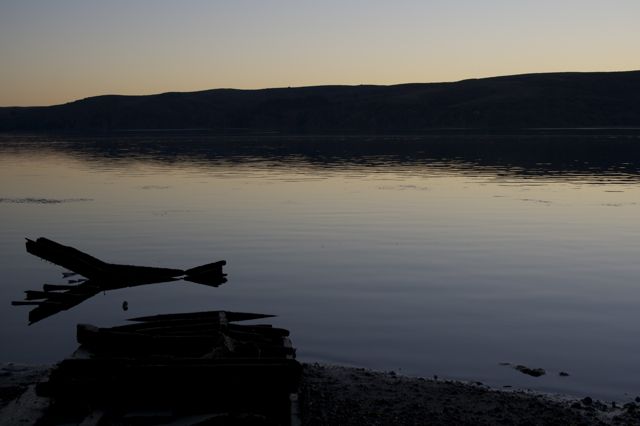
A strong foreground element can help establish a level feel for an image, especially if it is in a contrast area

It isn’t always necessary to combat or worry about the far horizon. If you can include subjects in the foreground that immediately draw the eye, they can pre-establish where level is. Look at the picture on the right. The silhouette of the rotting boat cradle on the waters edge is one of the strongest elements and has good contrast. The eye goes there first. Level is immediately established by the reflection and how the water hits the cradle. The slight angle of the far shore becomes irrelevant and natural.

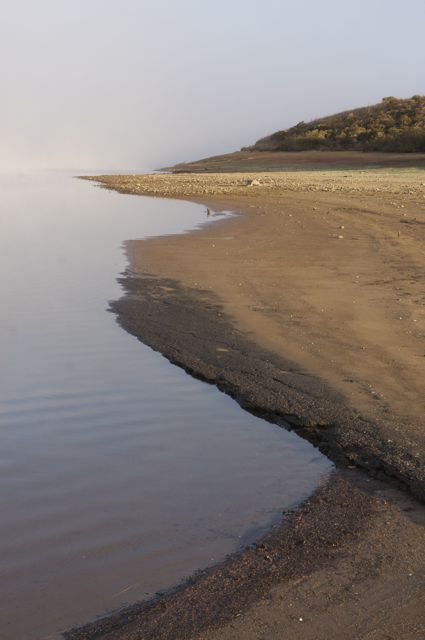
Including shoreline that leads through the picture helps establish that the shoreline is not supposed to be level

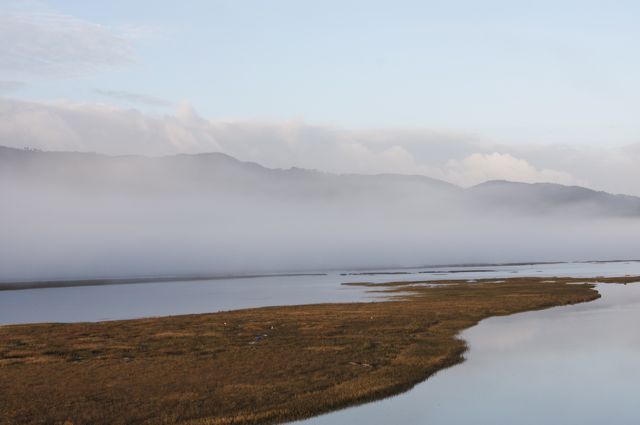
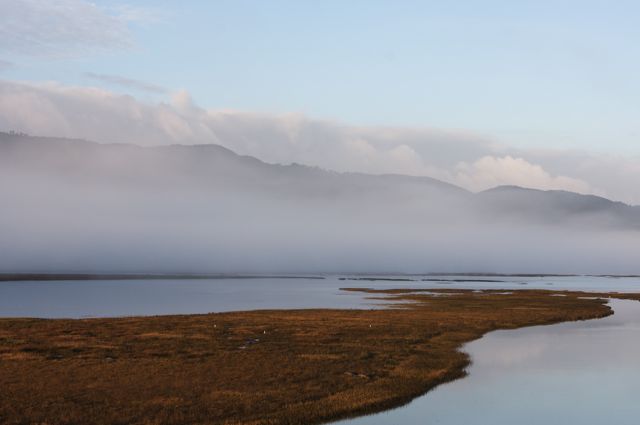
Another way is to show the shoreline as it winds away almost from your feet. This establishes right away that the shoreline will not be a horizontal line by the time it is more distant. Notice in this picture how the very far shorelines that jut out into the picture seem to rise slightly to the right? Again, an illusion, but one that is allowed by the foreground.

A third method is to include the near shore as well as the farther shore. Also, try shooting straight across a body of water, instead of up or down it. Shoot from angles where there is no major change in distance between the left side of the frame and the right.

Sweeping curves, lines from the edges, joining the shore at points where the mind can easily realize that the shore is not supposed to appear level are all good ways to watch your horizon. There are more ways, so take your camera and find some of them. Play with objects that the mind should think of as level or plumb, and see how incorporating them into your images affects your horizon.

Many of these same tricks and effects can also be noticed with fields, some skylines, and other open spaces. Play around, enjoy. Try to take notes of which pictures you take level, and which ones are offset so that you can understand what leads to acceptable results, and what keeps you scrathcing your head trying to figure out what is wrong.

Showing both shores of a river, slough or creek can help the eye to establish level

Again, showing the shore leading away helps to establish the images sense of shoreline

Middle ground elements can also serve to establish level and horizon

Posted in How To, landscapes, nature photography, Photo Essay, photography, road side | Tagged , , , , , , | 6 Comments

Approaching wild animals, without walking towards them


The key to approaching wild animals, is to remember that they are wild. Profound isn’t it? Well, for this lesson, it boils down to this- if you walk directly towards an animal, that is an aggressive form of behavior. In the animal world it generally means that you want to defend your territory, invade another’s territory, steal prey, steal a mate, or turn what you are walking towards into dinner. The natural response if it is a rabbit, deer or bird is to flee. If it is a predator or large mammal (such as an elk or moose,) the response can be to attack.

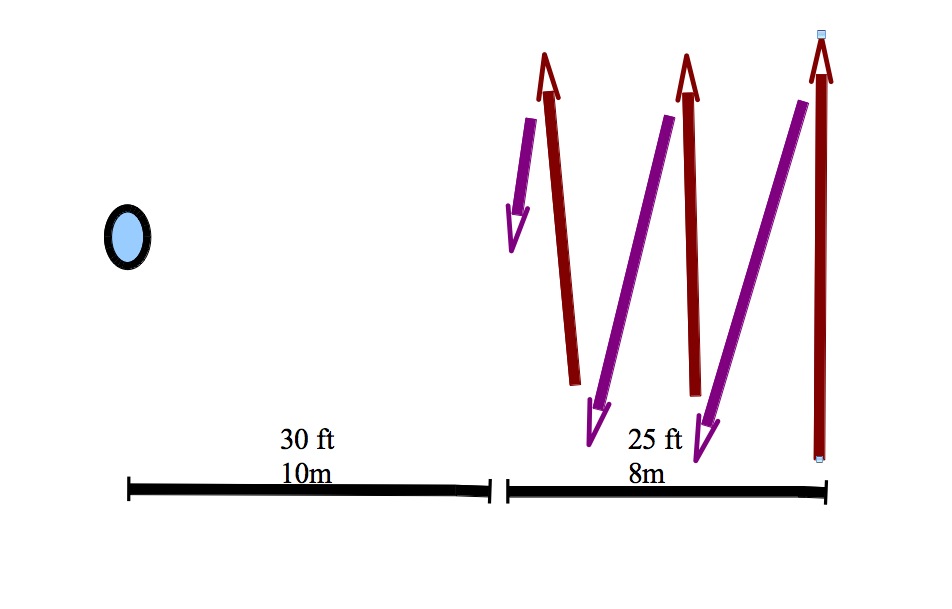
Regardless of the end result- being left with no wildlife to photograph, or you lying mangled on the ground with a broken camera- walking directly towards wildlife is not the way to go. Instead walk at an oblique angle to your subject, so that in the course of walking 30 feet you get perhaps three to ten feet closer. Also, walk farther than your closest point to the animal. It’s a little tricky to explain, so let’s look at a diagram I made-

Approaching a wild subject (a.k.a. the blue blob)

If you follow the arrows, you can see that by never walking directly towards the subject on the left, you can still get considerably closer, without (hopefully) making that subject feel threatened. Notice that on each leg of the trip, the midpoint (which would be the closest point to the animal) is not the stopping point. You keep walking, continuing until your back is almost toward the animal. It takes a little longer, but is more effective. This makes the animal feel that they are not the focus of your movements, that you are continuing beyond them, that you are doing something other than trying to get closer. Also, since you are zig zagging from side to side, you are viewing the subject from more angles that you can take pictures from, each with slight differences in lighting and background. (And yes, I realize that this is just a drawing I made on my computer, and not an exact representation of reality. Distances will depend on terrain, the animal, its species, and many other factors.)

When you are using this method, make sure that you do not stare at the animal. They will become nervous or aggressive if you focus too much attention on them, and you will lose any advantage that you may have gained. Look to the side, examine the grass, at your feet, even take a couple of pictures of that grass. Focus your camera lots of places, not just on the animal. Move your attention around. Also, keep your movements slow and smooth, pausing often. Sudden movements will still spook or alarm animals, especially if you are closer to them.

It is important to remember however, that if you get too close, any animal can feel threatened. Still use your telephoto lens (I prefer a 200 mm or more.) You don’t want to scare off the wildlife, stress it out, or get attacked, so maintain your distance. Just because you can get closer doesn’t mean that you should be foolish. Don’t expect to be able to go five feet from a Grizzly without being attacked, just because you try this method. A hawk is still wild, and won’t want you right next to it. This is not a magic trick, and you must still show respect for the animal and the fact that it is wild. If it seems to be getting nervous, you should stop, and even perform a slow retreat. (Too fast of a retreat can be as alarming as too fast of an approach.)

Be sure to watch the animals and the signals it is giving you. Not only will watching their behavior let you know when you are getting too close, but it can also let you know when the animal may be about to do something exciting, like catching a fish or a rat.

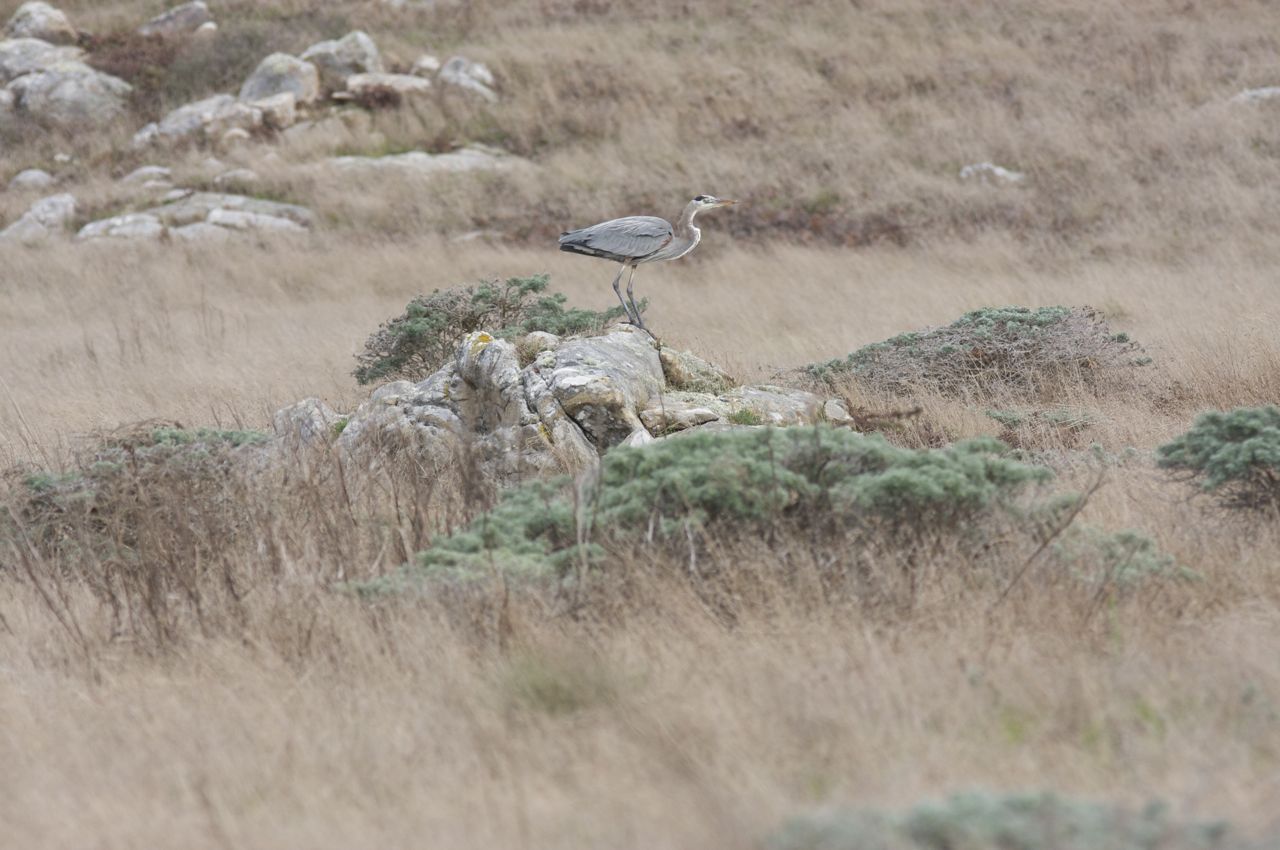
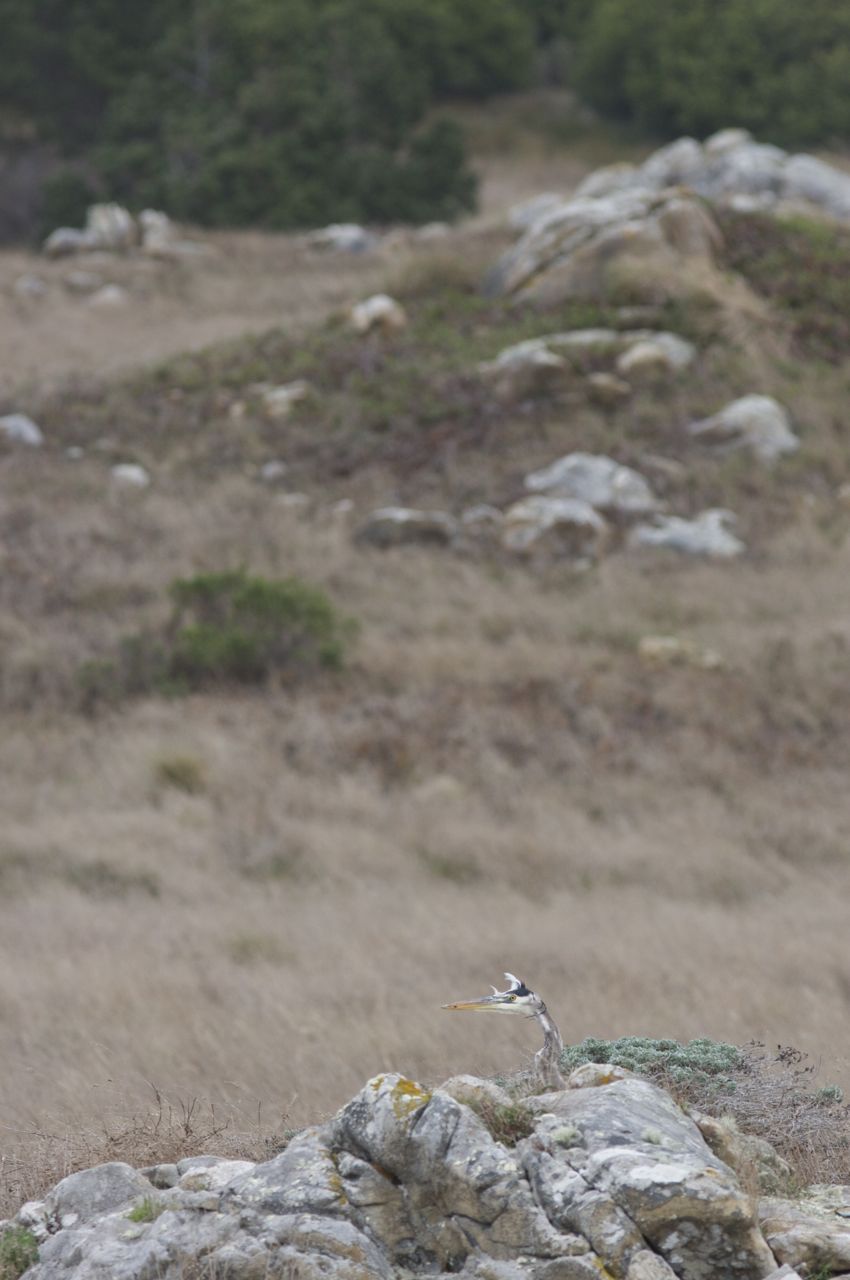
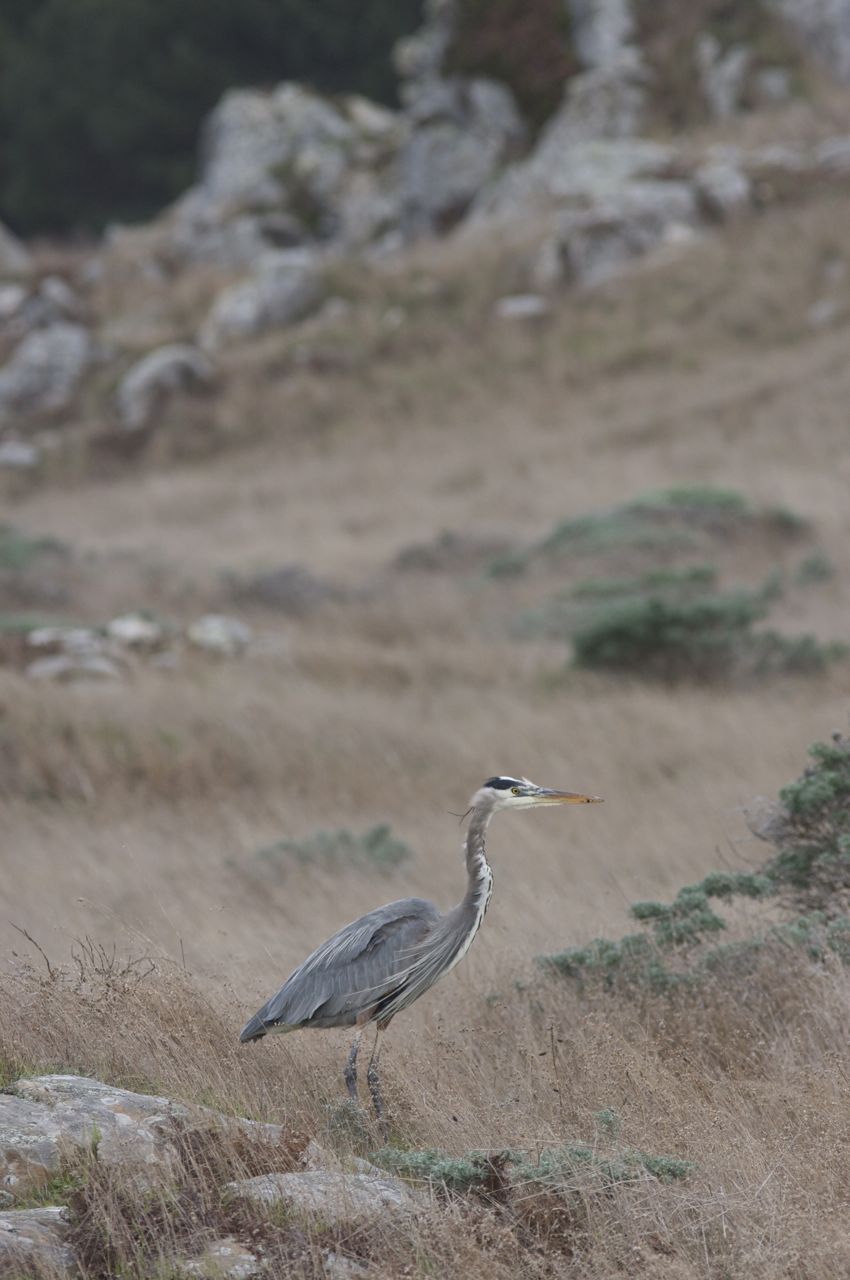
Below you can see several images I took of a Great Blue Heron on a windy day, using this technique. Notice the changes in angles, and the change in size of the heron (from getting closer.) I did not crop any of these images. They are how they were when they were taken from the camera.

Enjoy,

Galen

Great Blue Heron sighted, time to begin the zig zag approach

Approaching the heron

Closer yet

Close to the heron, time to retreat

Posted in How To, nature photography, photography, wildlife photography | Tagged , , , , , , , | 4 Comments

Finding scale in New Zealand


So often when taking photographs, we see something amazing, raise our cameras, take the shot, and walk away very pleased with ourselves. Until we get home and review our pictures. We were so impressed with how much larger or smaller than normal something was, that we just wanted to capture it so we could share it, but we forgot one very important thing… to give our photos scale. Taking a photograph of the largest ball of string in the world means absolutely nothing, if you can’t tell that it is really, really big.

When you photograph something because it is especially large or especially small, it is important to include something in the photograph to give the viewer a sense of the scale of the object. (I addressed this partially in an earlier post on the lava tubes of Lava Beds National Monument.) On a recent trip to New Zealand I came across several objects (animal, mineral, and vegetable) that gave me reason to include people and/or objects in my photos to give a sense of scale. These were subjects that were either especially large or especially small, but needed visual cues to help the viewer of the photograph to realize which.

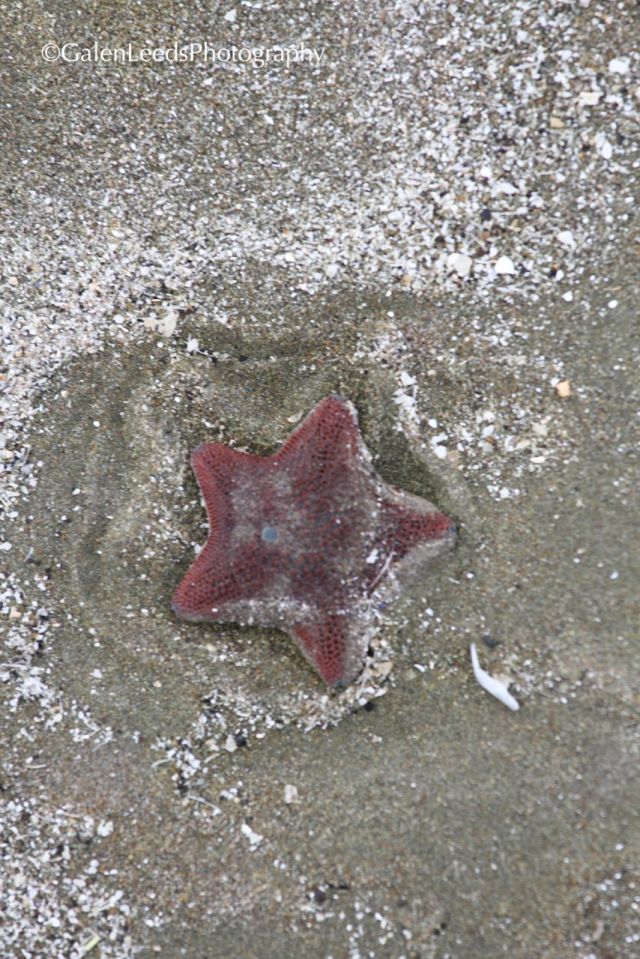
A starfish. How exciting.

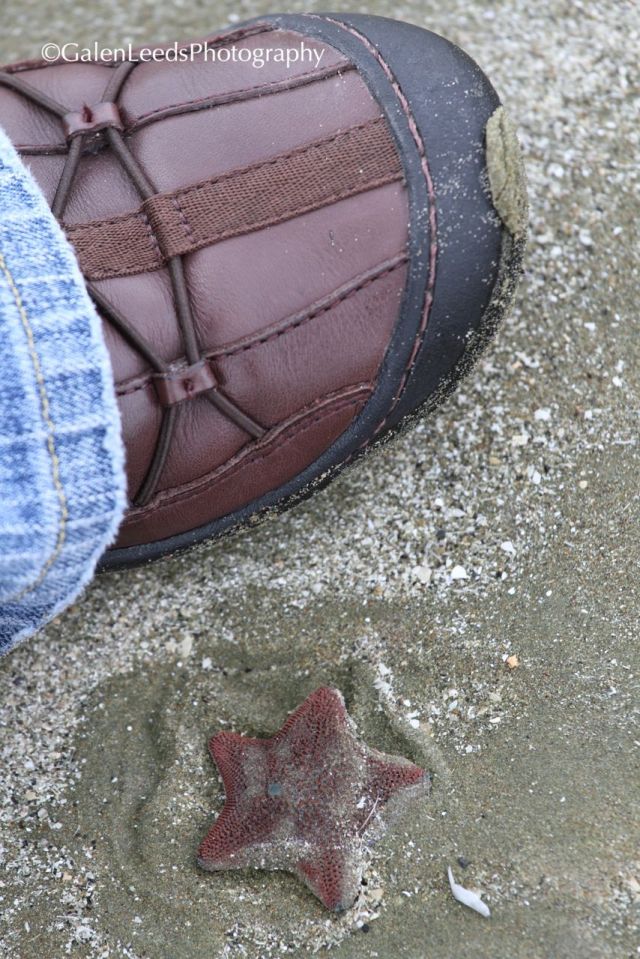
Visual cues can be especially helpful when the subject being photographed and viewed is something outside of the audiences own experience, or if the object is in contrast to most people’s experience. The hermit crab that we encountered was many times the size of hermit crabs encountered off of the coast of California (the ones I am familiar with). If I hadn’t included something to scale it against, my mind would simply equate it to the hermit crabs that I already know. Likewise with the starfish, except that they are much smaller than the ones I am familiar with.

Aha! A star fish with a foot. Suddenly the audience realizes that this is a very small starfish, smaller than what they may be used to. If they realized how small my model's foot really is, they'd know that this guy is miniscule

Posted in How To, nature photography, photography | Tagged , , , , , , , | 2 Comments

Bobcats: An essay in photos


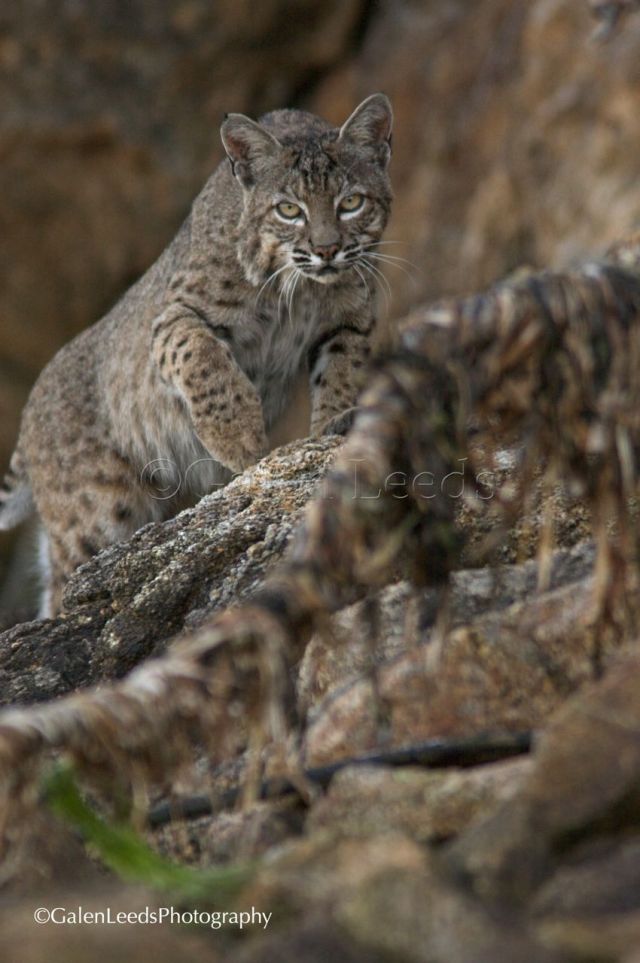
Bobcat stalking towards me along the shores of Tomales Bay. My kayak was beached at the time.

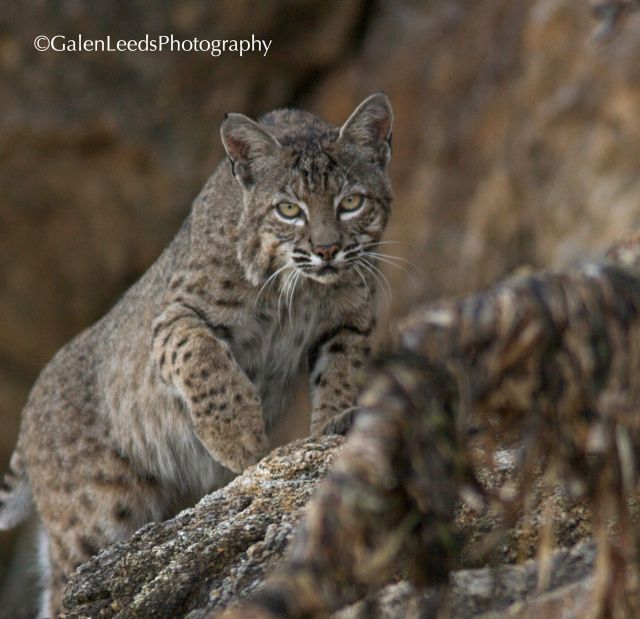
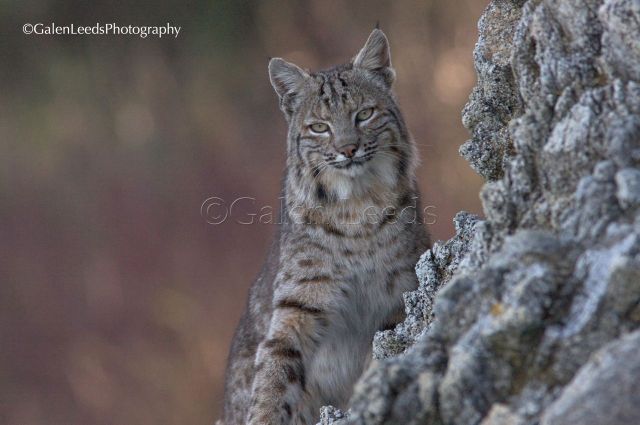
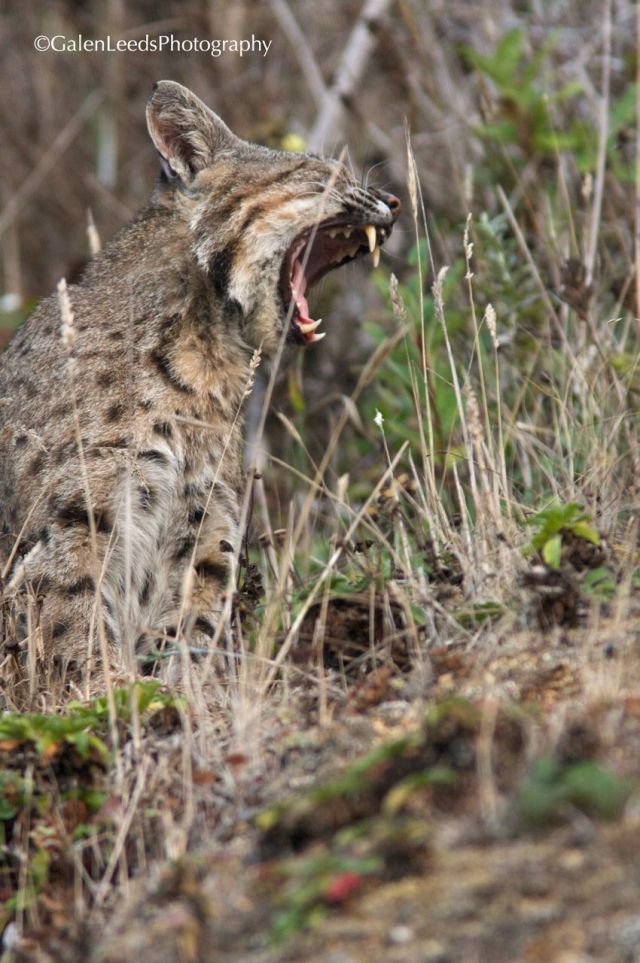
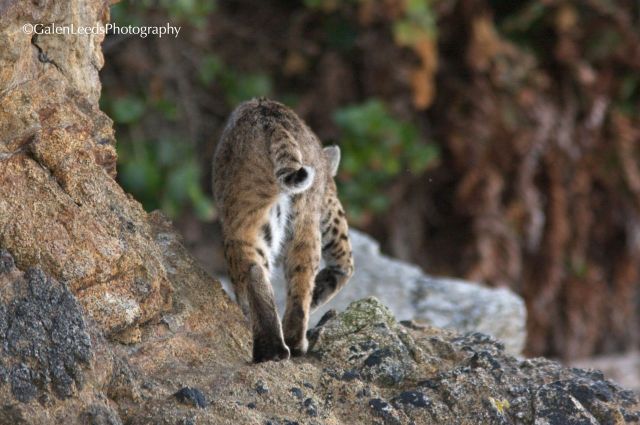
Over the years I have come across many bobcats. The most meanigful encounters I have had were while kayaking. Most of my photographs of bobcats were taken in the Point Reyes National Seashore. Here are some of those images-

And here is a little information about bobcats-

The bobcat, aka Lynx rufus, is one of the wildcats we have here in California, in fact among the twelve recognized subspecies, there is one native to the California area west of the Sierra Nevada- californicus. It may be the most common wildcat here in the U.S. of A., although it is largely nonexistent in the midwest. It prefers scrub, broken forest, and rocky and/or bushy grasslands, and will hang out a little in farmland type country. Which makes California, and especially the Bay Area, a pretty groovy zone for it.

It likely got its name from its “bobbed” tail, which is black at the tip, and white underneath. A lynx’s tail by comparison is black at the tip, and black underneath. There is often distinct banding or spotting on the upper legs, and a broken pattern of grays, blacks and whites on the face. They are shorter legged and shorter haired than the lynx (Lynx lynx.) The black tufting at the ears is usually less noticeable, all though still present than those found on the lynx.  Males are larger than females. Average sizes are 28-49 inches, and 15-30 pounds.

Largely a solitary animal they mostly come together for the purposes of getting it on. The males can be sexually active year round, but the females generally only go into heat for the months of February or March. The cats mate through a series of fake hunting and chasing games.

Usually two to three (although up to seven,) cubs are born in late April to early May, covered in spotted fur. They are born in a special natal den (bobcats will often have a few different minor dens through out their territory.) They begin to move about and explore when they are about a month old, and are weaned by the time they reach their second month. They learn to hunt quite young, but usually stay with mom for the first year.

What don’t they eat. It seems like if its warm blooded and moving, they’ll eat it, although they will also eat carrion when food is scarce. Smaller animals such as rats, mice, and shrews, it will often sit very still for and pounce on them as they walk by. Larger animals such as rabbits, woodchucks, and squirrels, it will chase more actively. It will also eat opossum, raccoons, birds, cats, foxes, porcupines, and skunks. Rarely it will take down a deer, but it prefers to go after the young, or else adults when they are in snow and can’t move as freely, or else while they are bedded down to sleep. They will also go after livestock, especially poultry.

Most of this information was from the National Audobon Society Field Guide to North American Mammals, John O. Whitaker, Jr. It was however put into my own words and has my own spin on things.

Enjoy

Posted in bobcats, kayak photography, nature photography, Photo Essay, photography, wildlife photography | Tagged , , , , , , , | 8 Comments

Anatomy of a photo #22: Bobcat stalking the shores of Tomales Bay


Bobcat walking towards me

This image was in a recent photo essay that I posted, and due to its popularity, I am going to write a little about what went into capturing this image.

First of all this photo was taken from my kayak. The majority of my more memorable bobcat images were taken during my kayak photography outings. Bobcats have learned to be suspicious or spooky about people who are walking around. Too often in the past they have been carrying guns or other forms of death. Take away those two legs however, and we present ourselves as a different creature. While wildcats will still become nervous around a person in a kayak and disappear, it doesn’t happen as quickly. There isn’t that same programmed response. I have heard similar things from bicyclists and horseback riders- they rarely get the same fear response from bobcats when mounted as when afoot. A second plus for the kayak is that they are cats, and cats are curious. Bobcats will often pause, wondering what the heck that thing floating out there is.

For this particular bobcat, it had felt like a bobcat sort of day, so I had actually gone out kayaking with the expectation of possibly seeing one on the shores of the bay. I saw this one while I was crossing, and still fairly far out from shore. I watched it as it stalked down the beach and rocky shore. On the hopes that it would continue its way down the shore I paddled ahead and out of sight, resting the nose of my kayak on the rocks at the very edge of the water and settled in to wait (staying in my kayak). By resting my kayak on the shore I hoped I would not have to do large paddling movements that might spook the cat. I was however worried that it would place me too much in its path, possibly stressing it out unduly from its normal behavior.

As I sat there debating with my self, I remained very still (although I had taken a couple of test shots to make sure of my cameras exposure). I had my camera at the ready, inches from my eye so that I could begin shooting with very little movement once the kitty came into view. I knew that it would notice me at some point, but I wanted to minimize the chances, and delay the inevitable. I had just decided that I might be too closely in the cat’s path and was about to push out into the water, when it came into view and it was too late. I had to stay put.

I had many horizontal (landscape orientation) photographs of bobcats already, so the first thing I did was to rotate my camera so that I was taking images in a vertical (portrait) orientation. It also seemed like a nice composition, complementing the perspective of the bobcat stalking towards me down the shore.

It was deep shadow where we were, so I did not have to worry about losing detail in highlight or shadow. It would be nice even lighting. Flashes were out of the question, as they can really disturb most wild mammals (birds not quite as much). I had a long lens on the camera (420 mm) so I had made all my camera adjustments to give me a fast shutter speed- the highest ISO I could use without having lots of noise, and a very wide aperture of f5.7 This also resulted in giving me a very shallow depth of field (which I rather enjoy for these nature portraits).

I took many images of the bobcat, as I often do when photographing wildlife. It’s easy to lose many images to blurriness (especially when shooting hand held) and also because the scene is usually dynamic and changing each instant.

This post and it’s story is getting rather long, so I will continue it tomorrow, but with another picture of the same bobcat, but one that I haven’t shared before.

Enjoy

Posted in Anatomy of a photo, bobcats, kayak photography, nature photography, photography, wildlife photography | Tagged , , , , , , | 11 Comments

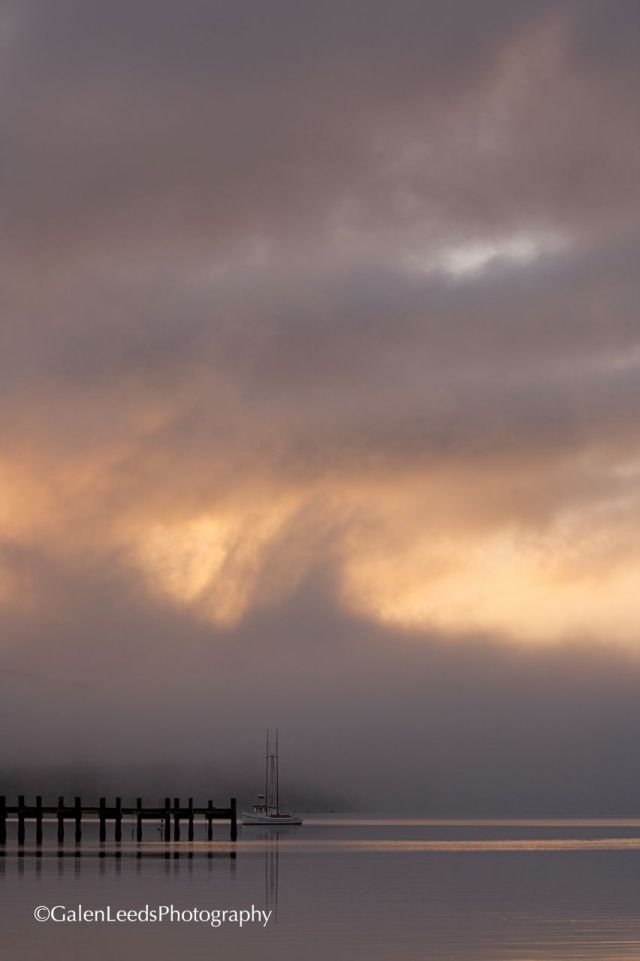
Anatomy of a photo #18: Boat and mist


I exposed more for the sky and the water than the other objects in the image

Early morning light is some of the best, but living out here on the edge of a continent, we sometimes have what we call “fog.” I’ve found that there are times when “fog” can create a late or second “magic hour” (the grail of so many photographers).

It still needs to be morning or evening, but there are times when as the fog swallows up the sun, and filters only some of it through, that the sky and landscape can once again get those warm colors. The visions can be especially nice if you are near water on a calm day, as I was on this morning when I was driving down Tomales Bay.

It was nearly an hour after sunrise when the fog started to break open a little. Light came filtering through, creating a rather magical waterscape. I drove quickly (with light you never know how long it will last, as it can be prone to change very quickly since the sun, clouds, mists, etc. are always in motion), to a spot where I knew there were some boats. I did not want to have the option of only photographing open expanses of water and mist, although that can also make for some very interesting shots. I wanted to be able to have options, to be able to play with my composition.

I took several shots of the boats, mists and water. Some were close ups of the boats, some showed just mist and water. This is one of the images I particularly enjoyed, largely because of the silhouette of the dock in the background.

I exposed this image more to keep the color in the sky and mists than to bring out the boat. In other images I have more boat detail. ISO speed was kept low to minimize noise. Aperture was fairly stopped down to increase my depth of field. The images were taken hand held.

Enjoy

Posted in Anatomy of a photo, landscapes, nature photography, photography, road side, weather | Tagged , , , , , | 4 Comments