Falconus Interuptus: A photographic story of Two Tails and a Peregrine


New

This slideshow requires JavaScript.

This story begins as many of my photography adventures do “I was paddling my kayak along the shores of Tomales Bay, taking pictures of whatever I saw of interest, when…”

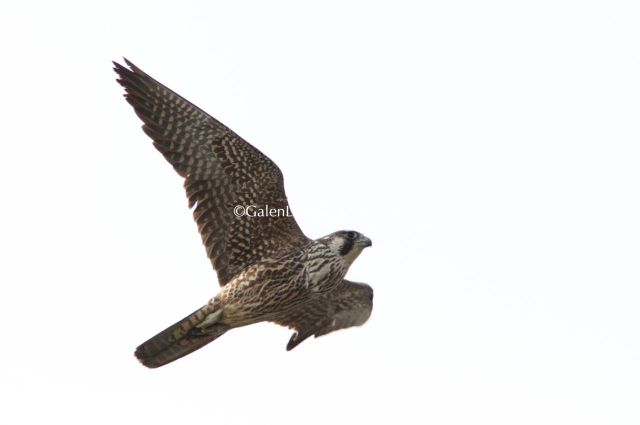
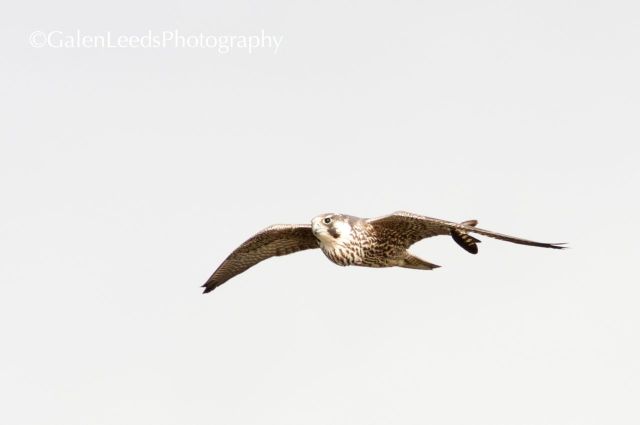
I saw this juvenile Peregrine Falcon speeding through the air

“My camera swung up, and I followed it. Click. Click. Click. I fired off several shots, capturing it as…”

It circled by me before heading for a copse of trees on Tom's Point, a bird preserve on the East Shore of Tomales Bay

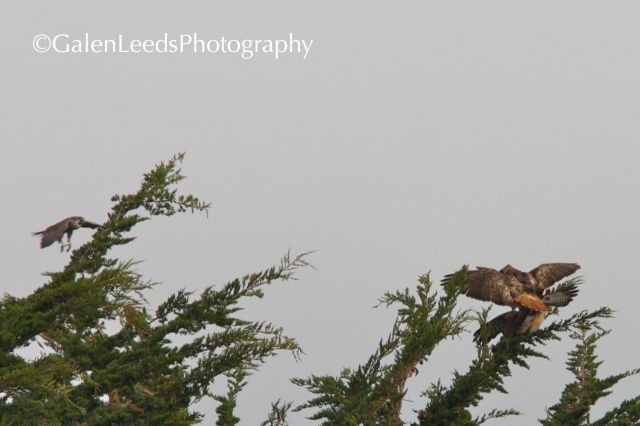
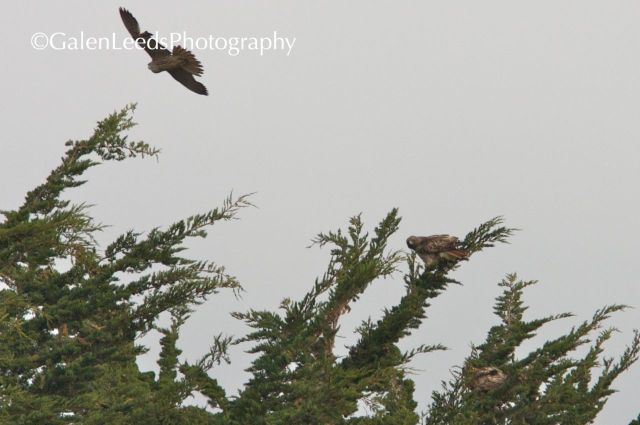
And here is where the story takes a new twist. I saw in the copse of cypress trees that the young Peregrine was racing towards, a pair of Red-tailed Hawks, coupled in romantic embrace (or what birds may consider romantic). Apparently the Peregrine saw them also, because…

The falcon was zipping right for the coupling couple

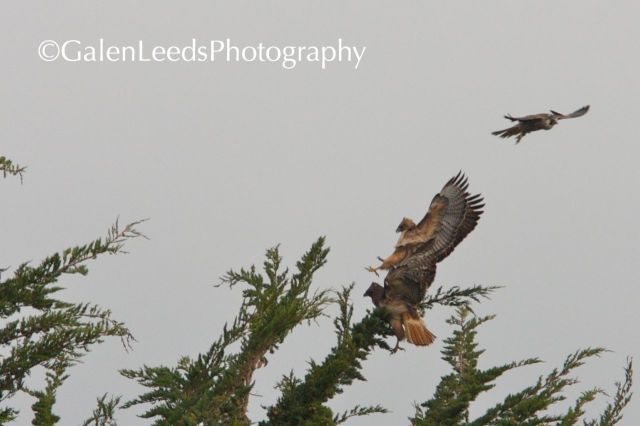
Now what do you think those Redtails were thinking when they saw the Peregrine gunning for them? I’m not really sure, but I can guess what they were thinking right after…

The feathered missile dislodged him from her

And I am sure it wasn’t complimentary. Luckily for the falcon, she is one of the fastest creatures alive. Without waiting for them to catch their balance,

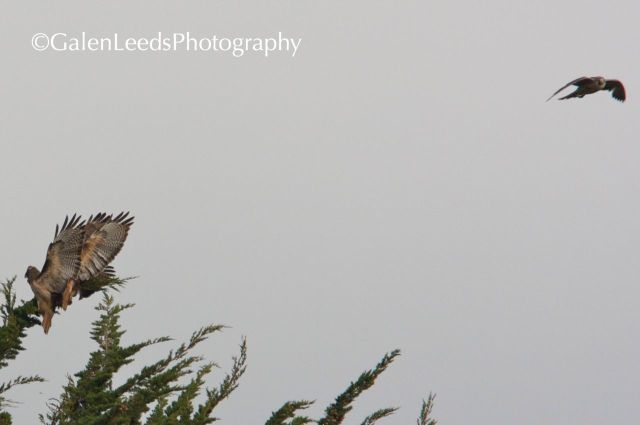
The Peregrine was well on its way, before the male could even settle onto a perch

The Red-tail Hawks seemed to try to regain a sense of equilibrium, but the moment was spoilt. I don’t know if it was to gloat, or if there was some sort of death wish involved, but…

The young falcon circled back around to view the aftermath, of two larger hawks perched on their own branches, separated

This is the only time I have seen such a thing, where one species so rudely interrupted another in such an obvious way. It was truly a very different sight to behold.

For another amazing raptor encounter that I witnessed, check out these photographs of a Red-tailed Hawk and an octopus

Posted in kayak photography, nature photography, raptors | Tagged , , , , , | 12 Comments

Warning: No Lifeguard On Duty


New

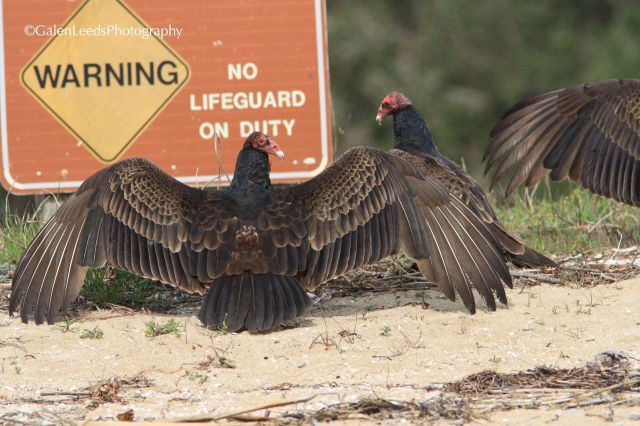
Do you ever get the feeling that some birds or animals can read?

I’ll let people make their own judgment on what this photograph means, as I feel that it is pretty self explanatory. I will however mention a detail or two about how it was captured, as from just looking at the image, it is hard to tell that this is yet one more example of kayak photography. That is I was kayaking on Tomales Bay in California, on a grey and foggy day (the reason for the even lighting and the good detail in the dark colors of the vulture), when I came across a group of seven or eight vultures sitting on the beach, some of them with their wings spread to dry.

It took some careful, slow paddling to get myself into position to capture this vulture without spooking it, as I wanted a photograph with its wings in the air. Some of the picture I took of the other vultures on the beach remain some of my favorite most detailed photographs of these birds that I have taken, but I thought all of you would get the biggest kick out of this one. Enjoy

Posted in kayak photography, nature photography, photography, vulture, wildlife photography | Tagged , , , , , , | 9 Comments

Morning trail


New

Something about the early morning sun

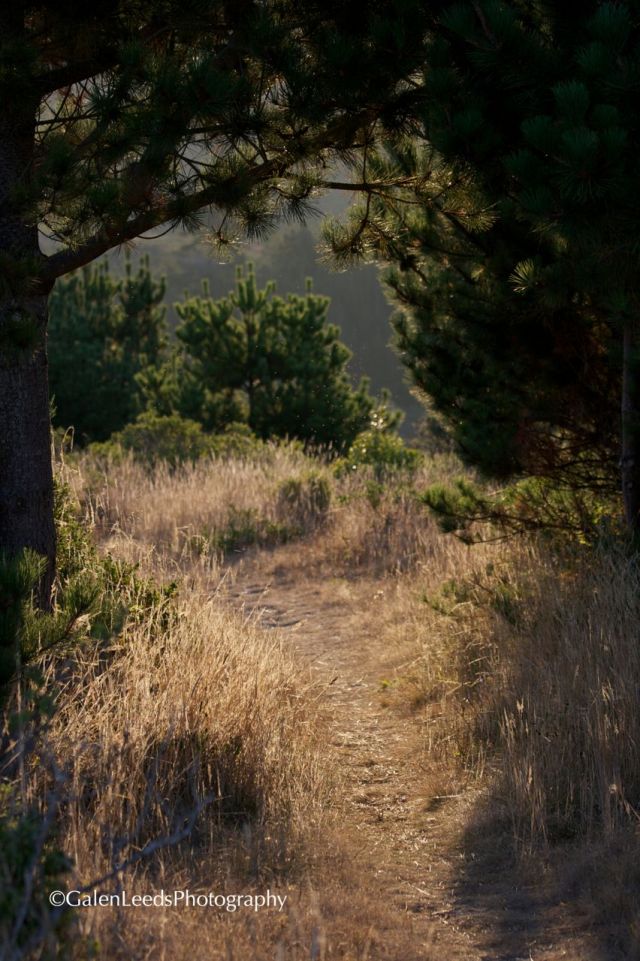
This image is nothing special, but it is one I enjoy. It’s from an early morning hike on along the road to Limantour Beach in the Point Reyes National Seashore. I want to keep it simple this morning, just as this hike was simple. Enjoy.


70mm lens, f/4

Posted in Anatomy of a photo, My favorite Parks, nature photography, photography | Tagged , , , , | 17 Comments

The Male Kestrel: An essay of photos


New

This slideshow requires JavaScript.

In my last post I showed photos of a female Kestrel, and then discussed some of the identifying characteristics that we could see. Today, I will be showing my photographs of male Kestrels, and describing some of the ways in which they differ from the female.

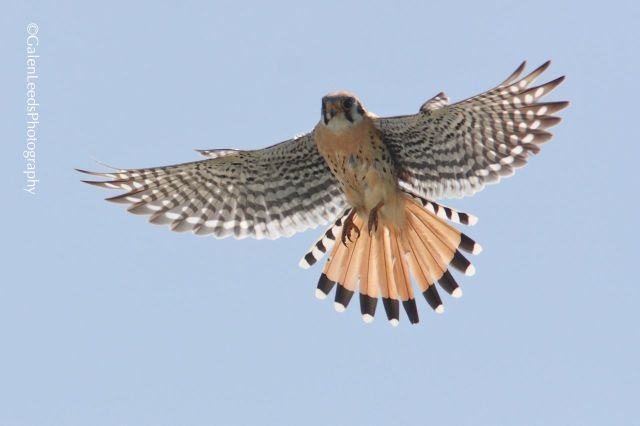
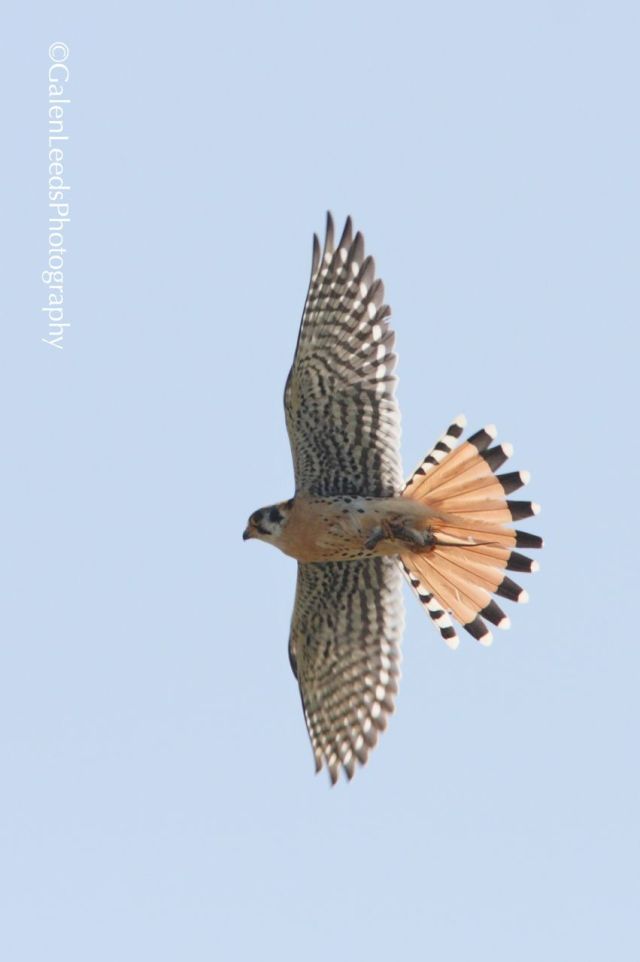
Male Kestrel: The most obvious difference from underneath is the tail

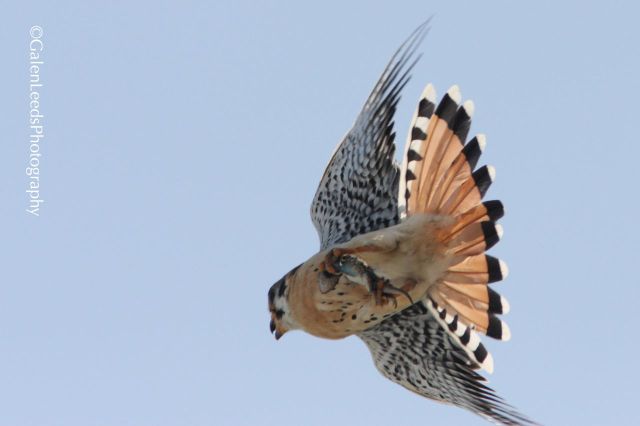
When a kestrel is in flight, it is not uncommon to see it from underneath, so we will start with some of the more obvious differences that can be see there. First is the tail. The female has a series of even stripes of alternating red and black. The male however has an almost entirely red tail, with only a single, wide, black band, at the very end, followed by a thiner, white terminal band. The outer two tail feathers (which will be a little harder to notice, are alternating black and white for their entire length.

A female Kestrel for comparison

Other differences you will notice are on the chest. The male will have either a clean, unmarked chest (often a cream color), or he will have scattered black dots. The female will have a streaked chest (the streaks running from a head to tail orientation). The males underwings are an even patterning of black and white, the females are reddish brown and tan.

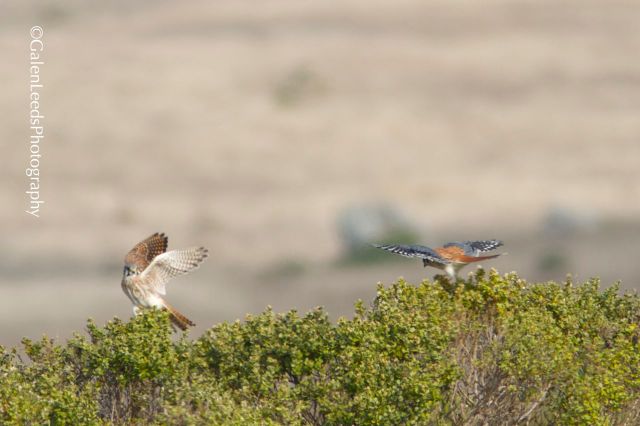
The male is on the right

Male and female Kestrels are also different from the topside. While the female is always a little larger than the male, the greatest differences you will be able to notice are in coloration. You can see a little in this photograph of the two birds next to each other. The wings for example. The female’s wings are red and black. The male’s are have a bluish color and are mostly black at the tips, with some white. The center of the male’s back is a brighter red than the females, and has only a little black mixed in. (A female’s back isn’t so brightly colored, and is much more mottled between the black and red.)

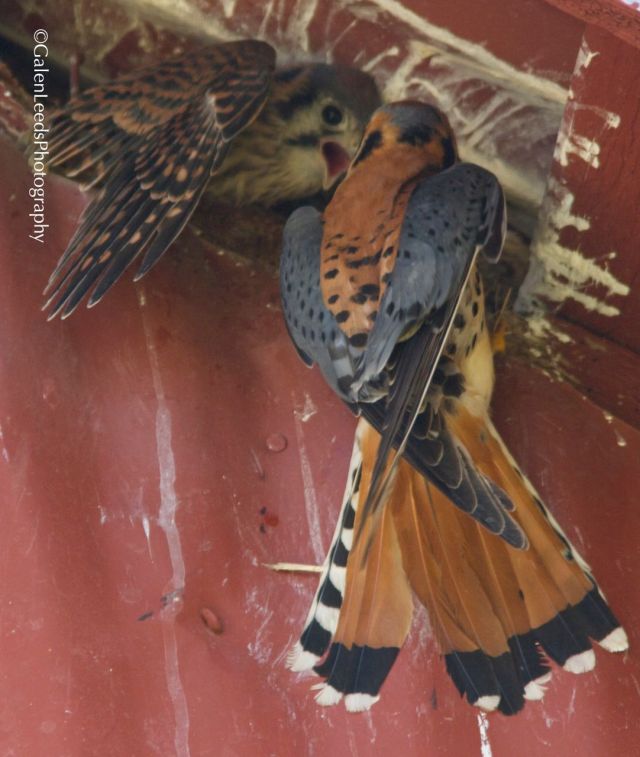
The back of the male, as it feeds one of its nearly fledged female chicks. Kestrels are cavity nesters

Again, you can also notice the coloration of the tail of the tail from the backside, and not just from underneath. Back, wings, and tail will generally be your easiest field marks. Learn them, and you will have an easier time telling the male from the female. I’ve included more of my photographs in the slideshow at the top. Look at them, and see what differences and traits you can notice.

Male kestrel carrying a Western Fence Lizard (a.k.a. a blue belly lizard)

Enjoy

Posted in kestrel, nature photography, Photo Essay, photography, raptors, wildlife photography | Tagged , , , , , , | 7 Comments

How to keep your kayak from sinking using a burrito and band-aids


No duct tape for me, although I was wishing for some at first. I’m glad now that I didn’t have any. It forced me to become so creative that my girlfriend accused me of going “all MacGyver” when I told her about my morning adventure of “the sinking kayak.” Umm-hmmm. That’s right, a sinking kayak, but luckily not sunken.

I noticed my peril just in time to paddle furiously and sprint the last few hundred yards to shore. And not the shore I started from. To get back to my truck and where I started I would have to cross a mile and a half of open water, with no chance of land fall anywhere in between… A sink or swim situation to get home, if I couldn’t figure out how to do a some sort of fix on my kayak. (Oh, and did I mention that it was so early in the morning that it wasn’t even all the way light out yet?)
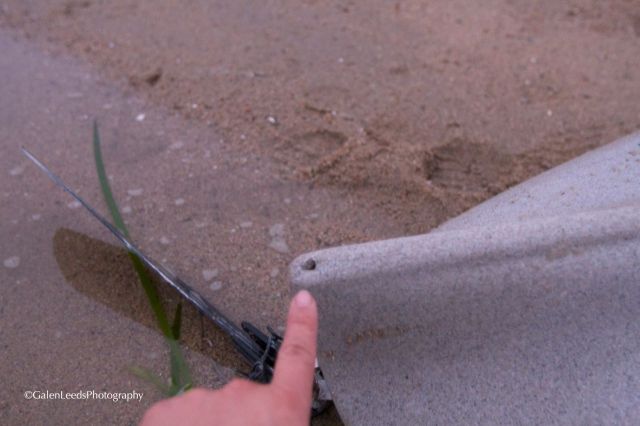
Here is the hole that I found in the stern of my boat, just under the rudder... at what is one of the lowest points in the boat, and only reachable from the outside...

While draining many, many gallons of water from my kayak, I did a quick mental inventory of everything I had in my kayak with me, trying to think of a way to keep myself afloat long enough to get me home.

  • Two layers of clothes (no worries about freezing if I was to be stranded for days)
  • Expensive camera equipment (useful for documenting the dilemma not resolving it)
  • Burrito (at least I wouldn’t starve)
  • Metal water bottle full of water (I didn’t need more water in the kayak)
  • First aid kit
  • Spare paddle
  • Towel
  • Tools (Ummm… left them in my other jacket?)
  • Patch kit (Do they sell those for my types of kayak?)
  • Plugs (Been on my “to buy” list for a couple of years now)

Unless I could devise something from what I had, my plans for the day were shot (plans like surviving). You know, this  really is starting to sound kind of like MacGyver.(Perhaps I too could have been an eighties icon… MacLeeds or MacGalen… Sounds so Scottish… Maybe a Sean Connery accent?) I thought in circles for a while before I came up with the aluminum foil wrapping from the burrito and some fancy band-aids that I always carry in my first aid kit as the perfect method for repair. No tools required other than imagination.
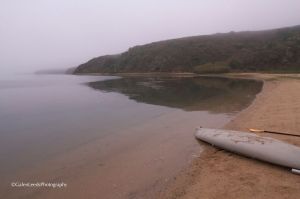
You can see the shore stretching off from my impromptu repair shop. Lots of grey foggy water, and it was finally getting lighter out

I bunched up some of the foil to make a pointed plug that I could stick into the hole, nearly the same diameter as the nearly dime size gaping wound in my kayak (I put my finger in the photograph to give it a little scale, and then thought since I was using my finger for scale I might as well point at whatever part of the repair job I was working on). I pushed the foil in tightly, letting the gash compress it as I pushed it in. I made sure to keep some of the foil on the outside however, because this is the key to the (w)hole repair right here- I flattened out the extra foil on the outside of the kayak, molding it to a small area a little larger than the damaged area itself.
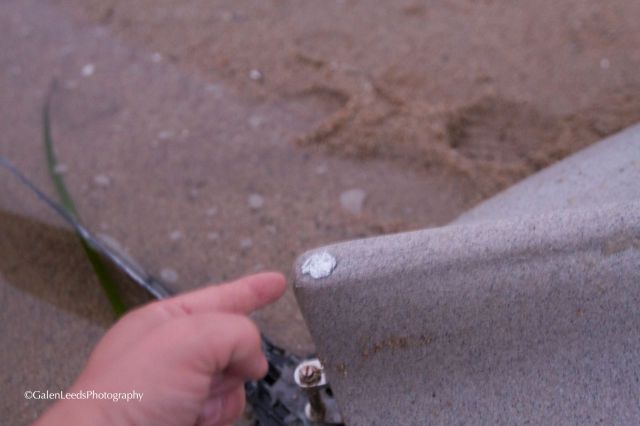
The foil is smushed against the kayak, molded to an area a little larger than the hole (notice the finger for ongoing scale comparisons?)

I thought of it like this. The water wanted to get into the boat. If I made something that was in the water’s way (like a piece of smushed foil) the water couldn’t get in. In fact, the more the water would push against the foil, the more firmly it would push the foil into place, increasing the seal, and making it harder for the water to actually get in. The bandaids? I’m not even sure that they were really necessary, but I figured they were just a little extra insurance against the foil plug somehow popping out or from getting scraped off by rocks or sand (which is how I think the hole came to be in the first place… being dragged on rocks and sand as I pull the kayak on and off of the beach). That and they were really good, fancy second skin style bandaids, which are rubbery and can kind of seal water out on their own (hydrocoloid bandaids for burns). So, taking some of the sterile cotton gauze from my first aid kit, I made sure the foil and the kayak were dry enough for the band aids.
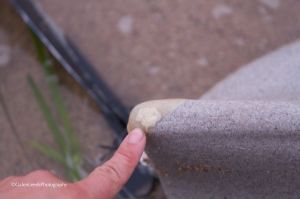
First I placed one bandaid on, but it barely covered
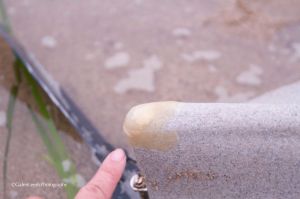
So I added a couple more to make sure it was well sealed and protected

I wouldn’t have trusted the bandaids on their own not to have come off or to hold their seal on their own. With the foil on there though, plugging it in a mushroom or rivet style, I suddenly felt very confident in my repair. So I decided to throw caution to the wind, and instead of paddling directly back to my truck (mile and a half over open water remember) I decided to just go on with my morning paddle, and to keep taking pictures.
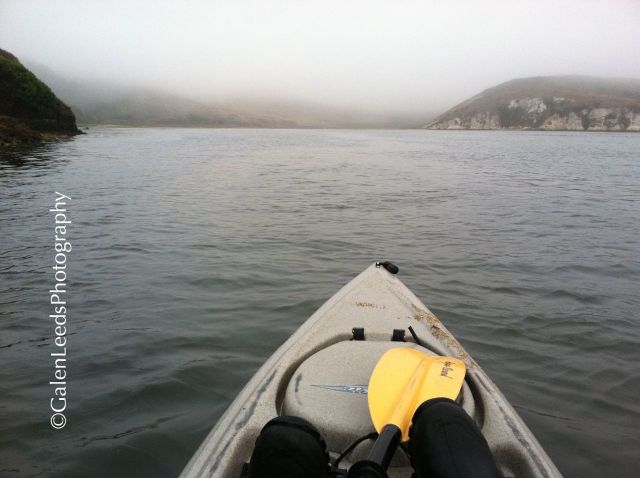
I put back in the water and paddled away from my car
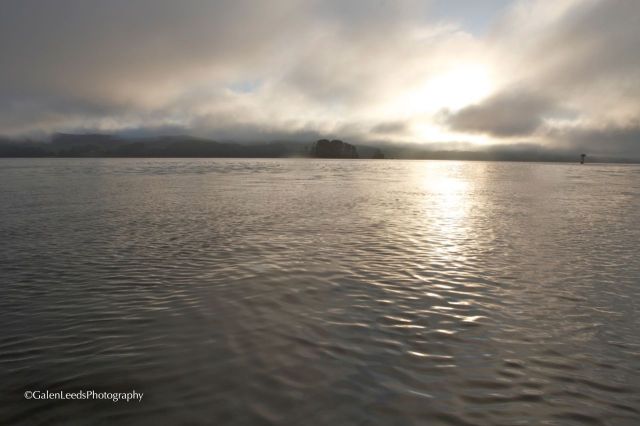
...and found a beautiful mix of water, fog, and early morning sun...

And it seems like I made the right decision. There is a hatch in my kayak that I can open to peer into the hull, and while there was a tiny bit of water left inside that I hadn’t been able to drain out before my repair, there was no new water. It was the most water tight my kayak has been for months (I had had just a slight leak before, but nothing to really worry about, a couple of cups of water after an five hour kayak).
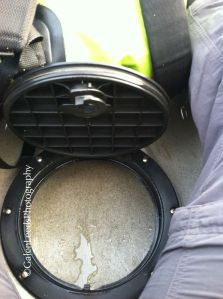
See, no more water


It was a beautiful and enjoyable morning after that. I photographed and filmed Willits, Harbor Seals, Cormorants, and so much more, thanks for my emergency kayak repair of aluminum foil and band aids. From now on, a spare piece of foil will live in my kayak, and another in my kayaking bag. It’s magical, and it really saved my bacon this morning and kept it from becoming very soggy bacon.
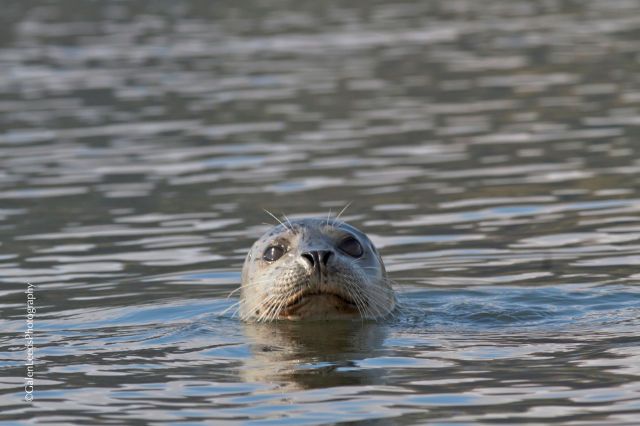
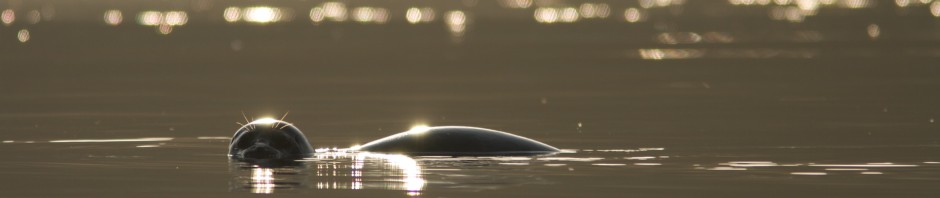
One of the curious harbor seals that came to investigate my MacGyver-esque repair
Posted in emergency kayak repair, kayak photography, nature photography, photography, wildlife photography | Tagged , , , , , | 18 Comments

Male Kestrels: A sneak peak photo


I won’t have time to finish tomorrow’s post about male Kestrels and identifying them, before I head out kayaking very early tomorrow morning, so I will give you a sneak peak photograph. See if you can notice any differences between this male and the female Kestrels of my last post

Male Kestrel carrying a Western Fence Lizard

Posted in kestrel, nature photography, wildlife photography | Tagged , , , , , | Leave a comment

Female Kestrels in flight: An essay of photos


New

This slideshow requires JavaScript.

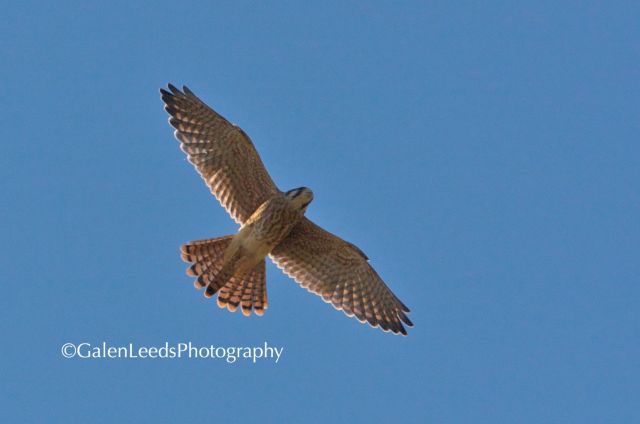
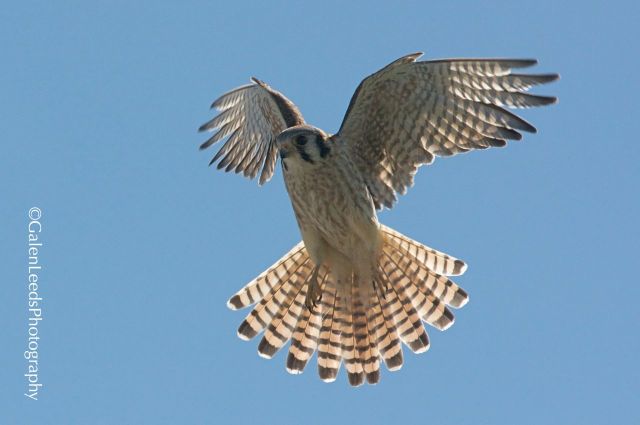
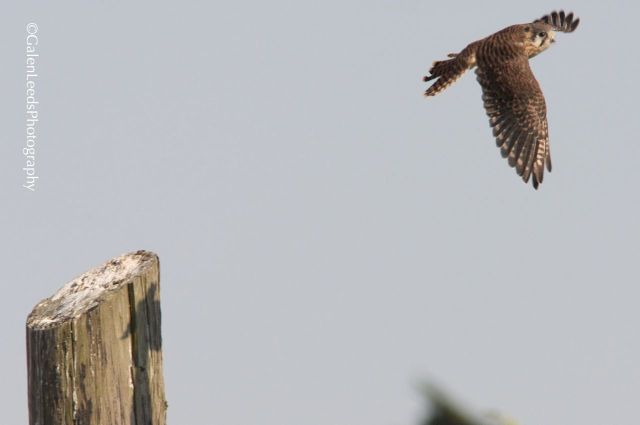
Female kestrel in flight

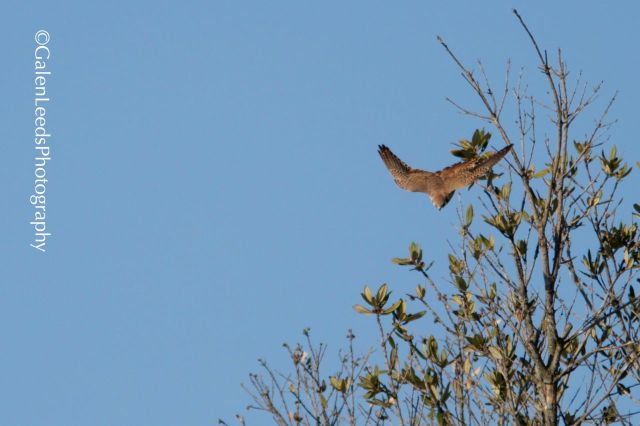
Kestrels are a fun, marvelous little bird to watch. They are the smallest raptor we have here in the United States (although not by much, a female kestrel can actually be larger than a male Merlin or male Sharp-shinned Hawk). They are a falcon, and so are in the same class of birds as Peregrines, Prairie Falcons, and Merlins (the four most common falcons in the States). Falcons are know for being fast birds and for hunting and catching prey on the wing.

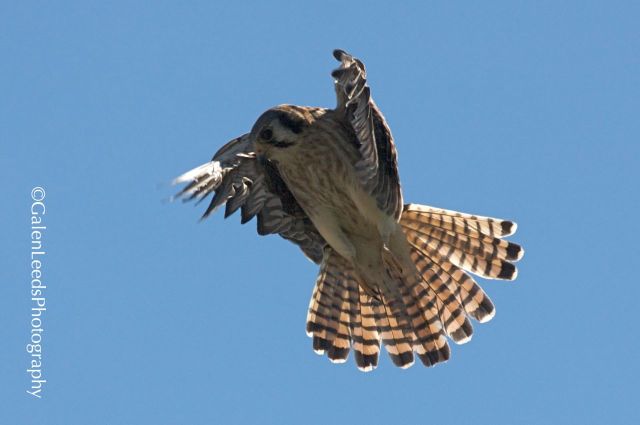
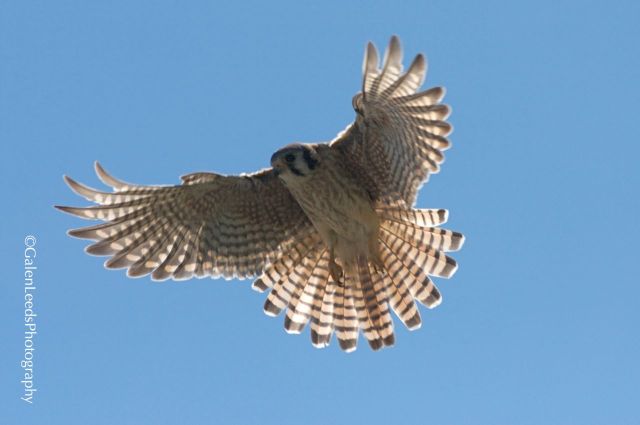
This female kestrel is flapping her wings in such a way that she is "hovering"

The kestrel is one of the slowest falcons we have here in the states, and will often hunt with a very different style from others in the family. They are able to hover- stay in one spot in the air by flapping their wings in a certain pattern, without moving from that spot (an act that is sometimes known as “kiting”) so that they can search an area for prey without having to circle. The other falcons hunt while zipping along. Kestrels are also more likely to hunt from a perch than other falcons.

One thing falcons are known for is the pointy shape their wings can have in flight

The female and male kestrel are very distinct in appearance, one from the other. Tomorrow I will post images of a male kestrel for comparison, but today we will focus on the female. The female is less colorful than the male. She is a combination of cream colors, a reddish brown and black. From the underside she is mostly the creams and blacks, with a small grey patch on the very top of her head. The tail is alternating black stripes. An adult female will have a very wide black stripe at the end of the tail. A juvenile or hatch year bird will have a skinnier band for that last stripe.

Notice the black and red barring going across the back and wings


From the top or back side, the female is a combination of a reddish hue and black. The pattern is more of a horizontal barring, although somewhat mottled. Both the male and female have mustachials (the side burn and mustache looking stripes coming down their face). This is a feature common in most falcons to one degree or another. Usually, as with kestrels, it is more distinct in the male.

The female at full spread during her hovering stroke

Well, that was a pretty quick and dirty lesson in ID’ing a female kestrel. Hope it helped some of you out.

-Galen

Posted in kestrel, Photo Essay, photography, raptors, wildlife photography | Tagged , , , , , | 9 Comments

Anatomy of a photo: yellowlegs


New

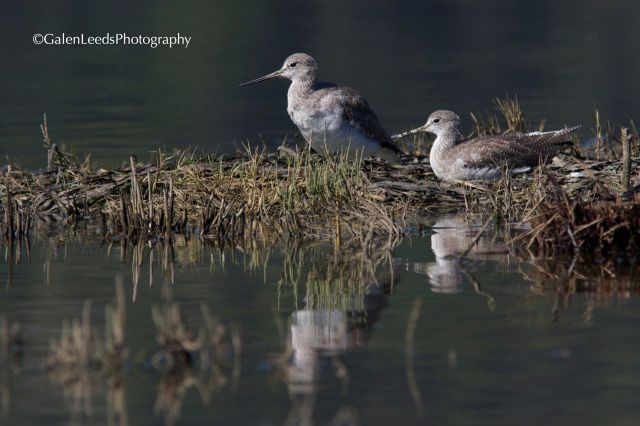
Yellowlegs relaxing in Pickleweed

These Yellowlegs moved into a restored wetland near where I live. (Details of the wetland restoration can be read at Giacomini Wetlands: History and Photos.) They are a very good sign, because they would only be there if there were enough invertebrates in the new mudflats to be feeding on. Slowly the area is becoming a more and more naturalized tidal wetland, and each new species of shorebird that shows up is like a badge of honor.

Yellowlegs are a fun bird to watch as they go about their business of feeding in the wetlands. Not as social as the Godwits or Willits, they are still a fairly gregarious bird, marching about and plunging their long bills into the mud, ferreting out tidbits where they can. More rarely I see them at rest, like in these pictures. While I love action shots of birds feeding or flying, it can also be fun to show their other side, their quiet restful side. We all have one, and while our actions speak for who we are, so to does how we take our rest.

The nuts and bolts. This photo was trickier to take because of the time of day. It was about 11:30 in the morning so the sun was overhead. I had to work my kayak around so that the sun was slightly behind me. (It was so high above me it was hard to place behind me.) This meant that from my very initial approach on these birds I had to always keep the sun at my back. If I had approached them from any other direction, their would have been shadows on their faces and I would not have been able to get that glint of light in the eye (which can really make or break a picture sometimes. Having that spark there, can really add some life to the subject.) While I could have photoshopped that glint in, I’ve never had to resort to that yet, and don’t know that I ever will.

The lens was a 300mm with a 1.4x converter to give me a total lens length of 420mm. The shots were taken handheld since I was kayaking and don’t like to use a tripod on a kayak. I wanted a fastish shutter speed of 1/640th to freeze any action and negate any camera shake, while maintaining a decent depth of field with an aperture of f/9.9 (this way all of the bird is in focus, but not much beyond the bird). To get the proper exposure with these settings I set my ISO to 320.

Happy shooting

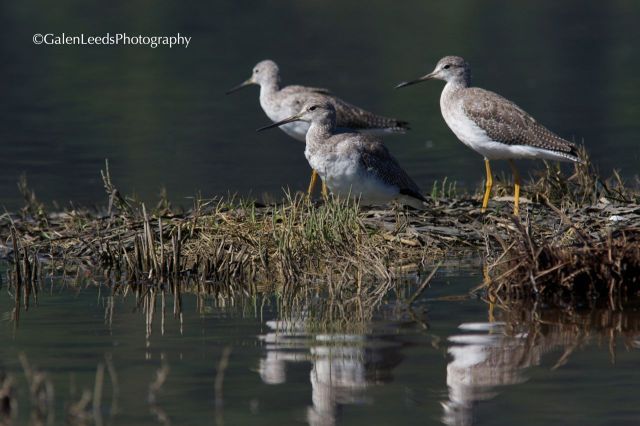
I had to include at least one photo to show why its called a Yellowlegs

Posted in Anatomy of a photo, kayak photography, nature photography, photography, wildlife photography, yellowlegs | Tagged , , , , , | 3 Comments

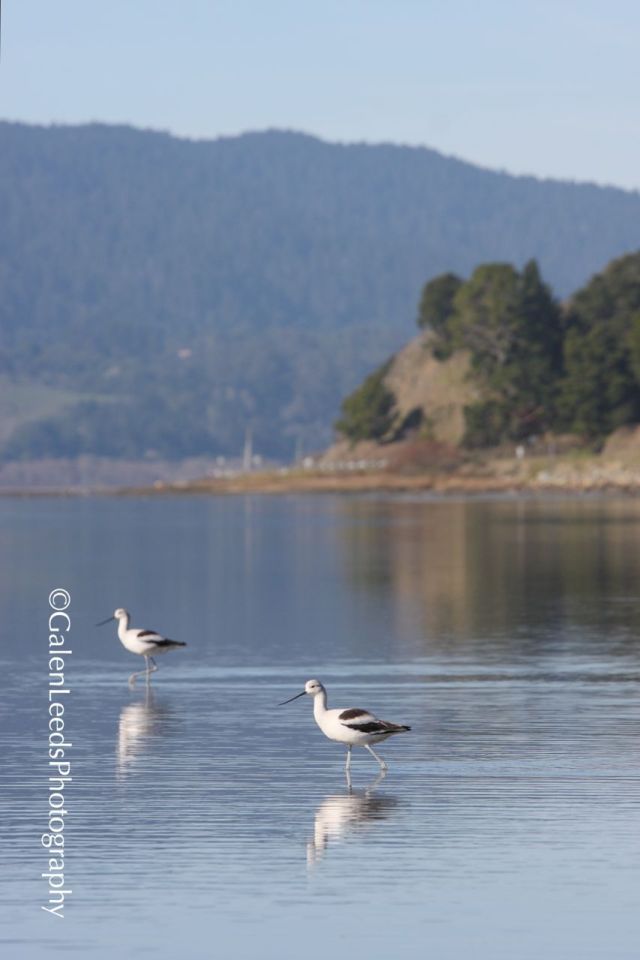
Anatomy of a photo #78:The American Avocet


New

This slideshow requires JavaScript.

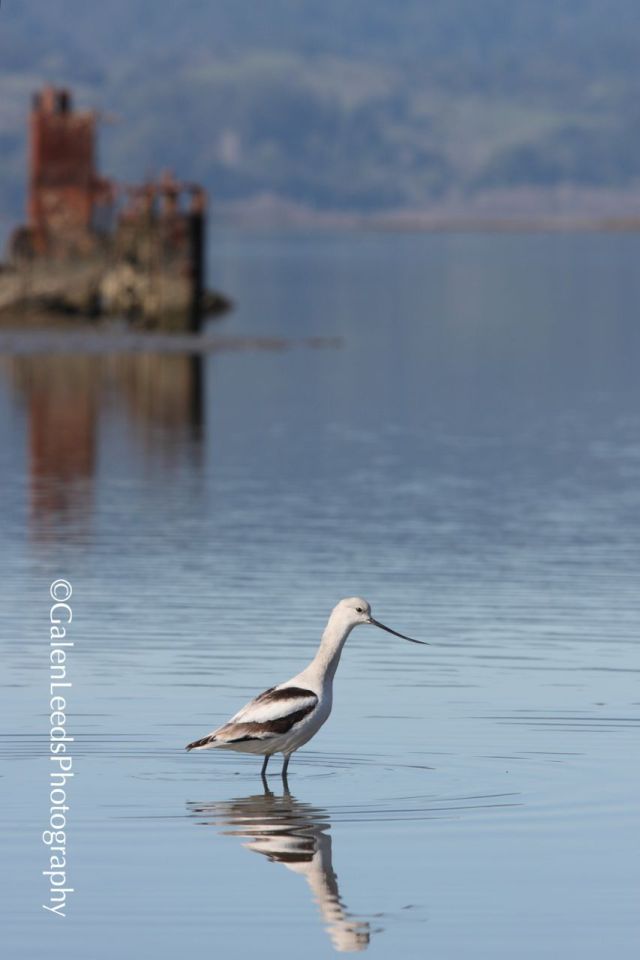
The American Avocet is one of our long legged wading shorebirds. Proportionally its legs are closer to those of a Stilt than to one of the Sandpipers. They like to winter near where I live, so on occasion it offers me a good shooting target from my kayak when I am out photographing wildlife. While they will breed in the area where I live, they are most commonly seen during the winter months, when larger numbers arrive at the coast.

Must be Happy Hour. Two Avocets for the price of one

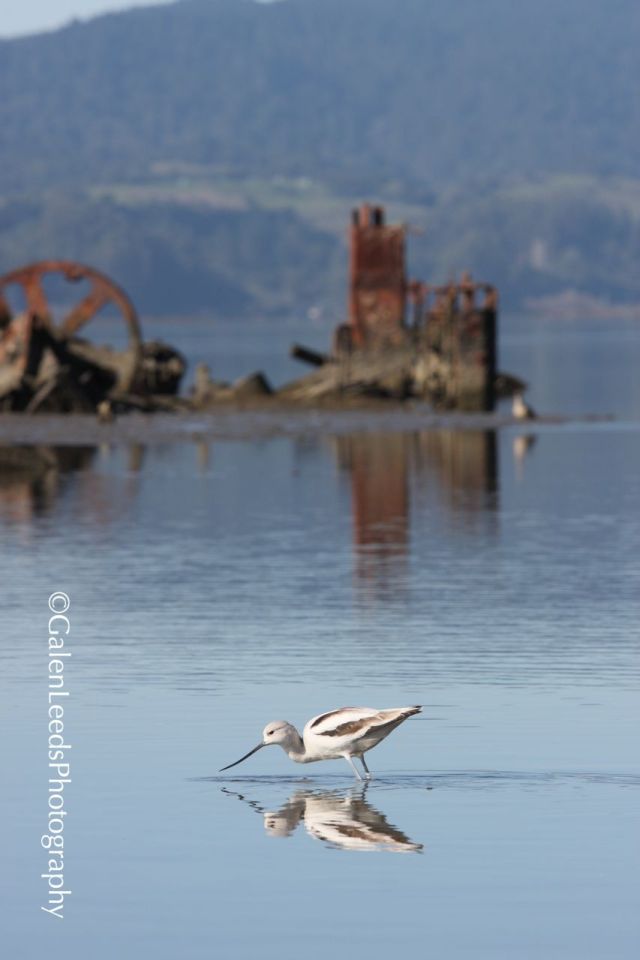
The Avocet in these pictures were all photographed from my kayak, while paddling the tidal waters of the Bolinas Lagoon. I used an SLR camera with a 200mm lens, handheld. (For details on cameras and kayaks try reading Kayak wildlife photography tips.) Often for wildlife I will use a longer lens than this, but I wanted to be able to include some of the background, even if it was made blurry by distance. Including the background was important to me in these images, because I was trying to give the birds a sense of place or location, sharing the habitat and waters that they can be found in. You can notice the rusted shape in the background of some of the pictures? This is a dredger that sank decades ago in the lagoon. It helps identify the place.

Notice the long neck and the upturned bill. Field marks of the Avocet

I exposed mostly for the white on the bird, as this is where wanted to be sure that I had some detail. If the white was overexposed (which is very easy to do with a white bird on a sunny day) the bird would appear very flat, except for the black markings. Background and everything else were secondary to properly exposing the bird. If the background had been underexposed, that is something that could have been dealt with. Over exposing however, is a spot where once detail is lost, it can not be recovered.

I tried to make sure that some of the images were action images, pregnant with the potential for movement

Shutter speed was 1/500th of a second, the slower end of the range that I would try to shoot an active bird like the avocet from. This is because I was shooting for a magazine, and wanted to make sure I had minimal noise by shooting at a very low ISO (200). I also wanted to make sure that the aperture was at least decently stopped down so that there would be at least some shoe to the background, even if there was no definition. (Shot these at f/8. If I had been using my usual bird lens of 300mm, much less of the background would have been recognizable, due to the shallower depth of field.)

Posted in Anatomy of a photo, kayak photography, shorebirds, wildlife photography | Tagged , , , , , | 6 Comments

My babies are coming home today!


My babies should be coming home today. That is, my two main camera bodies have been at the factory for over two weeks. I’ve had to rely on lesser cameras and rentals during that time, but finally they are being sent home. Praise be to the camera elves, may my babies be well and whole, cleaned, cared for, and repaired at the factory.

Today, I sit here working at my computer, and I listen to every truck and large vehicle that drives by, hoping against hope that they will arrive yet this morning, though I know that FedEx doesn’t ever really show until the late afternoon.

Ahh to have my darlings home and to be able to have all my camera settings how I like them, to not have to hunt through menu after menu to change the simplest of settings, to set my autofocus controls to how I really like them (best way to set focus controls in my opinion-Getting clarity by turning off your focus). One of the worst things about rentals is they are never set up to how we like them. They are great in a pinch, but only a pinch, especially if you can’t have the specific bodies that you know best.

I haven’t been kayaking in that time, because I just couldn’t face the thought of being out there without my two best buds… No, they are almost more than that… extensions of me, my vision, my consciousness…

Come on home to papa kiddos. I’ve missed you, and nothing has been the same without you.

Oh, and just a side note the repairs were not necessitated by kayak photography, but do to simple wear and tear and camera malfunctions. I stand ready to defend kayak photography against those who worry about camera safety. It is all simply a matter of being properly prepared, like on any other photography quest

Posted in photography, ruminating | Tagged , , , | 6 Comments

Kayaking Drake’s Estero: A tour of photos


New

This slideshow requires JavaScript.

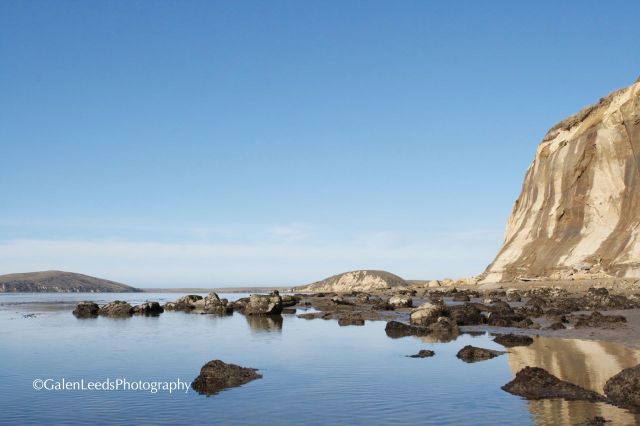
If you’ve kayaked Tomales Bay, you have not kayaked Drake’s Estero. The Estero is unlike anywhere else I know of, especially if you are strong of mind and body and decide to kayak a little farther. An amazing astounding place. I have not kayaked Drake’s Estero to nearly the extent that I have paddled Tomales Bay (it would be hard for me to ever kayak anywhere that extensively), but I know it well.

Drake's Estero has many fingers, each its own distinct habitat, twisting into a new found secret

It is necessary to time any kayak outing into the Estero based upon the tides. For the most part, it is a shallow body of water with some deeper sloughs coursing through what are extensive mudflats at low tide. Time the tide wrong and you could get stuck high and muddy, either waiting for the incoming tide or slogging through mud that can reach to your knees. Pass near the mouth, where the estero flows out into Drake’s Bay when the tide is dropping from an especially high to tide to a lower one, and you will have heavy current to deal with, trying to suck you into more open waters. The rewards however are legion and great.

Towering hillsides and cliffs tumble down towards the sheltered waters

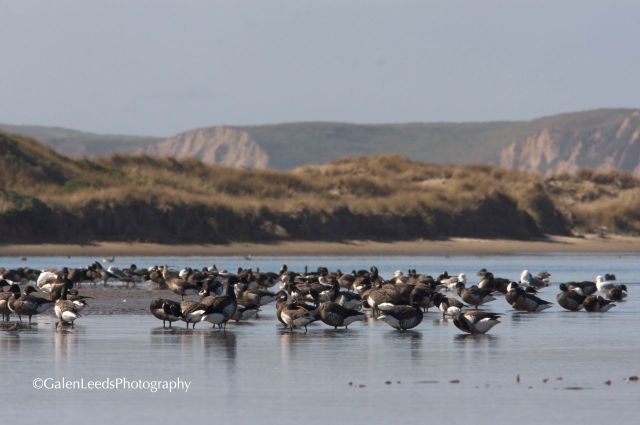
The mudflats create a rich habitat of invertebrates which are a food source for fish, crabs, bat rays, leopard sharks, and of course birds. Through out the seasons the birds and marine life will vary to some extent- ducks and geese will winter there, but in different parts of the estero. Brant Geese will often be on the mudflats more towards the mouth, while the ducks prefer the more sheltered areas of the old quarry and places like Home Bay. Grebes and shorebirds abound during most seasons as do cormorants (mostly Double-cresteds).

Brants lining some of the flats near the mouth of the Estero

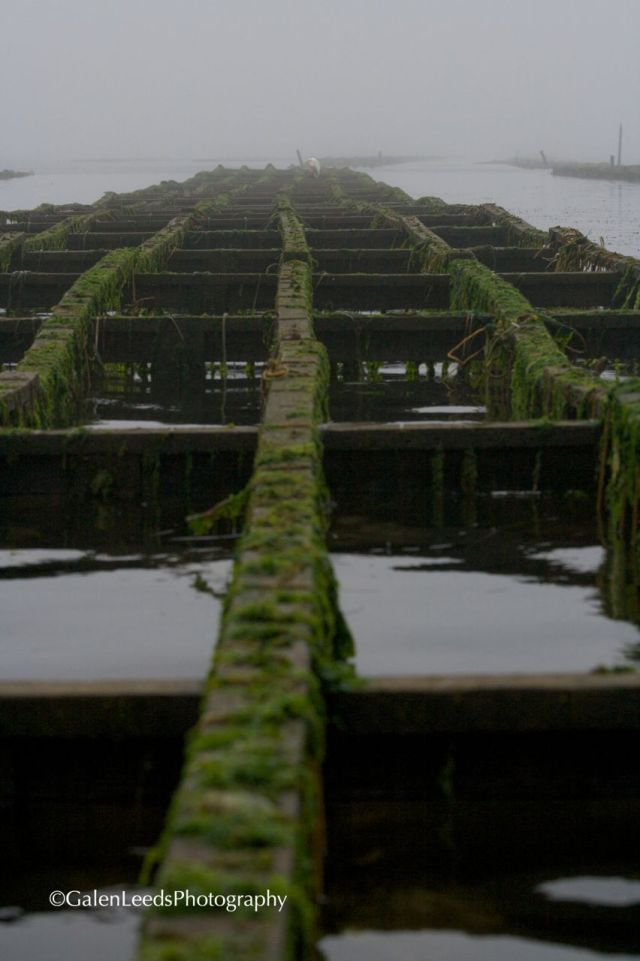
As one paddles through the Estero, it becomes apparent that it is rich in agriculture, with cattle grazing the grassy hills that surround it. The waters itself are home to an extensive aquaculture business, where thousands of oysters are harvested each day, the mudflats being an ideal environment. There is also more minor farming of clams. You can see signs of the oyster farms extensively through two of the fingers of the Estero- Home Bay and Schooner.

Oyster racks in the Estero

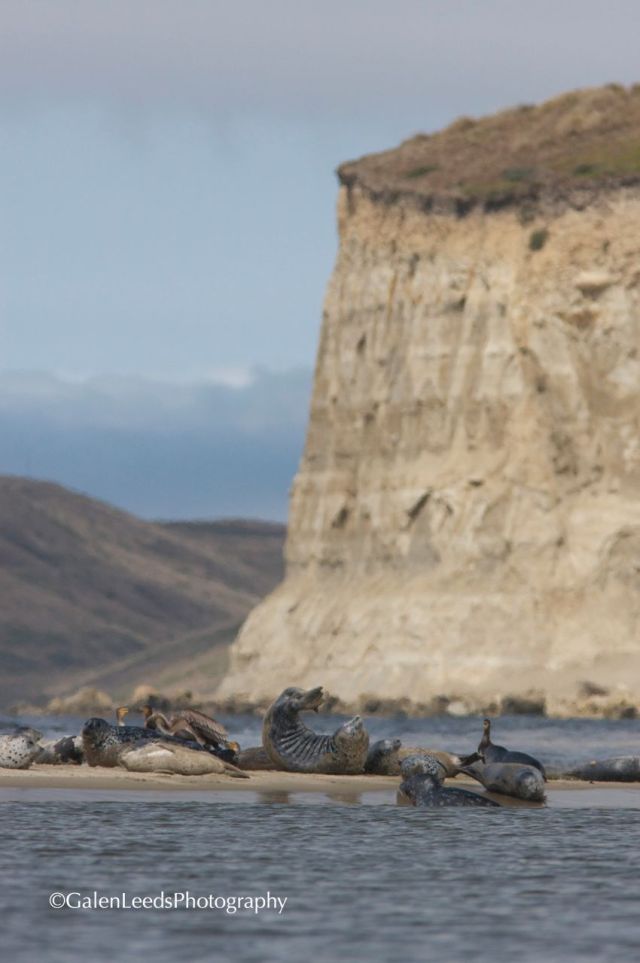
There is a healthy population of Harbor Seals to be found in Drake’s Estero, its protected waters giving good protection from marine and terrestrial predators, while allowing quick and easy access to Drake’s Bay and the open ocean. During the spring it is one of the major breeding and pupping grounds in California, although this does necessitate a boating (and kayaking) closure from March 1 through June 30, so that the seals can raise their families in peace. I have never kayaked in the Estero without seeing many, many seals either swimming or hauled out on the sand bars.

In addition to the landscapes, the marine life also make the estero what it is

Egads! There is so much to say and show about Drake’s Estero. So much to see and photograph as one kayaks around, that one post could never be enough. There are trails along the outside edges of the estero. Beaches to wander dreamily along. Ocean to view on one side and the Estero teeming with life on the other.

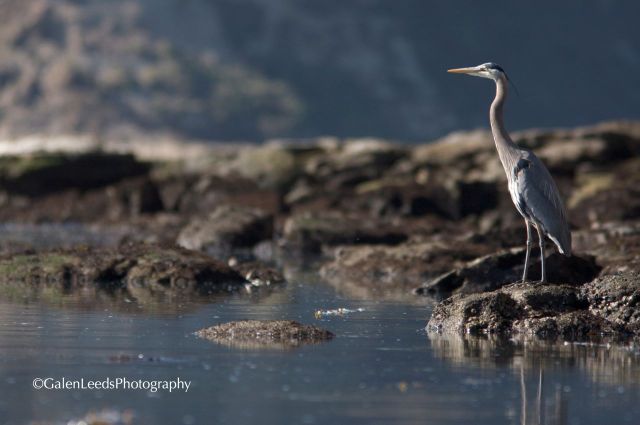
Great Blue herons are commonly seen, along with at least two species of Egret, fishing the shores of the Estero

As there is way too much to pass on I will finish with this-“Estero” is essentially the spanish word for “estuary.” Drake’s is an especially special estuary and bay in European American history, because it is likely the landing spot of Sir Francis Drake, when he had to make repairs to his ship after plundering many Spansih ships. The area was then later settled by Mexico before becoming part of the California and the United States. It has a long agricultural history since it fell into the hands of people of European descent. Before that it was a rich land for the Coast Miwok Indians, the tribe native to this stretch of Northern California.

For more views of some of the birds and happenings that you can see on the Estero you can try these posts-
The Pigeon Guillemot
Bizarre photos of gulls eating starfish
Bubble Jelly in Drake’s Estero
Great Egret fishing the oyster racks
Three Willets in pickleweed

Posted in kayak photography, My favorite Parks, nature photography, Photo Essay, photography, wildlife photography | Tagged , , , , | 6 Comments

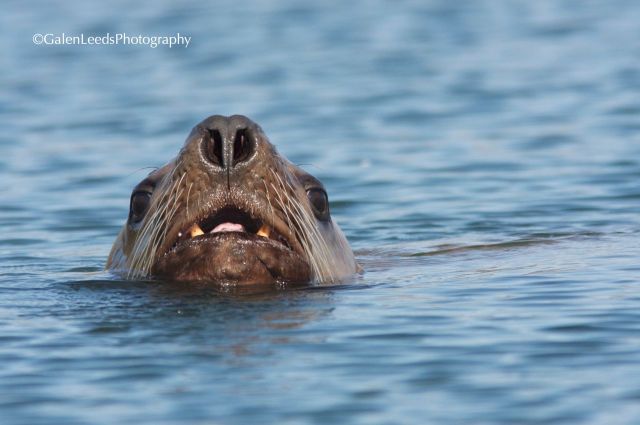
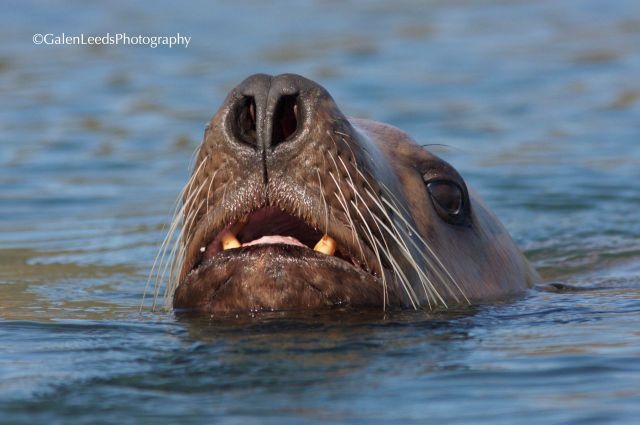
Anatomy of a photo #77: Sea Lion Tongues


New

I have not seen many Sea Lion tongues in my time. This is one of the few. I believe this is actually a Stellar Sea Lion, one of two species we have here in California. I wish this image showed more of the tongue, but when you are paddling a kayak and the Sea Lion is bigger than your kayak and has rather long looking teeth (you can see his teeth on the post The Sea Lion Snarls… I pretty much let him do whatever he wants instead of trying to pose him.

When I took these photographs from my kayak I must admit I was thrilled and nervous at the same time. I didn’t think the Sea Lion would do anything to me, but as I said, he was much bigger, even when you put me and my kayak together. I did not approach him, he came over to inspect me and check me out (although I definitely did my share of checking out also.) This is decidedly the closest I’ve ever been to a wild Sea Lion, and it felt interesting indeed to be the object of his scrutiny.

I captured these photographs hand held, as tripods are rather impractical in a kayak. Shutter speed was high- 1/1250th so that I could freeze any water droplets (which I did in some other images of this big guy), and to prevent camera shake in my images. Aperture was set to f/8 to give at least a little depth of field. The lens was a 300mm with a 1.4x converter for a total of 420mm

There are times when Sea Lions don’t make me nervous in the least, like when I came across the languid Sea Lion.

For more animal tongues, you can have a look at these animals-

River Otter tongue
Gull’s tongue while swallowing a whole starfish
Tule Elk tongue
White-tailed Kite tongue (it’s a type of bird/hawk/raptor
Song Sparrow tongue while singing

Posted in Anatomy of a photo, kayak photography, nature photography, sea lions, tongues | Tagged , , , , , | 4 Comments